


There’s nothing particularly new about the modernization of the pantry.
We watched it happen with olive oil, then tinned fish; there’s even talk that dental care is due for a redesign. And while the formula of taking an everyday staple, reconsidering the packaging, and sharpening the story has become all-too familiar, it can still feel exciting when a category that has looked the same for decades suddenly gets some attention.
But redesigning the everyday is complicated, particularly now. Groceries are expensive enough without turning every packaged good into a “premium purchase.” Brands like Fishwife have attracted their share of “gentrification” critiques. Still, there’s a difference between making a product more thoughtful, functional, sustainable, or beautiful and simply slapping a modern design on something ordinary to justify a higher price.
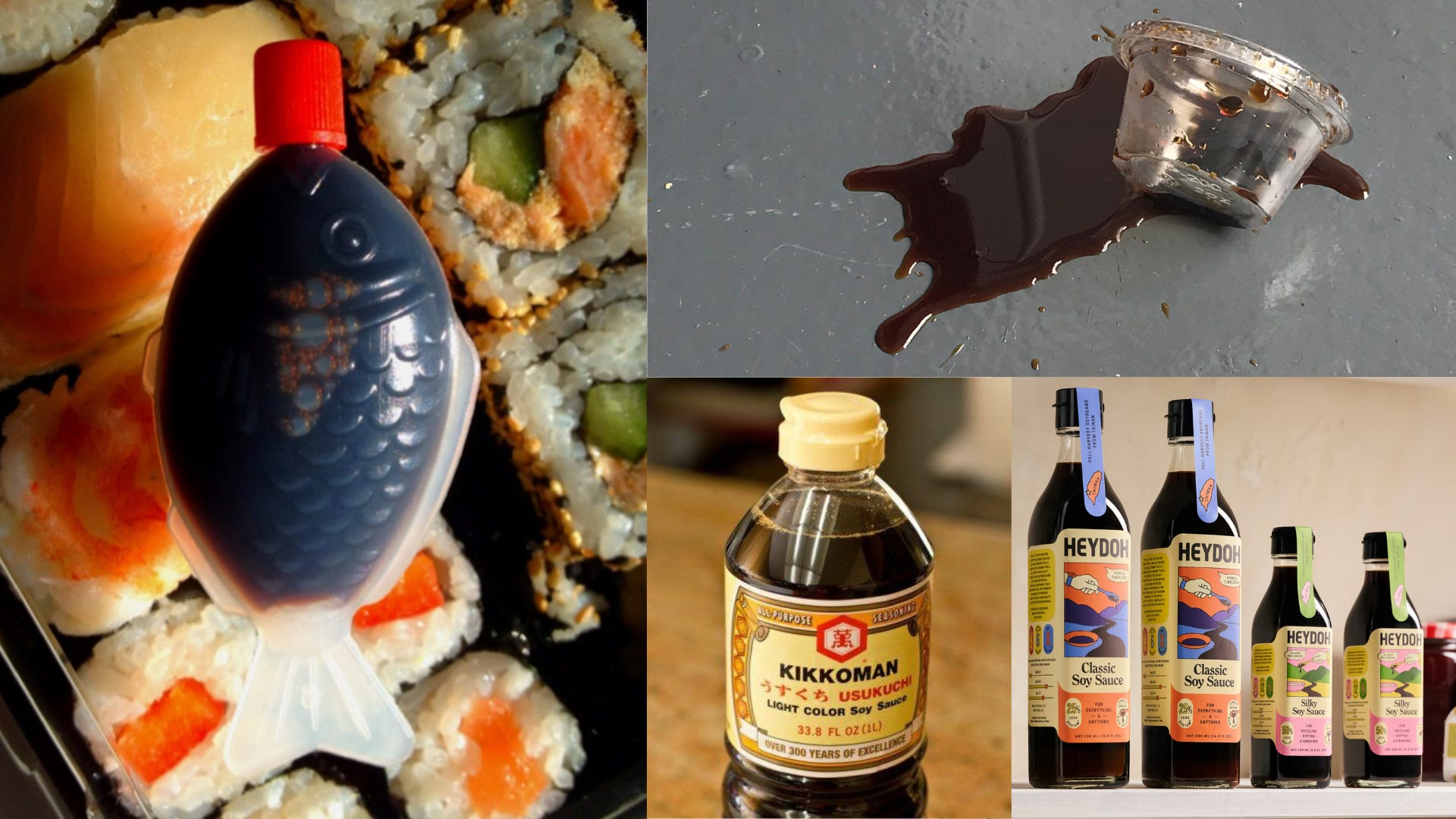
Still, good design isn’t inherently frivolous, nor should it belong only to luxury goods.
The more interesting question might be what we get in exchange for the markup. Is the ingredient better? Is the producer being paid more fairly? Does the packaging actually function better? Right now, nearly every trip to the grocery store feels more expensive than the last; maybe the best glow-up pantry goods are the ones that make an everyday product feel more luxurious without becoming something too precious to actually use.
Now, a new wave of new brands is remaking one of the oldest condiments on the shelf: soy sauce.
HEYDOH measures total nitrogen content and sources single-origin black soybeans from Taiwan. Poon’s is marketed as “the soy sauce equivalent of extra virgin, single varietal, cold-pressed olive oil.” Ni-Howdy is putting a cowboy cat on the label and swapping the sticky glass pour-spout for a squeeze format.
“Honestly, soy sauce bottles are just annoying,” says Zach De Bernardi, Co-Founder, Ni-Howdy.
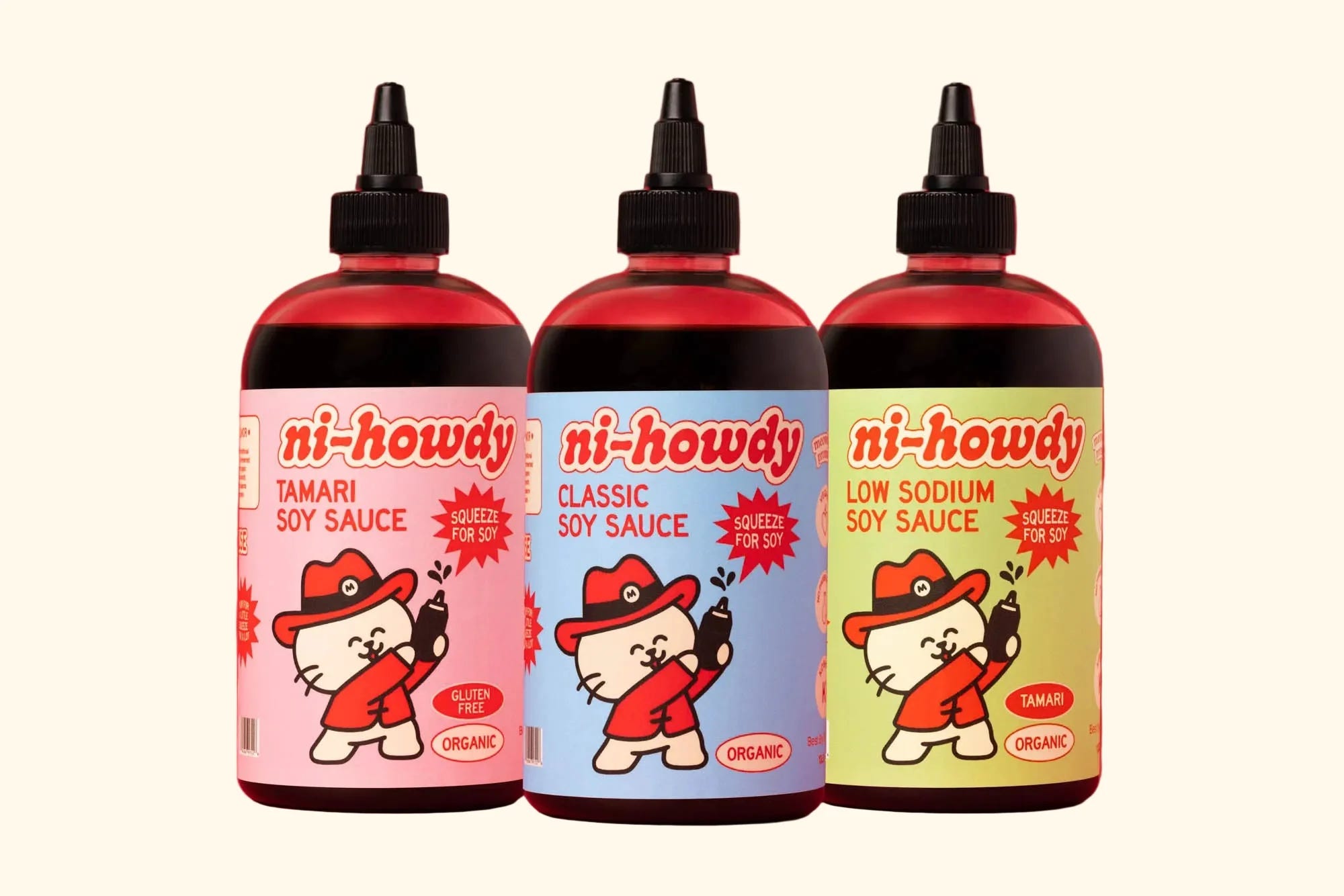
“They drip, the cap gets sticky, and nobody has touched the design in fifty years. And everyone knows the pour game. You tip the bottle, nothing comes out, you tip a little more, and now your rice is drowning. The squeeze fixes that,” De Bernardi adds. “One hand, real control, a couple drops or a full stream, exactly what you meant to put on there. If it ends up on the table instead of the back of the cabinet, that’s the win.”
Or stripping the ingredient list down to something a shopper can actually parse. “People love the brands they grew up with, but they flip the bottle over and see caramel color and preservatives, and it doesn’t sit right anymore. So we brew it the traditional way, keep the ingredient list short, and have the certifications so we’re not just saying the word ‘clean.’ Nobody wants a lecture from a soy sauce brand. The product stays serious, the brand gets to be fun,” De Bernardi shares.
If we’re thinking about this as a Venn Diagram, one circle is wellness culture, another is rising interest in global flavors, and the third is the broader cultural moment that’s putting most pantry staples under the same scrutiny once reserved for olive oil and coffee. Soy sauce sits in the cross-section of all three, and it happens to have a generation of founders with the technical and cultural fluency to explain what “better” soy sauce actually means. The Soy sauce aisle has been primed for re-examination rather than just a casual redesign.
Tinned fish spent the last several years moving from bargain-bin protein to dinner party centerpiece. The global tinned fish and seafood market is valued at roughly $35 billion in 2025 and is projected to keep climbing at a compound annual growth rate near 5.7 percent through 2034, according to Research and Markets. Analysts point to the same forces every time: single-origin sourcing, vintage-style packaging, infused with specialty oils, and a wellness narrative centered on omega-3s and clean labels.
Soy sauce is tracking a similar curve, just a step behind. Grand View Research estimates the global soy sauce market at $56.1 billion in 2024 and on pace to reach $75.7 billion by 2030. Mordor Intelligence’s estimate lands close behind, projecting growth from $59.13 billion in 2025 to $78.25 billion by 2031. Both reports cite the same underlying driver: consumers are moving away from chemically processed, additive-heavy soy sauce and toward naturally brewed alternatives, a shift accelerated by stricter regulation of 3-MCPD, a contaminant linked to certain manufacturing shortcuts. North America is growing faster than the global average, per Mordor Intelligence, largely because meal-kit companies and plant-based meat brands are leaning on soy sauce to deliver umami without synthetic flavoring.
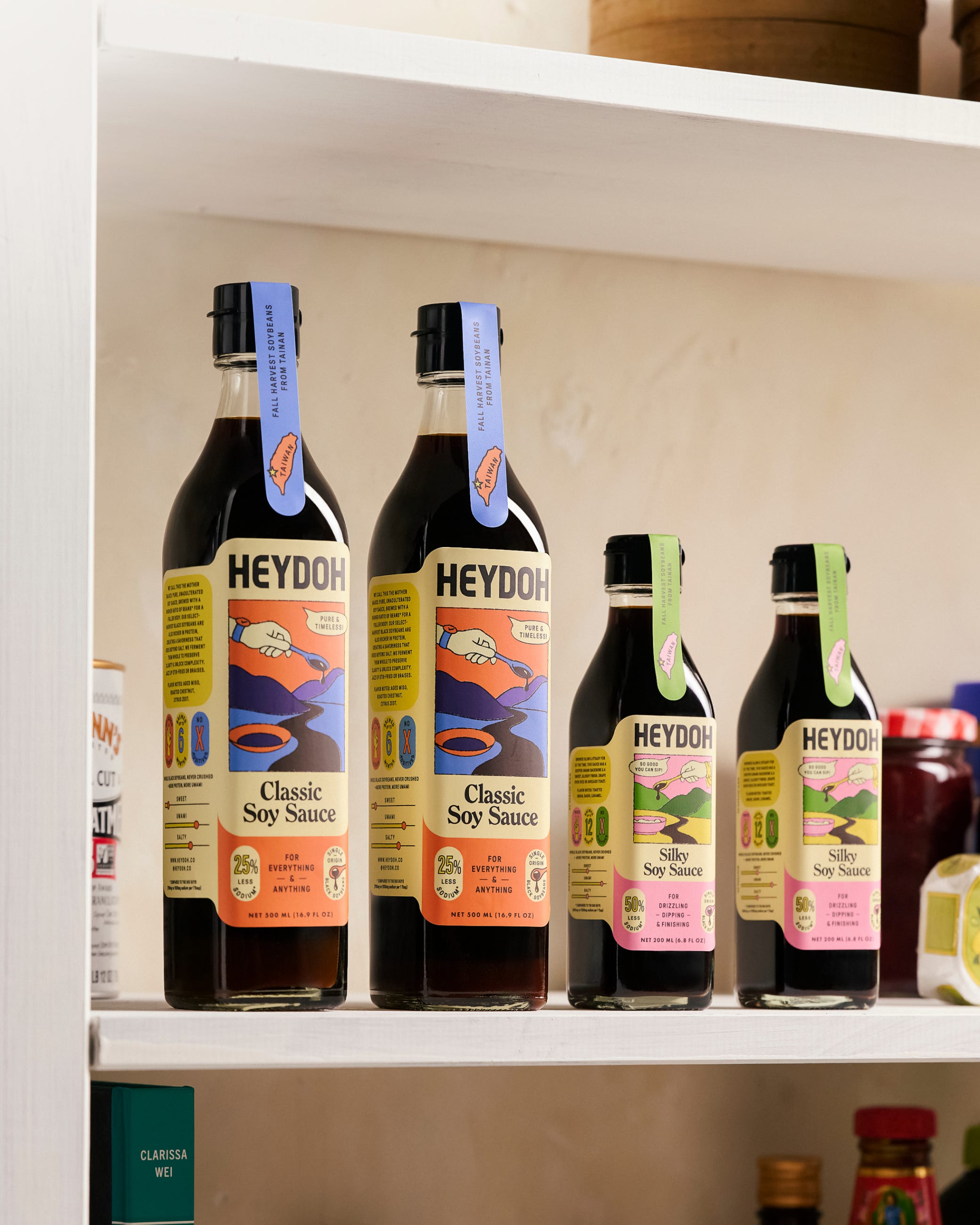
Founders in this space describe an aisle that overwhelmed shoppers rather than serves them, with light, dark, thickened, gluten-free, oyster-flavored, and practically a dozen near-identical bottles saying nothing about how they were made. The response has been to simplify the offer and get specific about what “better” actually means, whether that’s a measurable spec like total nitrogen or a shorter, more legible ingredient panel.
Ultimately, many of these new founders seek to reclaim shelf space for a product their families have used for generations, translating it for an American audience without asking the tradition itself to change. “The sauce is where the culture lives, so we don’t touch that. Traditionally brewed, real fermentation, no shortcuts. The packaging is where we play,” mentions De Bernardi. “A cowboy cat doesn’t make the soy sauce less Asian. It just makes it less intimidating for someone who’s never bought a bottle before.”
“The product and the traditions behind it have never stopped evolving,” Clarissa Wei, co-founder of HEYDOH, thoughtfully notes. “I know this because I live in Taiwan, where our soybeans and sauce are grown and produced, and have been based in East Asia since 2018. I’m also a journalist and James Beard-nominated cookbook author who has done extensive research on Taiwanese food history. Soy sauce production here isn’t frozen in the past. Producers are constantly responding to new technology, changing tastes, agriculture, and the way people cook. With HEYDOH, we don’t want to suggest that soy sauce needs to be rescued from the past.”
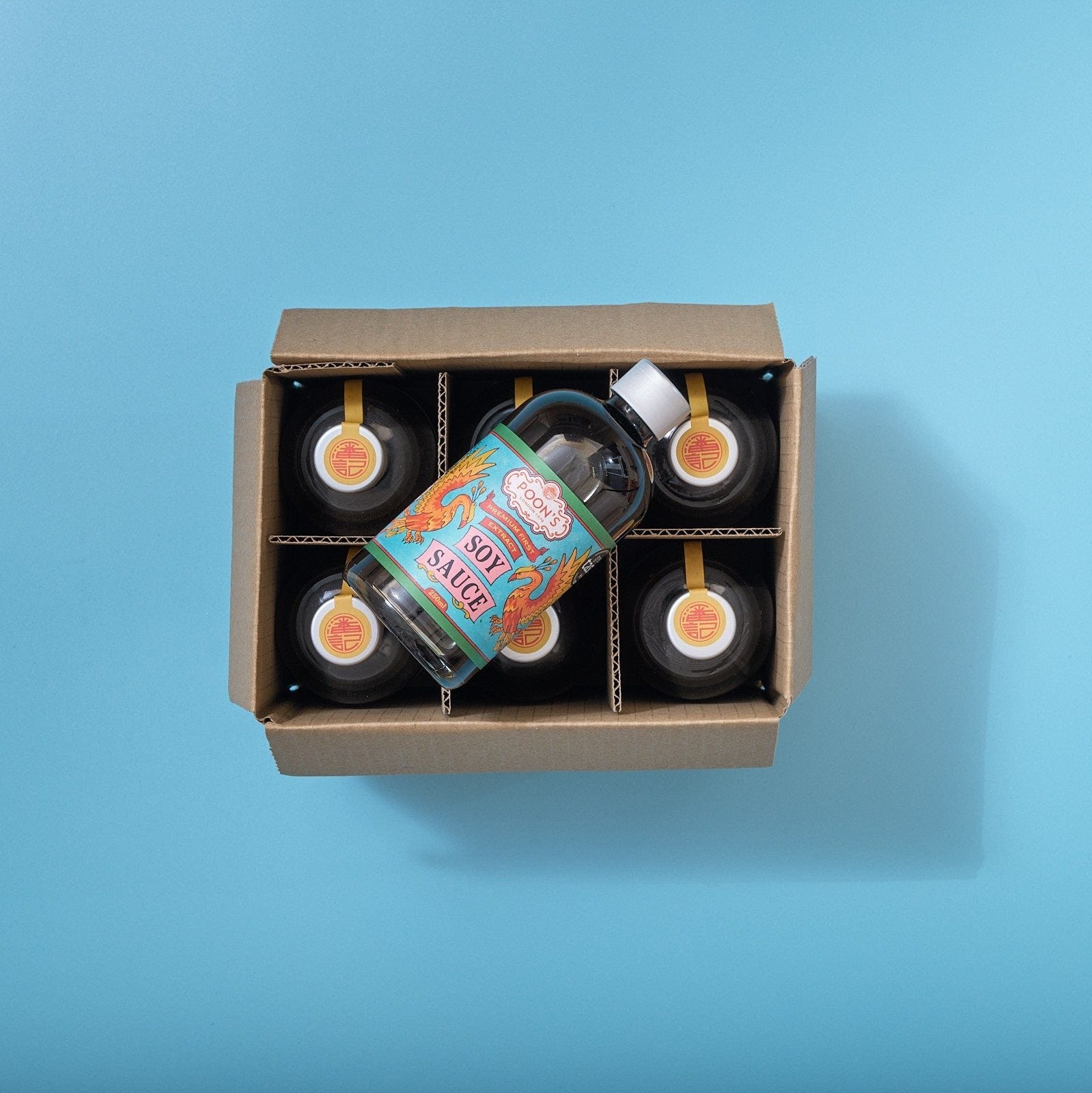
She continues, “It is a living, evolving product with both history and contemporary relevance. At the same time, our soy sauces are designed specifically for our target audience in the United States. Our SKUs and the way we market them probably wouldn’t work the same way in East Asia, because different cultures have different preferences and expectations around soy sauce. However, adapting a product for American consumers isn’t the same as suggesting that the tradition itself needs to change. For us, the line is in how that adaptation happens. We don’t parachute in, source a product, and just use its culture as a marketing story. Everyone on HEYDOH’s founding team is Taiwanese; we all speak fluent Mandarin, and we visit our suppliers regularly. We work with them as equal partners. HEYDOH’s cultural connection isn’t nostalgic or decorative. It comes entirely from lived experience.”
That distinction, between a product story and a marketing story, is what separates this generation of founders from past waves of pantry rediscovery. And it’s showing up at scale, not just in individual brand decisions. Sales in the Asian and ethnic aisle of U.S. grocery stores roughly quadrupled between April 2023 and April 2024, a jump tied to Gen Z’s appetite for new flavors and a broader social-media-driven curiosity about Asian food and beauty products. Matcha followed the same path, moving from a niche order to a mainstream one seemingly overnight.
Layer in the wellness data on top of that, and it’s even more obvious. NIQ reports that use of label-scanning apps like Yuka is up nearly 50 percent in under a year, with one in four consumers now checking a product’s ingredient list before it hits the cart. Consumers are verifying everything, and it makes sense, as we often hear stories like the recent UC Davis avocado impurity study.
“First we need to give the word ‘premium’ a more meaningful and measurable definition. Soybeans have long been vilified in American food culture because they’re typically grown as industrial commodity crops, often genetically modified, and because of false, inflated concerns about soy and estrogen,” notes Wei. “Also, virtually all the soy sauces on American grocery store shelves are made with commodity yellow soybeans, and many are made with defatted soybeans, in which the oil is removed. There’s very little conversation about where the beans came from, how they were grown, or how that affects the final flavor. Our hope with HEYDOH is to change that, and to become the first major single-origin soy sauce brand on the shelves of America’s largest grocery stores.”
HEYDOH is betting that shoppers are ready to ask the same questions of soy sauce that they now ask of coffee or olive oil. “Maxxing” language, like fibermaxxing, proteinmaxxing, and gut-health optimization, has seeped into wellness culture, reflecting a broader impulse to scrutinize exactly what we’re getting from what we consume.Soy sauce, with its fermentation process and naturally occurring amino acids, has an interesting opening in that conversation.
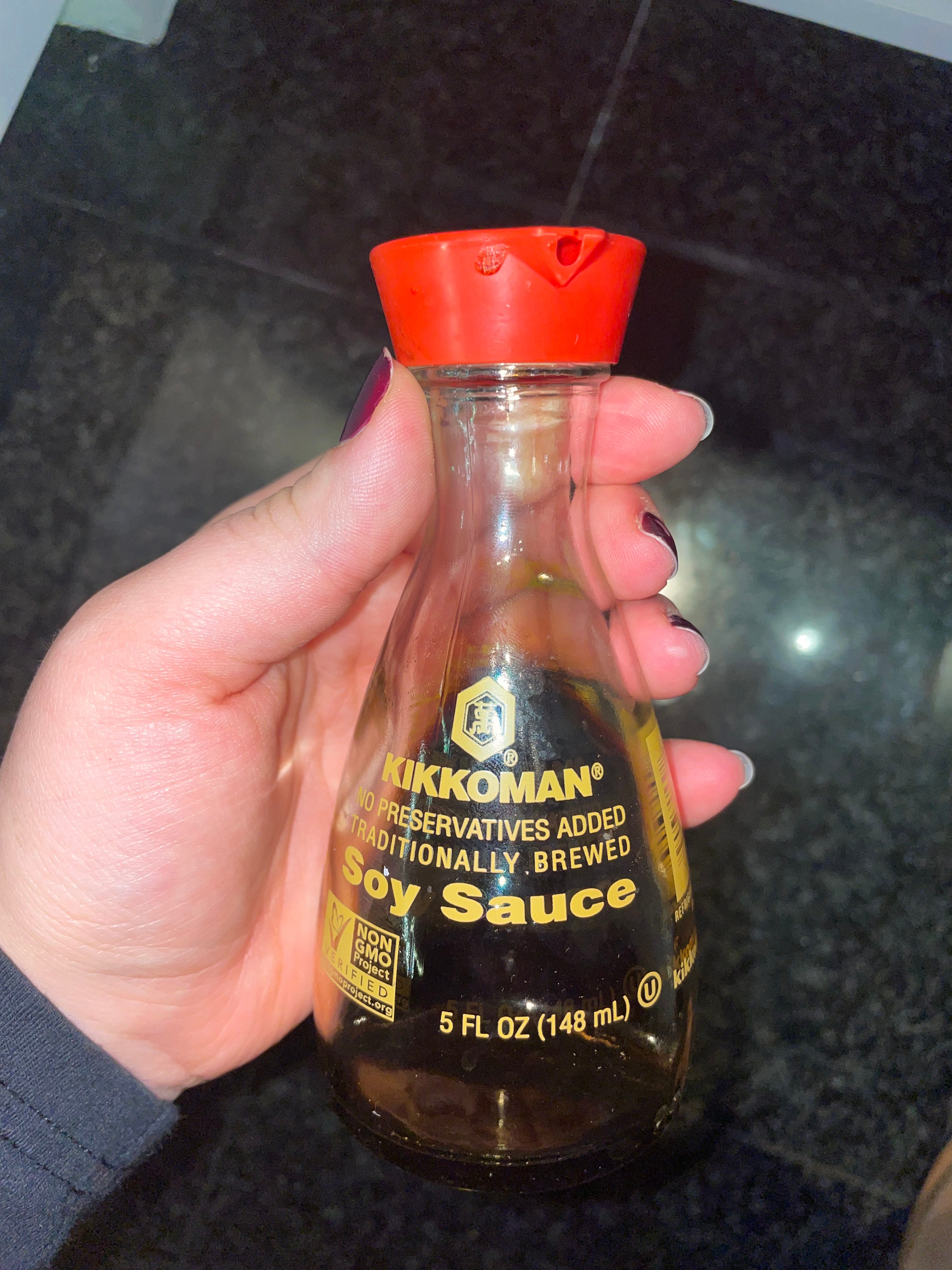
For decades, the soy sauce aisle gave shoppers relatively little reason to look closely. A handful of legacy brands dominated the space, the bottles looked largely the same, and its origin rarely made it onto the front label. What’s changing isn’t soy sauce itself so much as the amount of information and consideration surrounding it. A new cohort of founders, many with direct cultural or familial ties to the product, is publishing sourcing information, talking about fermentation and ingredients, and reconsidering packaging that has largely gone untouched for generations.
Tinned fish showed that this can all change how shoppers understand a familiar food. But soy sauce is entering that conversation at a different moment, when grocery bills are already stretched, and a prettier bottle alone may not be enough to justify another premium. The opportunity, then, isn’t simply to convince people to pay more for soy sauce. It’s to give them a reason to care about the soy sauce they’re already buying, and, if they are being asked to spend more, to make clear what they’re getting in return.
Until next week,
A bottle that lives on the table gets used most days. One at the back of the cupboard gets used at Christmas. That is the whole argument about the markup, because the price per pour ends up a completely different number. The olive oil wave learned this the slow way. People bought the good bottle, decided it was too good to use, and never bought a second. Precious is what kills a premium staple.
This new wave of redesigns and "optimization" seems to have been coming for everything, and in many cases, it has been largely positive.
However, what I fail to understand in this case, as well as the case of Graza, is how they want to push a premium and/or healtier product and make a decision to sell it in a plastic bottle - at a premium price, no less. Even as we learn more about how these packages are damaging to both environments and bodies, we are drowning in plastic.
To me, that is when all the storytelling crumbles and becomes not only suspiciously performative, but also, arguably makes the packaging worse just for the sake of trend. Sure, maybe the soy sauce glass jar did pour some globs at a time, but is this why we should pump tons of plastic into the environment for? Is that the very best solution we can find?
I think optimization is different than slapping a cute cat on a bottle that will outlive civilization and try to convince us that this is an improvement because you don't have to wipe the cap of your bottle after using it.
Anyway... Sorry about the grumpy rant. Ultimately, the issue is that I am not the target audience here, and I am not on social media 😂