

Good morning from Dieline’s editor-in-chief, Bill McCool. Here’s your daily side serving of design news, short musings, brand stuff, and forgotten ephemera.
Sorry, everyone. Not the usual Side Salad today, but we’ll be back in Link City on Tuesday.
“Move fast and break things” has long been Silicon Valley’s general ethos. The phrase itself was originally coined by Mark Zuckerberg and was the internal motto guiding Facebook’s engineers. It prioritized pushing software development quickly over a slow, cautious approach; keep it moving, and whatever damage ensued could be addressed at some TBD future date (clearly, it’s worked out for them).
That same careless and irresponsible mentality has characterized much of American life over the last decade.
A few nights ago, I managed to get out of the house for a $5 Tuesday night screening of Nathan Fielder and Lance Oppenheim’s You Can See Everything; mostly out of fear of having something spoiled about the movie on social media, but also because I’m cheap and the joy of going to the movies alone is sacrosanct.
Also, this is exactly the kind of picture you see with an audience. Rare is the film that gets a Royal Rumble-esque pop several times throughout its duration.
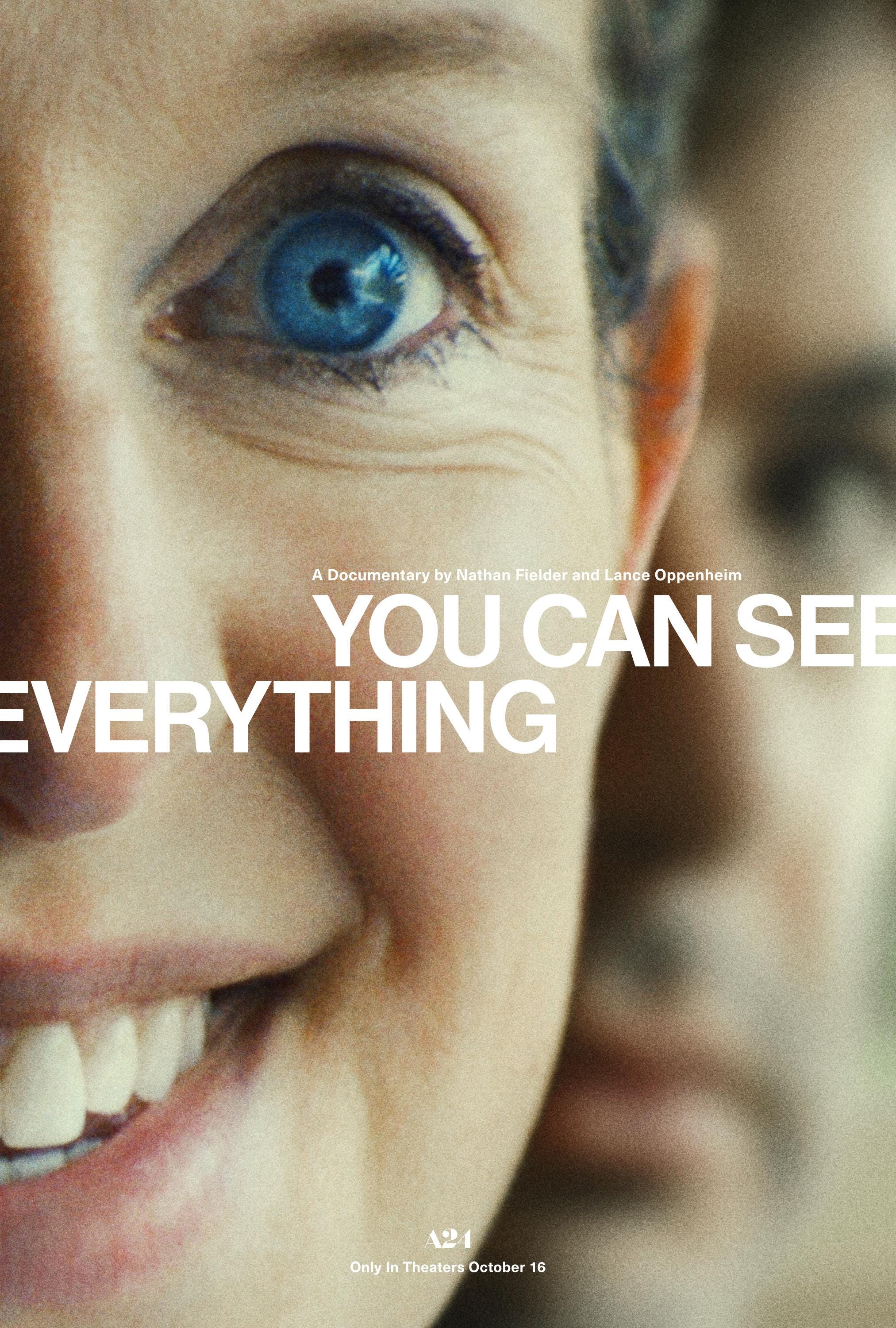
You don’t need me to recap the Elizabeth Holmes saga, but the businesswoman was convicted of fraud after lying to investors because her startup Theranos’ raison d’être, a blood-analyzing machine said to test for multiple ailments and diseases with a single drop, didn’t, you know, work. Before she went to federal prison, she and her husband, Billy Evans, brought in comedian and showrunner Nathan Fielder and director Lance Oppenheim to document her last month as a free person, in an attempt to humanize her and potentially tell her side of the story.
Why they even agreed to star in a documentary from a comedian who once had a Comedy Central show centered on legally dubious marketing scams isn’t exactly clear to me, and there’s absolutely such a thing as bad press, but the result is what will likely be one of the best movies of 2026 and perhaps even the decade. The film is about truth, manipulation, and the very art of documentary filmmaking. I am spoiling nothing by saying any of this, by the way, and that is largely what the film focuses on.
It’s certainly the movie that meets the American moment we’ve been living through for the last ten or so years, and will be something we’ll still be talking about for some time. In this particular attention economy, that’s truly saying something. Because, really, what was the last thing you watched on Netflix that actually stuck with you for the next 24 hours? I’ve got nothing, but maybe that’s just me and my viewing habits.
But I think there’s also a smaller story that exists within the immensely complicated narrative Fielder and Oppenheim delivered with the film (which I would argue is two films, but let’s not go there given the spoiler agreement we’ve made). There is no doubt whatsoever that Holmes committed the crimes she was convicted of, despite those in certain corners of social media who might have you believe that was debatable. But it is fair to say that the loudest voices in the room, or at least the ones heading tech and media, who tend to garner the most coverage, are the kind of grifters and con artists who thrive in a moment defined by corporate fraud and regulatory chaos.
We know Theranos’ Edison was a dud and that the device couldn’t do the thing it purported to do. If you have a machine that clearly doesn’t function as intended, you probably shouldn’t go to market. That would make sense because you want to build trust in the very expensive doohickey that will revolutionize healthcare, right? You go back to the drawing board, and you make something that actually works. Similarly, if you have, say, an AI chatbot that has coached a teen on how to commit suicide, and even written their suicide note for them, you would think that the company responsible for the defective and harmful technology would discontinue the product until they introduce new safeguards. Instead, we reward them with further investment and corporate sponsorship while the US government ignores consumer protections and the environmental costs of the energy required to power the sector. Oh, and we’ll also supply that company with contracts for the Department of War. Hell, we even rebranded Artificial Intelligence.
And why not pile on to this some more? What about technofascism and crypto grifts or daily disinformation and the war on democracy? Figures like Mark Zuckerberg, Elon Musk, Larry Ellison, and Jeff Bezos have had an enormous impact on our lives, not just with regard to the media and information we consume, but even the products we use.
In the first part of the film, Fielder repeatedly attempts to get Holmes to reckon with what she’s done and the many lies she’s told. Of course, she shows not an iota of contrition or accountability, which isn’t even the point, really. If anything, it only compounds her elusiveness and keeps the audience wondering whether any objective truth can be wrung from the doc (and whether that’s even possible by the very act of making a documentary). Whether that’s master manipulation territory or someone who is completely removed from the consequences of her actions, I can’t (or won’t) say. But it does take a very particular kind of person to do that, and we sure do seem to have a lot of them on hand, from our own president to the leader of most every tech and media company. And it’s not as if we have a particularly good relationship with the truth.
To be successful in building your company or brand or even your silly little gut-healthy soda takes a certain kind of character (and one that Holmes may have even created herself, but I digress).
There genuinely is a universe where Holmes isn’t exposed as a fraud, where she is constantly fundraising and getting more buy-in or whatever to make this contraption that will conceivably change the world for the better.
Holmes and her husband (and boy, I wish I could say more about him in these pages) are still committed to the Theranos bit by desperately attempting to launch “Theranos 2.0” and getting the “truth” out over the first half of the film. That sociopathic start-up energy and the language of “business” and generating hype is immensely toxic to witness in the documentary. Much of that plays out like the kind of catnip for LinkedIn thought leaders and tech bros and marketing marks that I find compellingly empty and devoid of any real substance. Currently, the world’s greatest conman is trying to sell you a flying car while doing his darndest to influence another election and maybe even manipulate an armed conflict. These things are absolutely related, and I can’t help but feel an overwhelming sense of exhaustion when I come into contact with all of it.
Because things are bad for most everyone, and I’m not sure there’s such a thing as objective truth anymore.
Meanwhile, a majority of Americans think AI is bad for society and fear losing their jobs. They’re also overwhelmingly against the construction of more data centers and would like to see some kind of industry-wide regulation, and I’m not so sure they’re interested in “pacing” the AI arms race, no matter what they say at the UN. Though, to be fair, maybe we should give Sam Altman some credit for his candor when he recently said we should “accept some bad things happening for the benefits of this technology.”
Regardless, the tactics of business leaders and brands and the “faking it” to “making it” pipeline don’t exactly make for a sound approach when building a company. And perhaps we should be concerned about the real lack of serious people in the room instead of paying heed to the folks who insist on selling us the fantasy of an AI-assisted utopia…or even transforming the healthcare industry.
Because if we can no longer tell what the truth is, if we can’t even agree on the basic facts of any given situation, then maybe things are irrevocably broken.
-Bill