


In April 2025, Muskaan Kasat, a brand and packaging designer based in India, developed a student concept called Mitini, a conceptual spirits brand centered on Jaipur Blue Pottery, a traditional, globally recognized craft, known for its cobalt-blue glaze and floral motifs. The idea was to bring a centuries-old regional craft into a contemporary luxury context, preserving its lineage by translating it onto a bottle that people would keep long after the liquid was gone.
Mitini won the Pentawards Student Category, was featured byWorld Brand Design Society, and was mentioned in Creative Lives in Progress.
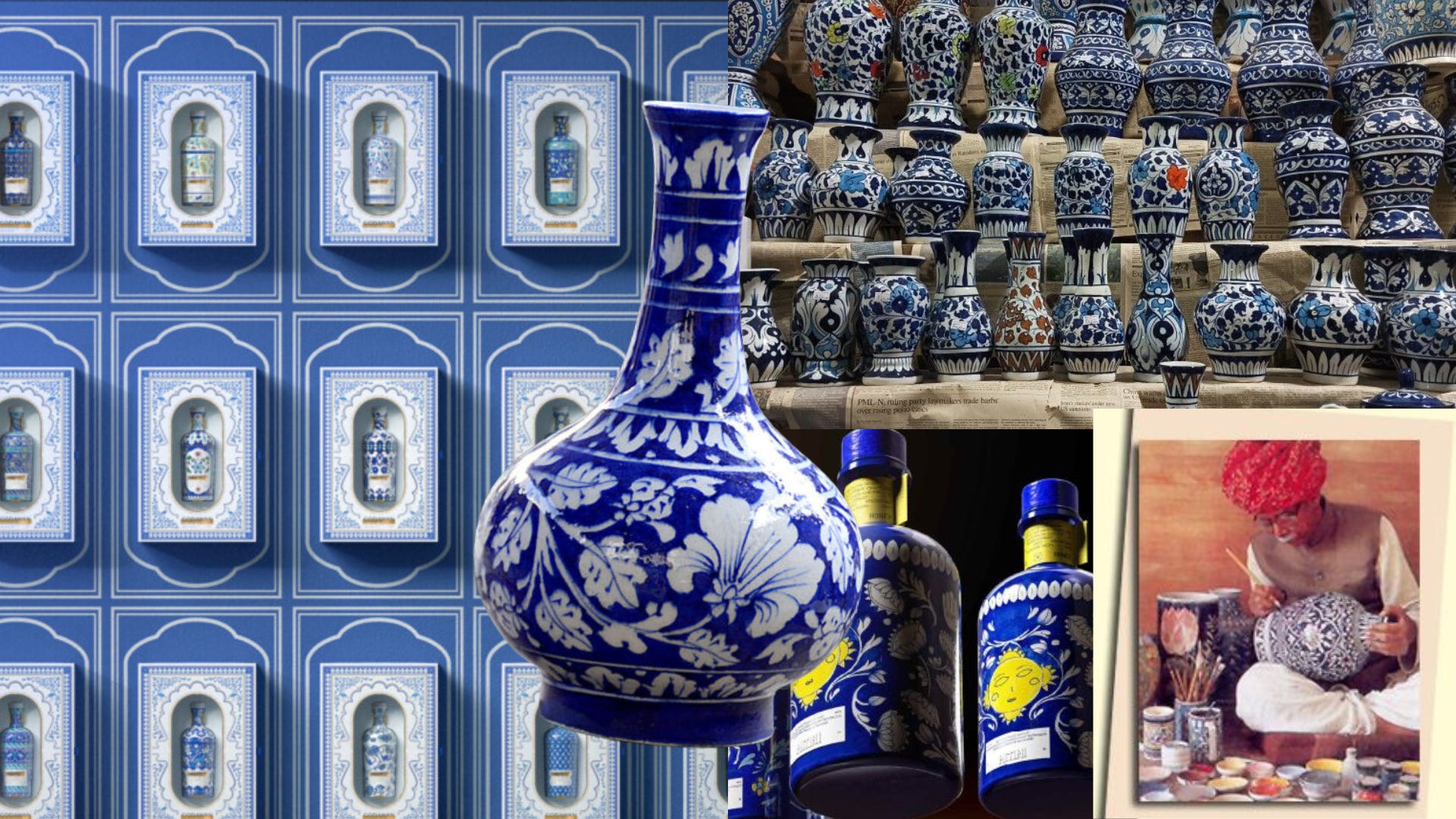
Later that year, in September, Godawan 173, a limited-edition Indian single malt whisky produced by Diageo India and designed by Butterfly Cannon, launched at The Savoy in London. The packaging drew directly from, yes, Jaipur Blue Pottery, marrying the craft’s signature cobalt motifs to a luxury spirits bottle intended to honor both the endangered Godawan bird and the fragile art form it shares its name with. It won aD&AD Pencil and a One Club for Creativity award. The Dieline has also recognized it for its originality of thought.
Kasat noticed and posted about it on LinkedIn.
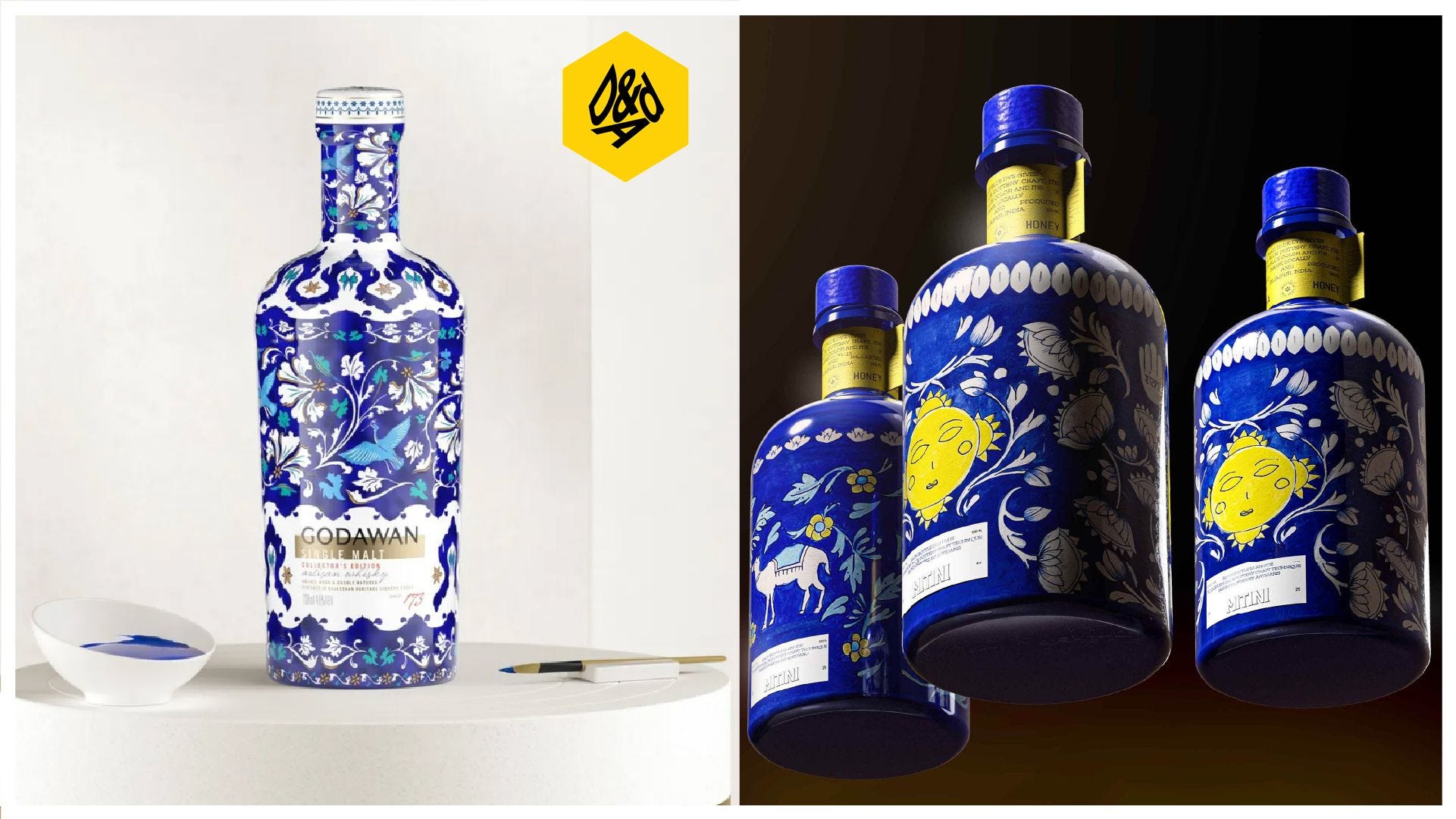
“My first reaction was an unhelpfully loud, ‘Well, that looks exactly like what I did,’” she told me. In her LinkedIn post, she questioned where original thought goes when better-funded players enter the room. It’s an interesting conversation around combining cultural inspiration with creative ownership. I don’t know the answer, but who really can lay claim to this craft? Or any craft?
The conversation Kasat started touches something we’ve all been seeing for years. We are in an unusual cultural moment in which Art Nouveau linework, Art Deco geometry, folk craft, and artisanal technique have come to the forefront of design to convey a sense of authenticity. It’s a likely reaction to AI-generated imagery, which has flooded visual culture with technically competent images that absolutely feel completely hollow. Craft, on the other hand, becomes proof of humanity. Historical reference becomes evidence of research, intentionality, and rootedness.
On the opposite end of the spectrum, dupe culture has quite literally taken over consumer goods, whether it’s perfume and fashion dupes or water bottles and probiotic gummies. The design industry has its own version. Ideas, directions, and aesthetic territories travel far and wide. They move through student portfolios, awards websites, Behance pages, Instagram saves, and mood boards. And when a bigger studio or global brand picks up a similar thread, there is often no clear line between inspiration and appropriation.
The question Kasat is raising isn’t whether Blue Pottery belongs to her. She’s very clear on that. “I am not claiming ownership of the endless possibilities the craft holds,” she tells me. “It would be as bizarre as if I claimed a potato because I saw it first.”
A student and a major global agency both looked at the same endangered regional craft (master potters refused to share their trade secrets with fellow craftsmen), identified the same opportunity to incorporate it into luxury spirits packaging, and arrived at visually similar outcomes. There’s an overlap, but it also describes how design works.
Jaipur Blue Pottery, with its instantly legible visual identity, its Mughal-era roots, and its documented precarity as a dying tradition, was a culturally loaded subject waiting to be picked up. It’s precisely the kind of material that many creatives are not just enamored with, but the kind of craft they’re essentially primed to discover.
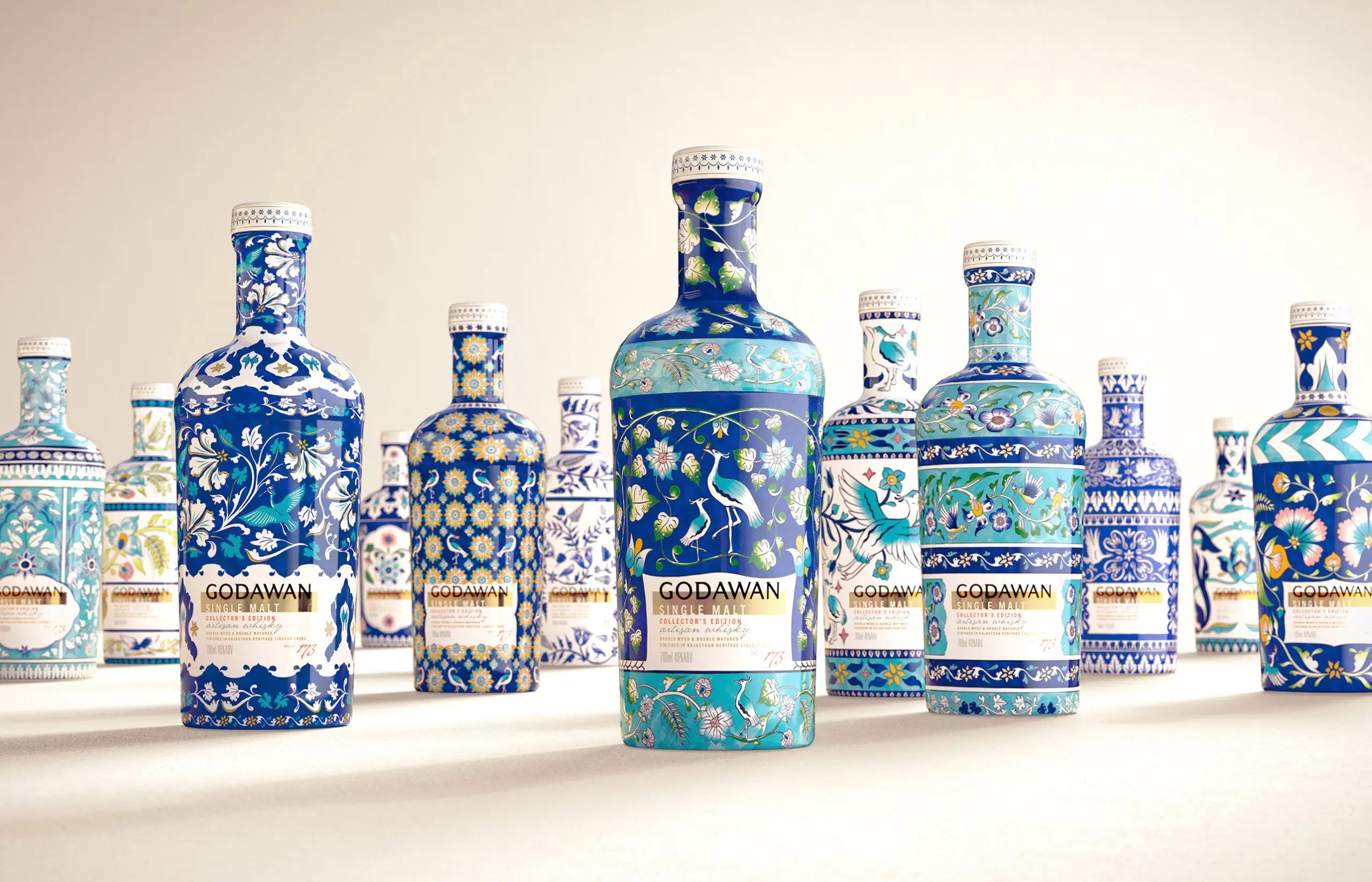
Butterfly Cannon responded directly in the comments of her LinkedIn post, noting that Blue Pottery was one of several creative routes explored for Godawan toward the end of 2024, and that on projects of this scale, significant time passes between concept development and final execution.
“We had been building the Godawan brand alongside Diageo India from its earliest beginnings, long before anyone had heard of it,” Butterfly Cannon Co-Founder, Jon Davies, told me. “That meant spending time in Rajasthan, immersing ourselves in its landscapes, meeting its people, and discovering the extraordinary crafts that give the region its distinct identity. Jaipur Blue Pottery was one of those early introductions that stayed with us.” The collaboration extended to working directly with Dr. Leela Bordia, one of the foremost custodians of the craft, and her team of artisans, every sketch shared, every motif discussed. “The final decisions weren’t made in isolation by a design studio; they were the result of ongoing dialogue between brand owners, designers, and the people who have dedicated their lives to preserving the craft itself.”
Which I totally believe, but I also believe that the internet moves quickly, too. And who’s to say that someone on the Butterfly Cannon team wasn’t inspired by Kasat’s work? Even peripherally or unconsciously.
Kasat graciously received the agency’s comment. “Thanks for sharing your perspective,” she replied on the LinkedIn post, “and congratulations on the fantastic work on the project. It has definitely started a conversation around drawing inspiration from cultural crafts and traditions.” Which is a generous read, but also, notably, a shift in framing. The post that asked whether Godawan had taken “moving parts from an idea already in circulation” became, in the comments, a broader conversation about cultural inspiration.
None of this is to say that Kasat is wrong, but there’s a point at which taking to the internet to accuse someone of something should perhaps start as a private conversation first. The day I forget about Andrew Benin, Graza’s founder, taking to LinkedIn to call out Brightland and its founder Aishwarya Iyer by name, writing that he viewed it as ‘a blatant disrespect’ and that he was ‘choosing to voice his discontent’ for the brand packaging their olive oil in a squeeze bottle, is the day I die. Benin acknowledged he’d been told to ‘hush’ and ‘not be rash,’ and did it anyway. Which, fair. But the public callout turned what could have been a direct conversation into a PR nightmare for the brand.
Though it’s worth noting that the case involved two direct competitors in the same product category, which makes it a different kind of allegation than two designers independently reaching for the same centuries-old craft.
But, don’t get me wrong, I also understand where she’s coming from. When you build and design something that you’re proud of, there’s always a sense of ownership, and there should be.
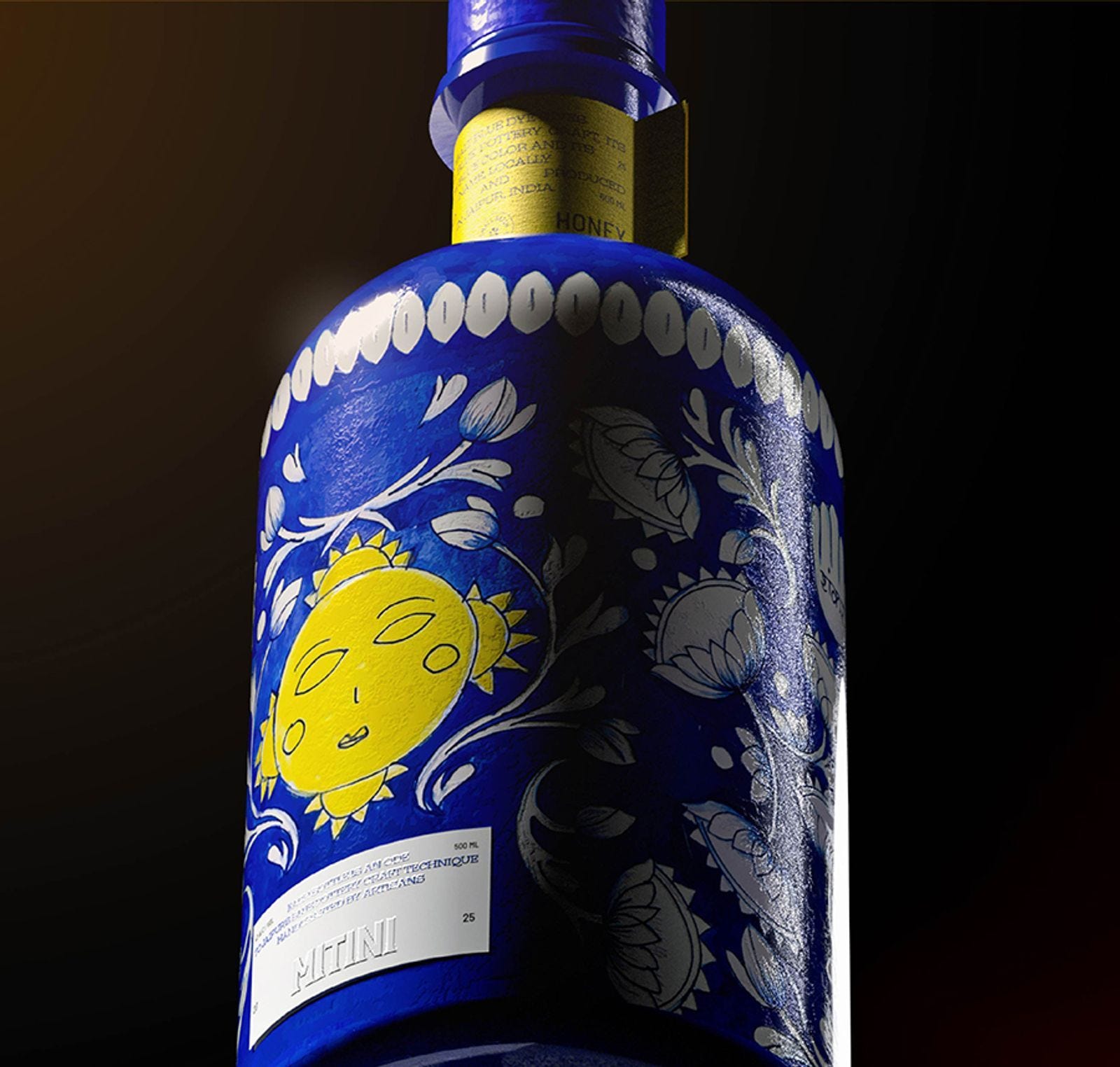
Even if the Godawan case isn’t the clearest example, there is a structural asymmetry in the design world. Student work and independent concepts circulate within professional communities. They get seen, absorbed, contextualized. Kasat won an award for her work, which was publicized. The designers who benefit most from that circulation are rarely the ones who originated the idea. A concept that wins a student award and gets coverage in design media in April lives in the same visual ecosystem where agency mood boards get built in October. Whether anyone makes a conscious connection or not, influence is rarely traceable and almost never credited.
“I am describing the all-too-familiar experience,” Kasat wrote, “of watching an original idea remain publicly visible and largely overlooked until a better-funded player like Diageo India attaches it to a bigger narrative.”
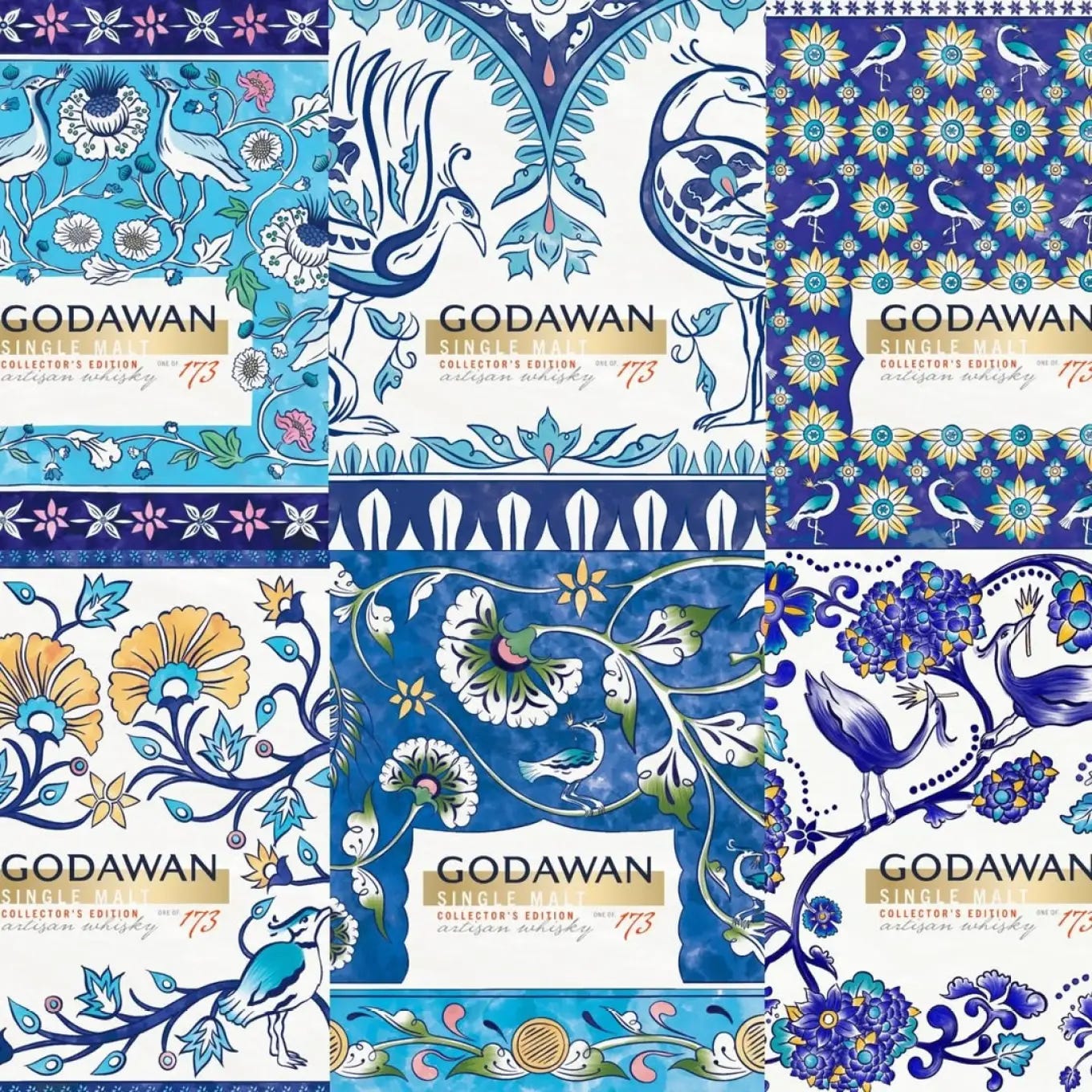
The visibility gap between student work and professional work is real, but it isn’t total. Especially now with how the internet works. And sometimes two designers look at the same beautiful, endangered craft and see the same opportunity.
The harder question this moment raises isn’t about Kasat or Butterfly Cannon specifically. It’s about what happens when an entire industry reaches for the same historical and craft references simultaneously. As Davies put it. “A project genuinely engaging with craft starts with curiosity and humility. It asks where this tradition comes from, who protects it, and how the work can contribute back to it. Simply borrowing the visual language without that understanding risks turning a living heritage into decoration.”
The question of originality in design has always been complicated. It gets more complicated when the raw material is a living craft tradition, when the cultural stakes are high, and when the design industry’s hunger for “authentic” and “craft” references moves faster than its ability to think carefully about what that appetite really means.
It’s certainly no coincidence that both landed on this craft as a source of inspiration.

Design your label in Kittl, see it on a photorealistic product mockup, and export CMYK-ready files — all in one place. No switching tools, no render wait. Just the visual they need to say yes, and the production file ready to go. Use code DIELINE for 25% off any subscription.