

I live in Savannah, Georgia. Every day, I hear the tour bus trolley rolling by my house ferrying visitors through a retelling of what this city used to be. I walk my dog through the historic squares and admire the Spanish moss draping the oak trees, sunlight twinkling through the cracks. Everything about this town is quaint.
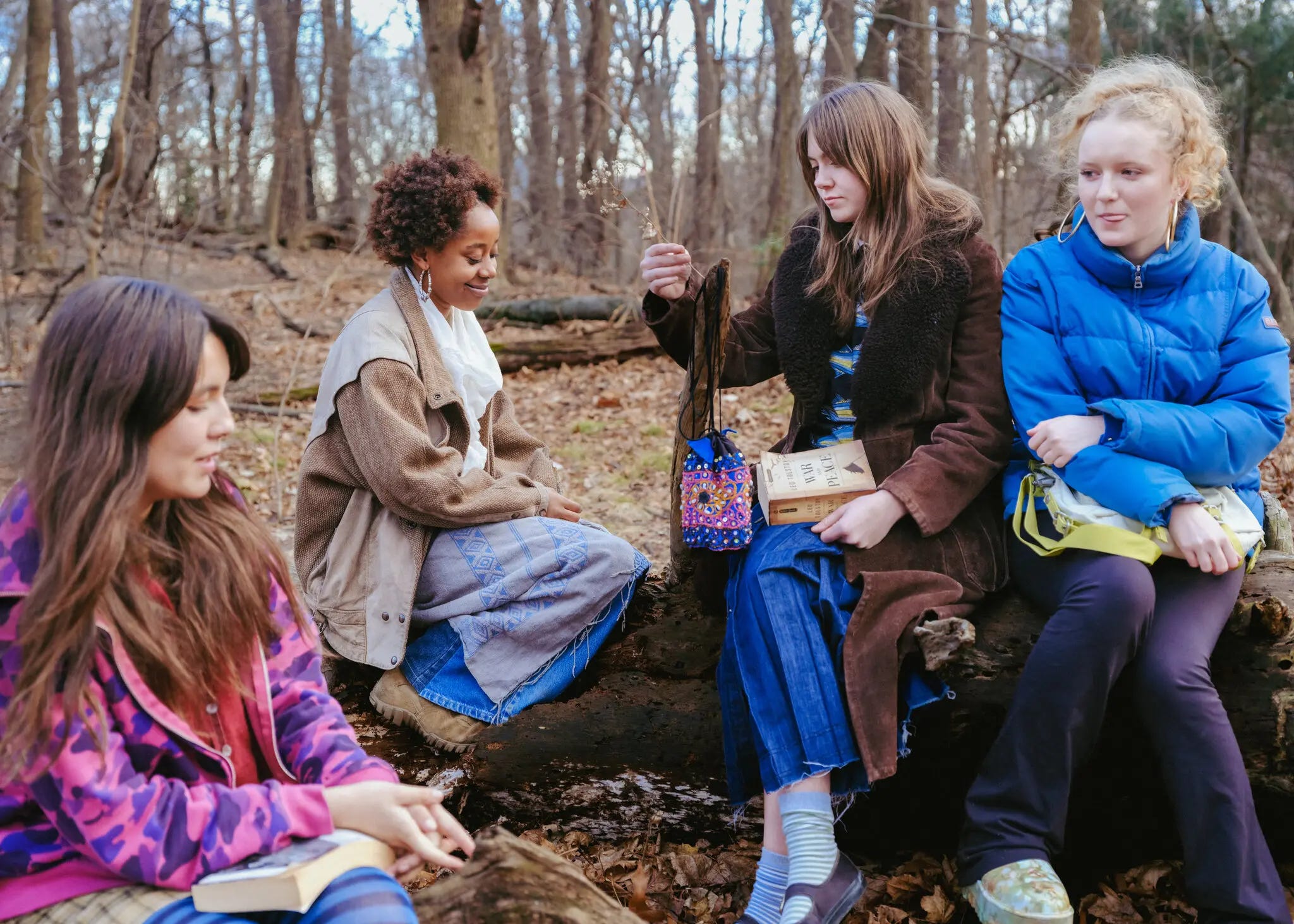
My neighbors and I meet every evening at five o’clock sharp in the park by the fountain with our dogs. We claim a long stretch of the benches, and we talk about our days, what’s for dinner, what books we’ve been reading, and, lately, about one member’s cancer journey. I am the youngest person there by a solid twenty years, and the most pleasing part of it all, for me at least, is that nobody at that bench knows what a Labubu is. Nor do they have an opinion on the shoe, color, or song of the summer. Nary a thought is shared about the “taste economy.” For one hour a day, I am completely offline, talking to people who seem to be, from all appearances, always offline.
It’s refreshing in ways I couldn’t comprehend at first.
Just the act of talking with people with whom I don’t have much in common besides our dogs and a zipcode, I realize just how important it is to get off the internet. Which is rich, coming from someone (me) whose job it is to be very online.
Since 2003, the average American has added roughly 24 hours of solitary time per month, while face-to-face socializing has dropped by about 20 hours per month, already underway before the pandemic made it catastrophic.
The average American now spends 2 hours and 16 minutes on social media every day, and my personal screen time will be taken to the grave with me. Multiply that across a lifespan, and you begin to understand how we got here. We’re living in a country of people who are technically more connected than any humans in history, and lonelier than almost any of their predecessors.
But we have spent the better part of a decade where “being online” is an entire personality. My own Instagram bio used to read “chronically online,” as if it were a badge to be proud of. And for a while, it was something I was proud of. Being the person who found the thing first, like the meme, the micro-trend, the obscure reference, carried a sense of social currency.
But I’m starting to feel and sense a shift.
The narcissism that social media has always enabled has stopped feeling aspirational and started feeling like an endless hamster wheel. A race to nothingness. Everyone from the president to the person next to you at a red light performs on the platforms, for an audience of people also performing, and somewhere in there, the question of what any of us actually think or feel or want becomes unclear. And research backs this up, 82% of Gen Z adults associate social media with the word “addicting,” and 40% say they wish it had never been invented.
A 2025 Deloitte survey found that nearly a third of Gen Zers deleted a social media app in the previous 12 months. Film cameras, paperback books, and “dumbphones” are making a comeback. Even media brands are feeling the reversal. Country Living, a Hearst publication celebrating small-town life, antique collecting, and scratch-made baking, has seen 57% year-over-year membership growth, with Gen Z and Millennials now making up 51% of its audience, up from 36% the prior year. The hobbies driving that growth, antiquing, crocheting, and baking, are, as its editor-in-chief put it, “all about surprise and delight.”
People are trying to leave. It’s been dubbed a “Dopamine Diet,” and, in effect, it’s a behavioral strategy that involves temporarily abstaining from highly stimulating digital activities. The goal is to reduce overstimulation from algorithms, notifications, and endless scrolling, helping the brain’s reward system recalibrate and break compulsive habits.
We’re seeing it from Luddite Teens, sure, but we’re also seeing it on a larger scale.
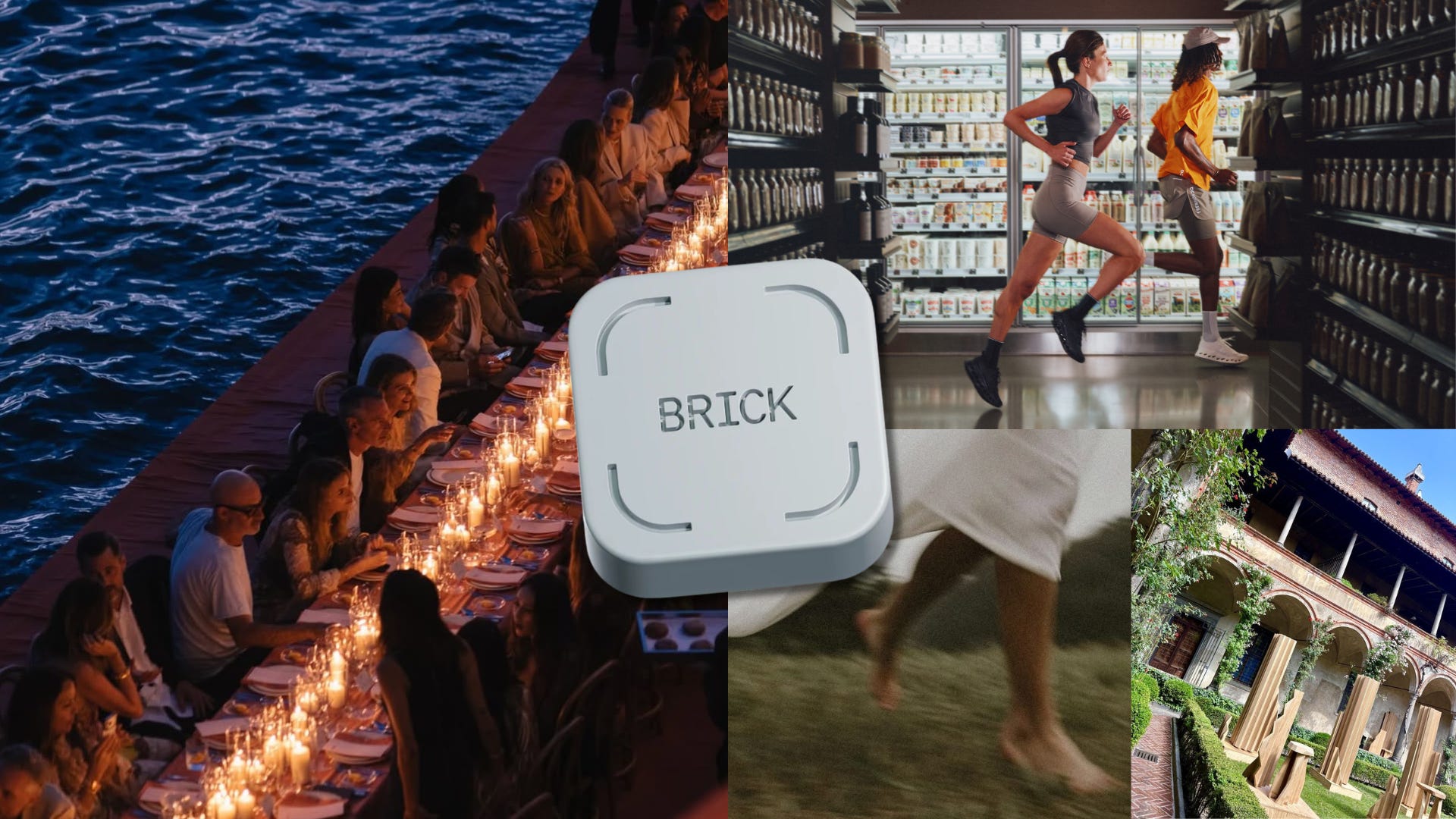
Phoebe Bridgers locks phones in bags at her shows, and audiences lose their minds with gratitude, which says everything about how relieved we are when someone just takes it from us. The best concert I’ve ever been to was Florence and the Machine at Gov Ball in 2019, when Florence threatened to throw anyone visibly holding a phone out of the concert. The most memorable sporting event I ever went to was The Masters, where phones and cameras are vehemently banned. And lest we forget the virality of products like Brick, which lock you out of certain apps.
Eventbrite reported a 567% increase in phone-free event listings between 2024 and 2025, with 49% of Gen Z and Millennials saying they want less curation and more real moments. The pouch company Yondr, which makes this all possible, has now secured over 20 million devices across more than 10,000 events.
Being offline is its own form of luxury.
Brands, naturally, have noticed. The offline moment has become a marketing strategy, which is either poetic or depressing, depending on your tolerance for irony. Brand dinners and events are being positioned as refuges from the feed, curated evenings where the whole point is that you’re not supposed to post, which of course everyone posts about anyway, because the whole thing was designed to be posted about. Zimmerman hosted a dinner by the Mediterranean Sea, and Byredo hosted an event called “In Conversation With” that evolved into an exhibit in collaboration with artist Jeanguillaume Mathiaut. The most interesting one, in my opinion, was the Anthropic dinner for Claude. Of course, there was a conversation prompt on each plate, too.
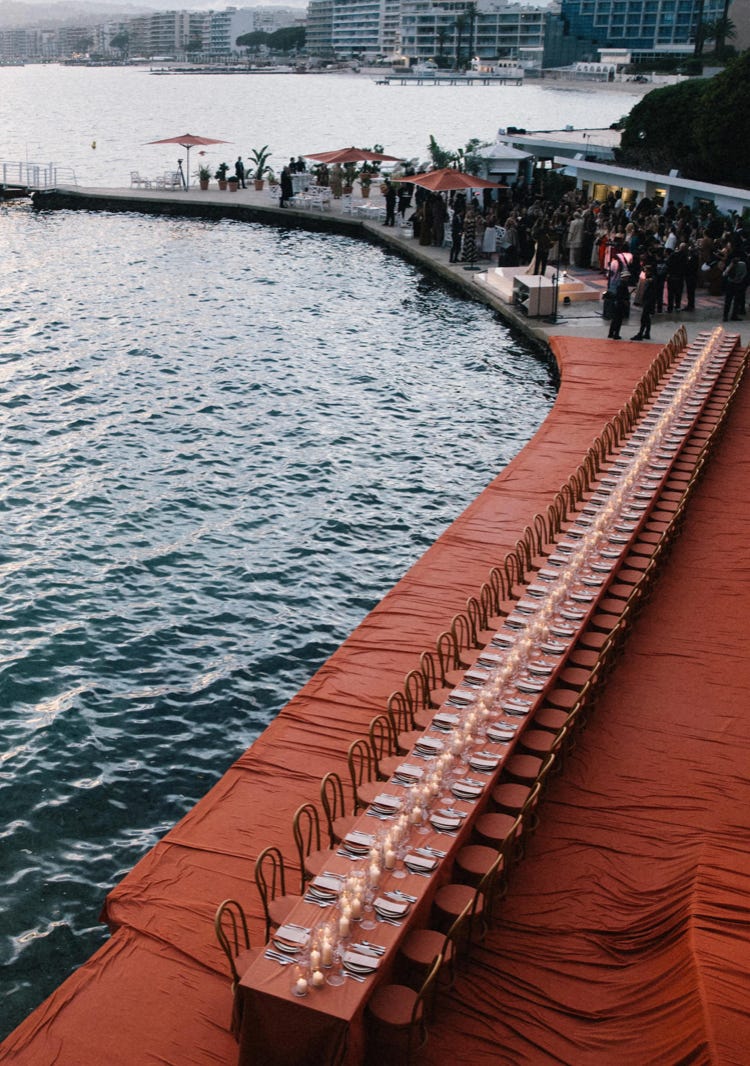
But the forced authenticity of it is almost impressive. Can you feel the brief underneath every candle? Help creators get offline so they can post about it?
Earlier this year, Pinterest launched a phone-free activation at Coachella. Upon entering the event, guests were to lock their phones in a pouch and step into an experience “designed for uninterrupted joy.”
A genuine desire to disconnect exists, but the moment a brand tries to create space for it, does it become fake or even performative? Brands are increasingly discovering that the more they try to perform realness, the less real they seem, and the consumer who’s already exhausted from performing realness themselves has a very low threshold for detecting it in others.
So what does this mean for the CPG space right now? For the brands spending their budgets trying to reach people who are increasingly suspicious of being reached, or for the consumer who no longer feels the pull to constantly scroll?
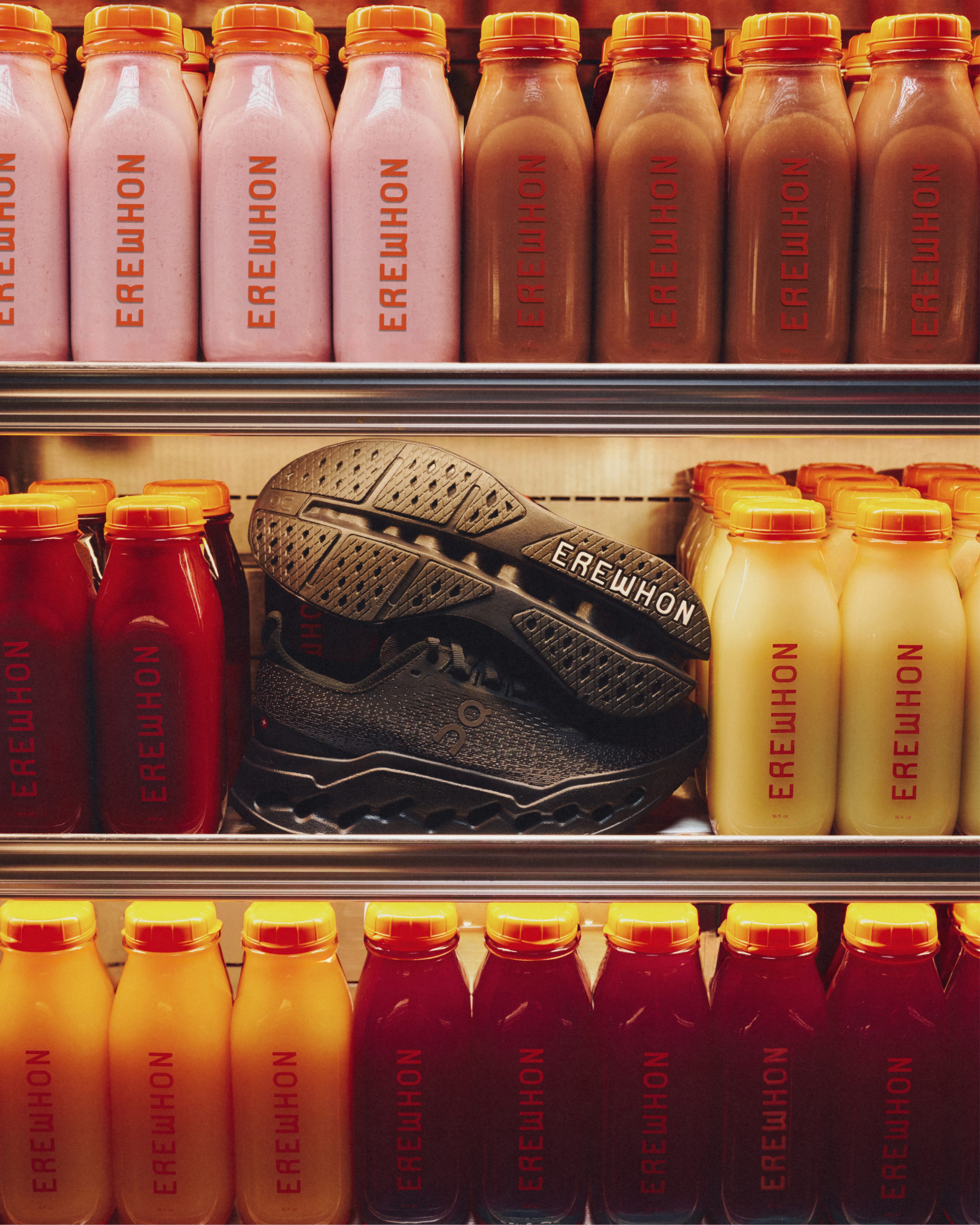
It’s not easy for brands to think outside of being online or wanting/needing to be posted. But a few brands are showing up in smart ways. On and Erewhon announced a multi-year partnership built around a community-led Wellness Club. It’s a series of running, training, and recovery events across LA, alongside a co-branded post-run recovery juice available in stores.
In 2025, the All-American Rejects had a “House Party” tour, playing intimate shows in bowling alleys and fans’ backyards, with Mike’s Hard Lemonade sponsoring the final tour stop. There was no elaborate production, but the intimacy of the setting created the magic. Mike’s bought into an inherently low-documentation experience that creates a strong, lifelong fan base for its consumers.
In February of 2026, Fishwife took a tour of local bagel shops around the country to celebrate the launch of their new smoked salmon. And Graza has just announced a partnership with the Food Network on a Food Truck Tour across five cities serving up “super tasty bites,” according to their website. These tours are a great way to show up in people’s routine lives, not their feeds, and create a more personable and memorable experience. Not necessarily to be posted, but to be experienced in real life.
What all of these brands are creating are moments that force people off their phones in ways that build connection. It’s less about creating branded moments and more about creating a brief period when people with a shared love of a brand can build a sense of community.
What will inspire people to get offline and enjoy lived experiences without the pressure to post about it? What cuts through right now isn’t a campaign designed around disconnection. It’s something so good that people forget, just for a moment, that they were “supposed to” document it.
Until next week,
AI Won’t Replace Great Teams. It Will Redefine What They’re Capable Of.

The best creative teams aren’t using AI to replace human thinking. They’re using it to remove friction, scale high-quality work, and give their teams more room to focus on creativity, strategy, and brand impact. Join us to learn six practical AI plays and the leadership strategies helping modern teams do more than they thought possible.
This is such a fantastic piece, Chloe! The paradox of brands hosting phone-free events just so attendees can later post about how 'offline' they were is hilariously accurate. You completely nailed the shift toward true disconnection, when an experience is genuinely that good, people simply forget they were 'supposed' to document it.
I curate a blog here on Substack and I am always looking to connect with writers who bring this kind of sharp, cultural insight. Would you be open to a mutual subscription exchange to support each other's work? No pressure at all, of course. Keep the great essays coming! ✨
Your point made me think about how brands have often misunderstood what social media was actually good at. It has the potential to help brands become part of people's lives and communities, but it often gets treated like another TV spot or print ad—a place to push messages instead of creating something people wanted to participate in.
This line made me laugh because I could completely picture the meeting (and I'm pretty sure I've sat through versions of it): "Can you feel the brief underneath every candle? Help creators get offline so they can post about it."