


Look, I’m no doctor, but I’ve always wondered how and why Listerine had cornered the market on dissolvable strips. It has crossed my mind many times that Tums should try them. Or Advil. Not to get too carried away, but I even think there’s a world in which Kraft could make cheese slices as thin as a dissolvable strip to lay delicately across a bowl of chili, though that’s a thought for another day.
The point is, apparently I’m not the only one with these thoughts, and wellness is starting to melt in your mouth.
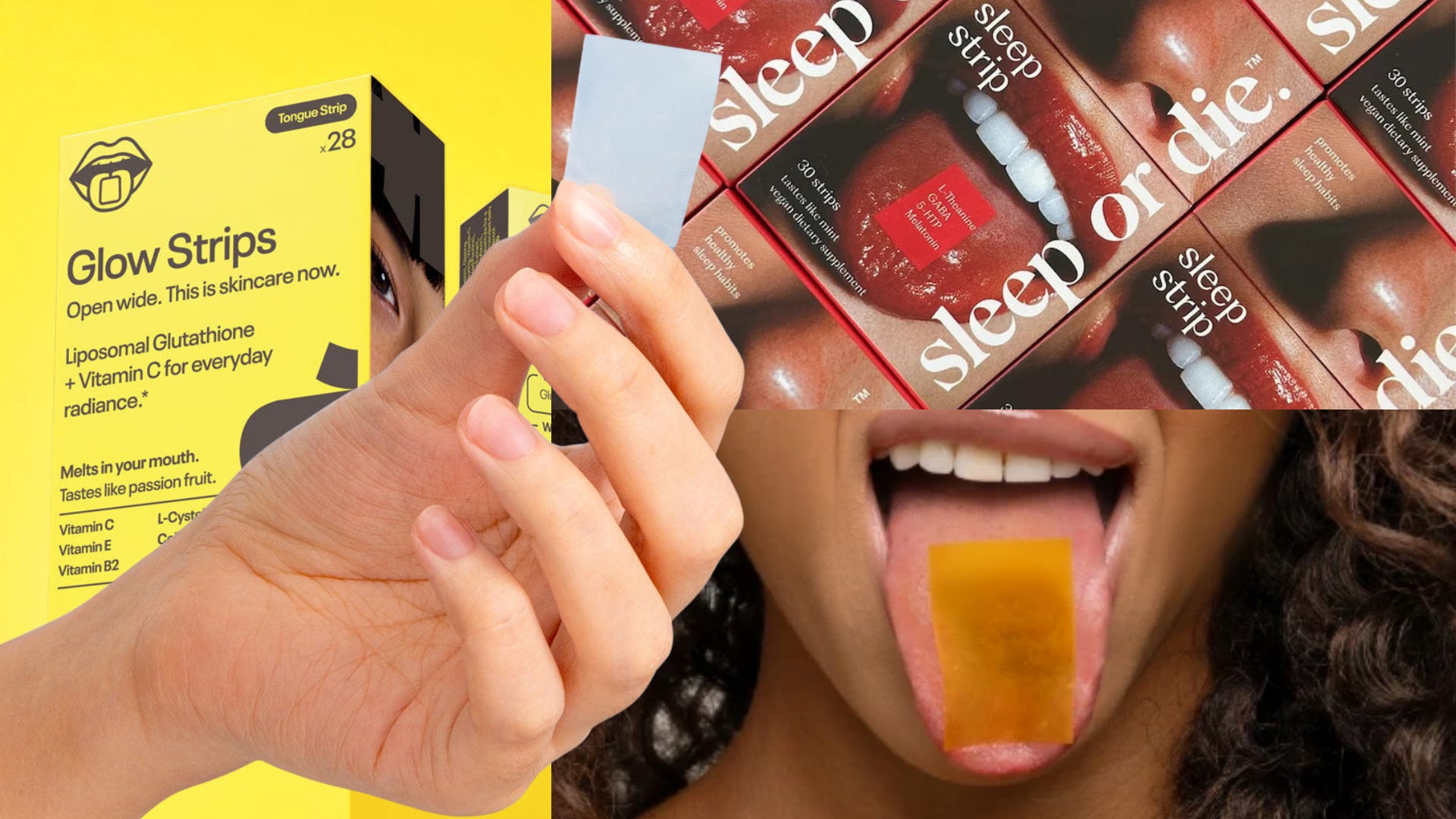
We already know what to do with a strip. Thanks to Listerine, the act is decades old, and that familiarity helps explain the format’s appeal. StripIt, an LA startup from brothers Noy and Vem Chatoyan, launched this summer with Sleep and Digest strips. Its pitch focuses less on what’s inside and more on how it goes down. The founders watched family members struggle to swallow pills and decided that discomfort alone was enough to make people quit their supplements. Board-certified dermatologist Dr. Noreen Galaria, who treats skin cancer alongside her plastic surgeon husband, founded INNER GLOW, which built its name on sun-protection and anti-aging supplements before adding VitaMelt vitamin D strips. RIN, on the other hand, brings over a format Korean consumers already know well. Mother-daughter founders Dr. Youngja H. Park, a pharmacologist, and Candace Dannenbaum, a former managing director, launched the brand in the UK in September with passion fruit Glow Strips loaded with liposomal glutathione, vitamin C, and marine collagen.
And Sleep or Die, a Canadian sleep brand whose name says everything about its world, sells strips meant to help you drift off.
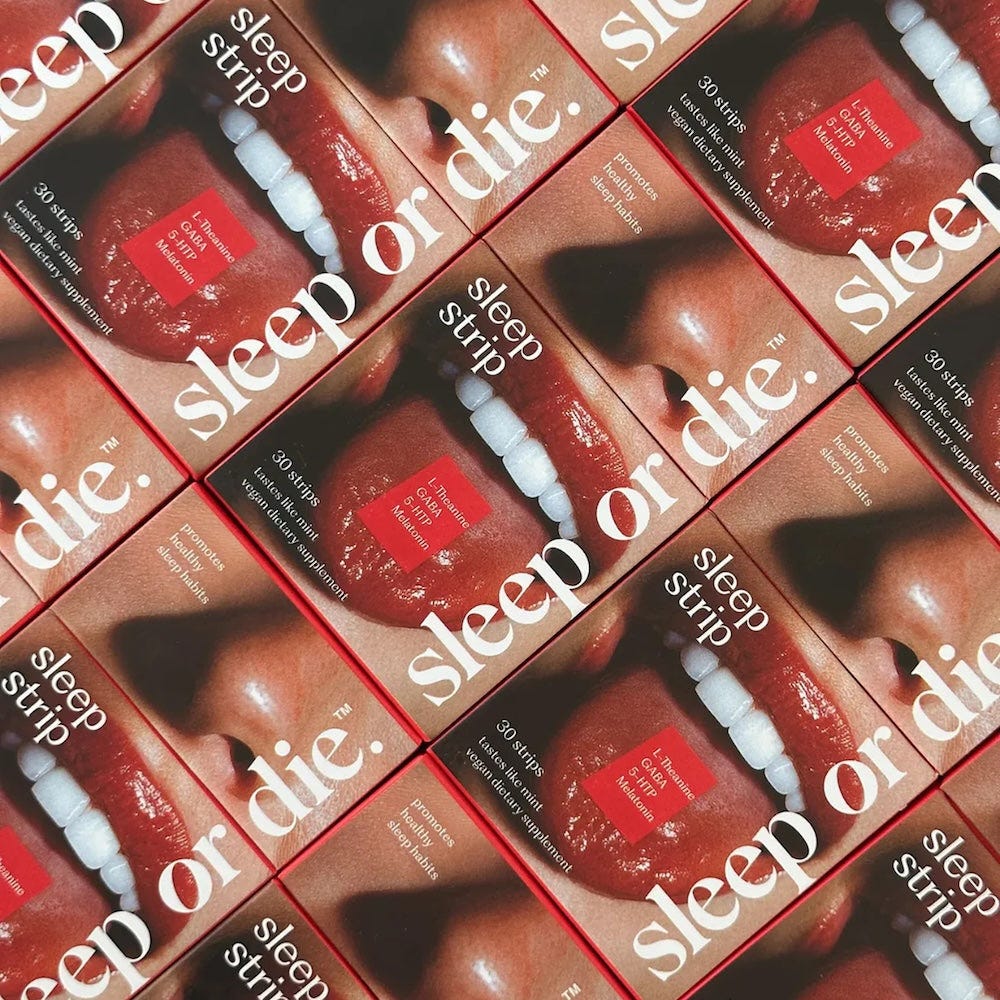
These brands are making supplements dissolve, but they’re also giving them a different cultural role. A vitamin bottle belongs in a cabinet, but a slim pack can become part of what you carry when you travel and, maybe most importantly, become part of your everyday ritual, ideal for throwing in a purse or pocket. I’ve written about the rise of the single-serve pack, particularly how it’s impacted the health and wellness space, and these strips are definitely an extension of that conversation, especially when it comes to convenience.
“One of the things I love about supplement strips is the freedom they give you. You don’t have to be at home or plan your day around taking your supplements. You can take them anywhere, anytime. They’re incredibly thin, lightweight, easy to carry, and dissolve right on your tongue without needing water,” notes Noy Chatoyan, co-founder of StripIt. “I think that simplicity is a big part of why strips are gaining so much attention. People want to take control of their health, but they also want it to be easy and enjoyable. And when you remove some of those everyday inconveniences, taking care of yourself becomes that much more accessible.”
That pocketability also brings me back to the cigarette packaging trend I wrote about. Part of that format’s appeal is physical: flipping the lid and sliding a single piece out of the pack. But the bigger draw is what those gestures signal in the context of wellness. They turn consumption into a little occasion, a small pause in the day. Supplement strips work the same way. Peeling one open and letting it melt on your tongue feels less like supplement stacking and more like a tiny ritual. Yes, it’s a nod to the “little treat economy” we’re all, frankly, tired of hearing about, but it also says something about where wellness is headed. People still want to optimize, but they don’t want it to feel clinically soul-sucking. A pill organizer and a 12-step supplement stack can make self-care feel robotic, and strips bring back some necessary whimsy.
StripIt’s founders describe individually wrapped strips inside a flip-top pack with a magnetic closure. INNER GLOW uses a slim tin for its VitaMelt strips. Both formats feel comfortable alongside gum, lip balm, and the other small objects that somehow become permanent residents of a bag. “Our goal was packaging that does two jobs: protect the product and make it easy to keep up,” says Dr. Noreen Galaria, the dermatologist who founded INNER GLOW.
This also has a big packaging impact because of its potential sustainable features. A tin can be refilled, reused, or tossed in the recycling bin, which is more than you can say for most plastic supplement tubs. And because strips are paper-thin, a month’s supply weighs next to nothing compared to a bottle of capsules, which means smaller boxes and lighter shipments. But it’s not all perfect: the individually sealed sachets that keep each strip fresh are usually made of multilayer foil and plastic, which is notoriously hard to recycle, so the format trades one bulky bottle for a handful of tiny wrappers. Whether that’s better or worse is debatable.
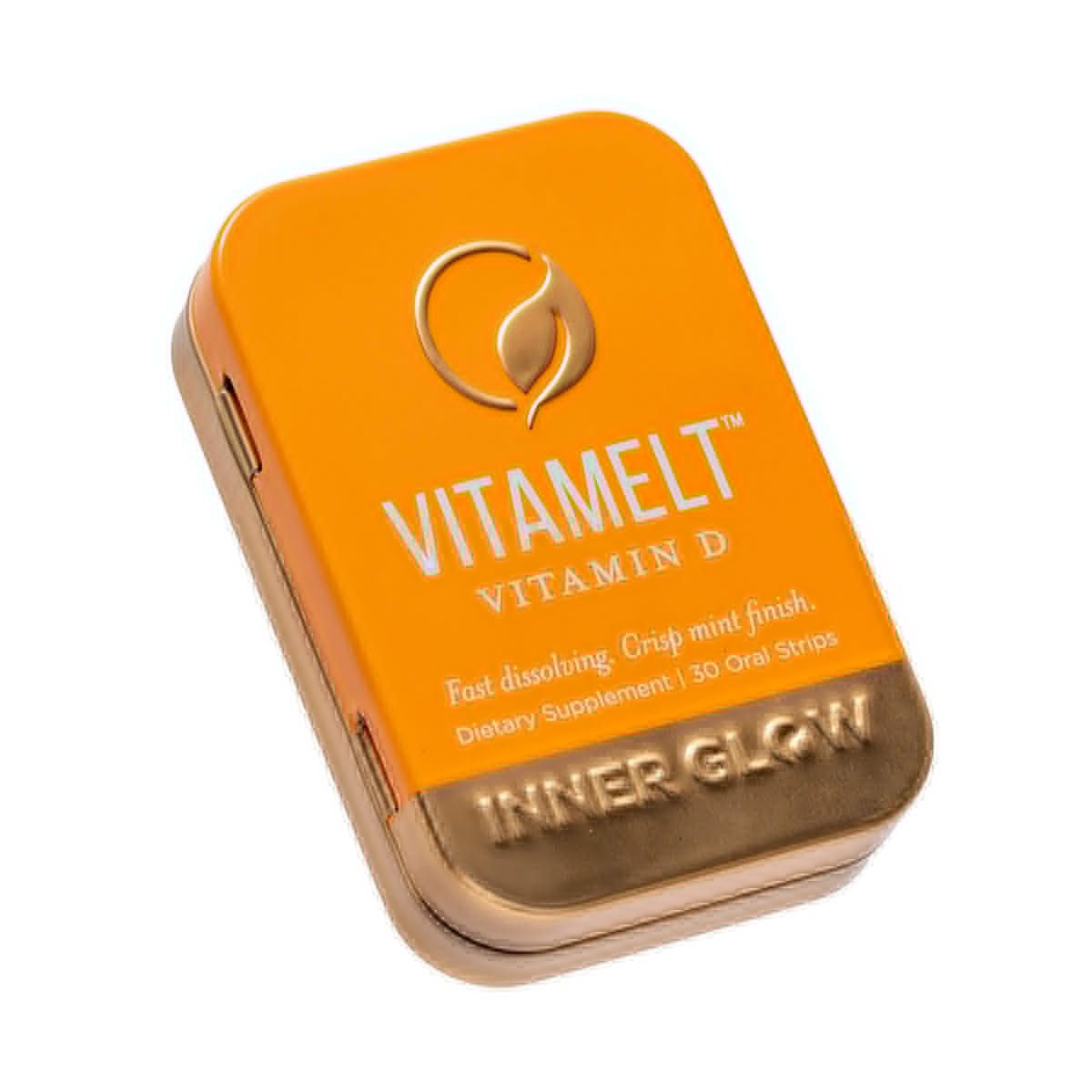
Keeping up with wellness now means fitting products into everyday life, and strips offer participation with little prep. “People want wellness to feel less like a chore and more like a natural part of their day,” says Vem Chatoyan, StripIt’s other co-founder.
Eye patches help explain what that can look like, because they used to be something you wore while getting ready in private. Now, though, they’re an accessory people wear out in the world, like on flights, at the coffee shop, on a Zoom call, apparently without a shred of embarrassment. Self-care has become an accessory, and strips fit right into that shift. The product itself disappears, sure, but the pack stays behind to carry the identity.
Supplements have always been a bathroom-counter habit, swallowed quickly, the bottle hidden even faster. A strip pulls that moment out of the medicine cabinet and into a purse haul, beside a latte on a café table, or mid-meeting, or passed to a friend at dinner. What was once a private act now happens out in the open, where other people see the new ritual and, inevitably, ask about it.
RIN makes its relationship to beauty explicit. Co-founded by Candace Dannenbaum and her mother, Dr. Youngja H. Park, the brand brings a Korean inner-beauty perspective to its Glow Strips. “We wanted RIN to look and feel like beauty, because in Korea that’s what inner beauty is,” Dannenbaum explains. That positioning helps the strip make sense alongside skincare.
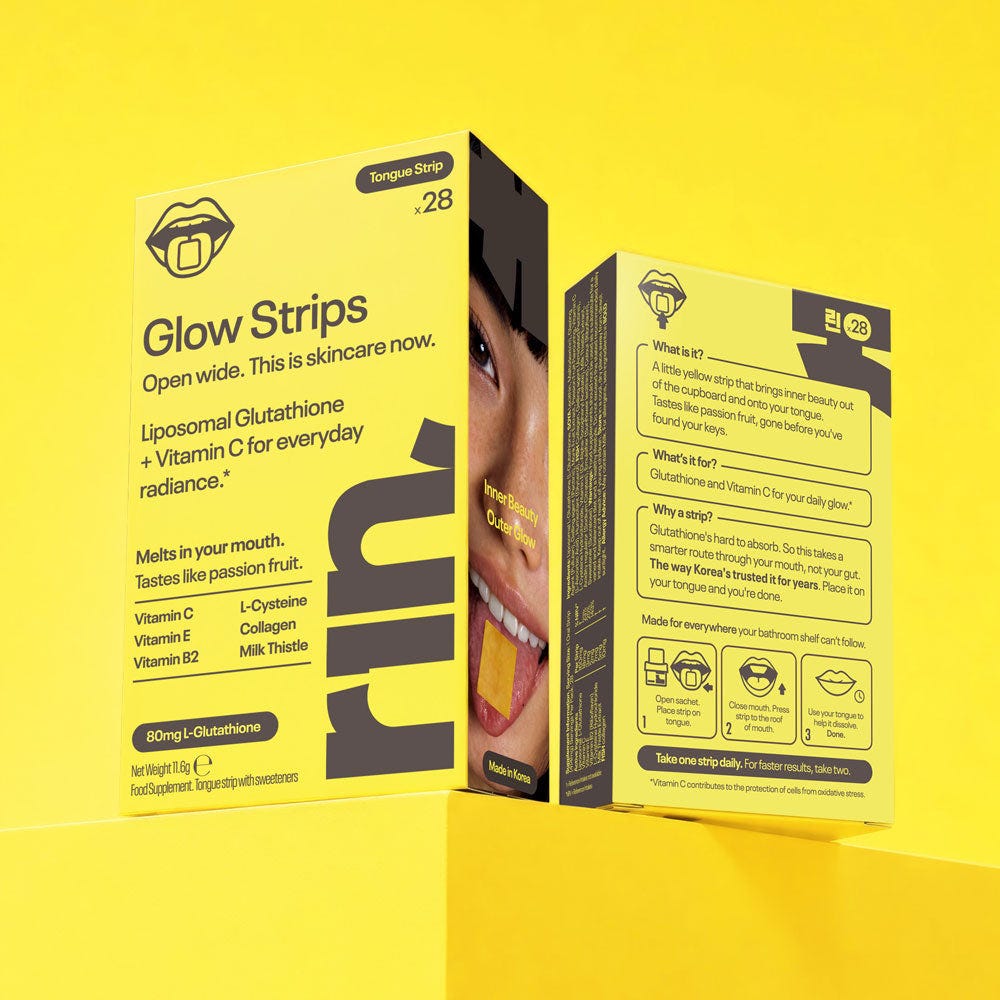
She goes on, “Strips are resonating because they’re easy and convenient. There’s pill and powder/mixing fatigue. No one wants another tub of capsules or bag of powder on the counter, and a strip needs no water and fits in your pocket. Snacking on skincare is a real concept in Korea.”
For brands, that creates an opportunity beyond making a supplement easier to take. In a category where the contents often look fairly interchangeable, the package gives people a way to express taste. A capsule doesn’t say much from across a table, but a distinctive pack of strips might, and in a culture where people want to show off what they’re into or what they know, a little tin does that efficiently.

And novelty absolutely matters. A strip gives an established category a fresh action: open, place, dissolve. The product includes a built-in demonstration. You can explain the experience by showing someone, which gives brands and customers something more immediate to share than another bottle of capsules.
Novelty alone won’t carry a brand, and Dannenbaum is the first to say so. “The products that last will be the ones with a reason to be in a strip. Not every ingredient should, or even can, be absorbed through your mouth. My advice to anyone looking at strips is to ask why it’s a strip. If the answer is only ‘it’s convenient,’ that’s a nice bonus, not a reason. The products and brands that last will be the ones where the format is doing real work.”
Pill fatigue is one thing, but actually struggling to swallow a pill is more common than you might think. In a 2026 study published in the International Journal of Language & Communication Disorders, 41.5% of respondents reported difficulty swallowing pills.
“I think the future of supplementation is ultimately about giving people better choices. And for vitamins, probiotics, and other ingredients that can be effectively formulated into strips, I believe this format has enormous potential,” shares StripIt co-founder Chatoyan. “We’re not trying to make every pill obsolete. We’re trying to make wellness more accessible to more people, regardless of their age, background, or lifestyle. Because taking care of your health shouldn’t be limited by how comfortable you are swallowing a pill or how busy your day might be.”
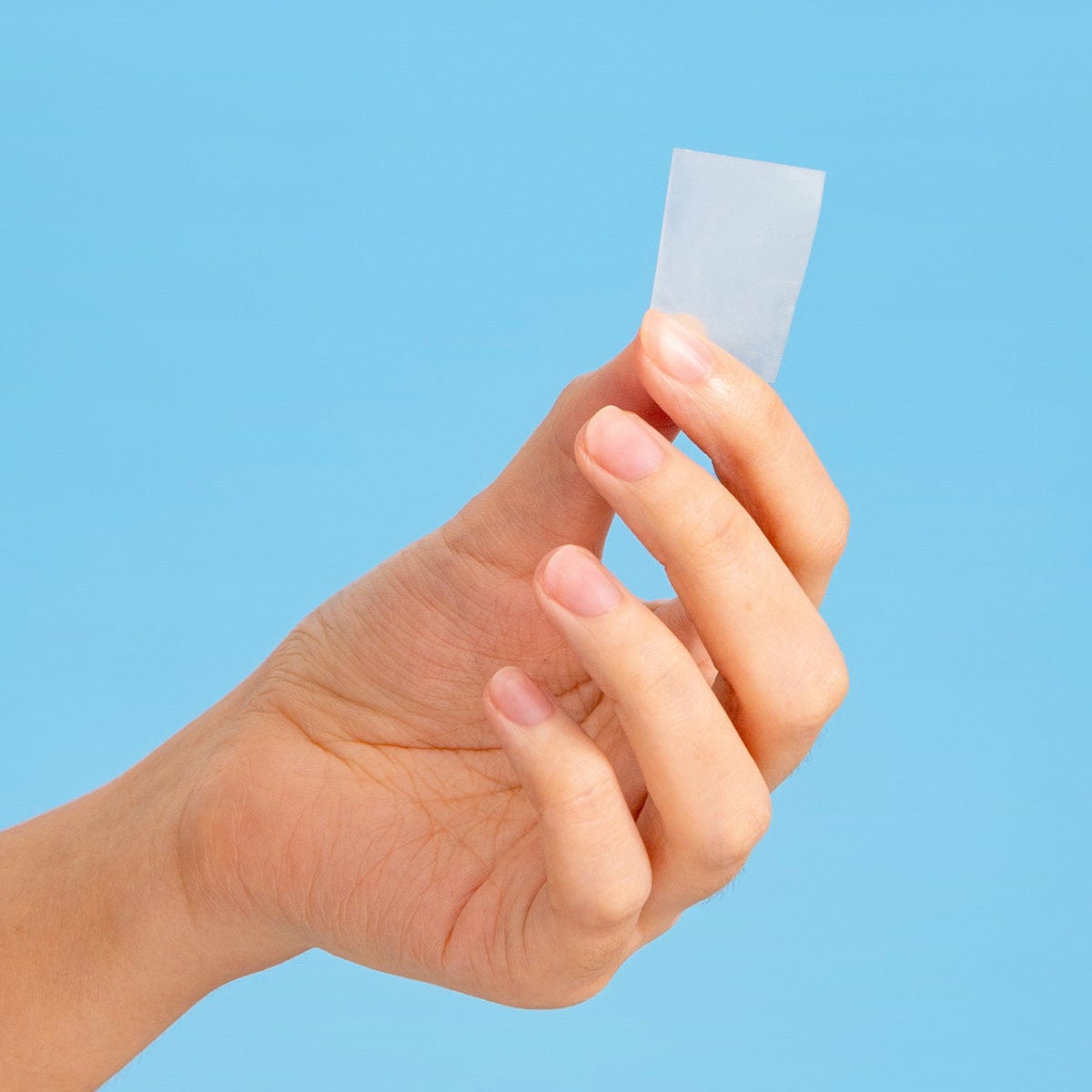
And of course, the strips’ efficacy is another factor. Can they ever be as effective as a pill? Noy Chatoyan helps answer this, saying, “There are limitations, and I think it’s important to acknowledge that no single supplement format is going to work perfectly for every ingredient. One of the biggest challenges is simply space. A strip is incredibly thin, so there are physical limits to how much of an ingredient you can fit into it. Certain supplements that require very large doses, for example, aren’t necessarily practical in this format.”
He continues, “What’s especially exciting for us is that our strips are formulated without added preservatives, yet have a stated shelf life of two years. The individual sealed sachets are an important part of that, helping protect each strip from moisture and air until the moment it’s opened. Unlike a traditional supplement bottle that’s repeatedly opened and closed, each of our strips remains individually protected until you’re ready to take it.”
The early science is encouraging for these strips, at least for some ingredients. A 2022 study published in Clinical Drug Investigation compared a vitamin D3 dissolving film with a standard oral vitamin D solution in 48 healthy adults and found they performed nearly identically, with the film absorbing slightly better. But Chatoyan’s point about space also makes sense: a 2025 review of orally disintegrating films notes that most can carry less than 40 milligrams of an active ingredient before the film starts to break down. In other words, a strip can do a vitamin D dose justice. But something like your daily magnesium, which usually comes in hundreds of milligrams, might not be as effective. It’s equally important to remember that supplements aren’t held to the same testing standards as pharmaceuticals; in fact, they don’t require pre-market approval or safety and efficacy testing by the U.S. Food and Drug Administration (FDA), which, in my opinion, is quite scary. That, however, is a whole other article.
Despite the lack of pre-market approval in the U.S., strips absolutely bring together several desires at once, like everyday wellness, beauty that travels beyond the bathroom, and brands that become an accessory, so there’s a lot of potential for these brands to succeed. The next chapter of wellness branding will be shaped by how comfortably products move through our social lives, and strips give wellness a pocket-sized ritual.
Now give me Tums and Advil in a strip.
Stay Fresh,