


My saved folder on Instagram is a rich, substantial archive of good intentions involving shallots, pot roast, and the most moist upside-down orange cake you’ve ever forked.
I’m forever considering becoming the type of person who keeps fresh herbs alive. But it’s Monday, I’m busy, and the gap between who I am and who I strive to be feels equivalent to the number of dishes I’d have to clean after making the recipe. For me at least, other things currently matter more than learning to cook chicken sous vide on a random weekday, but I’d still like to eat as though I’d made the effort.
Grocery stores seem to have identified this gap as a growth opportunity.
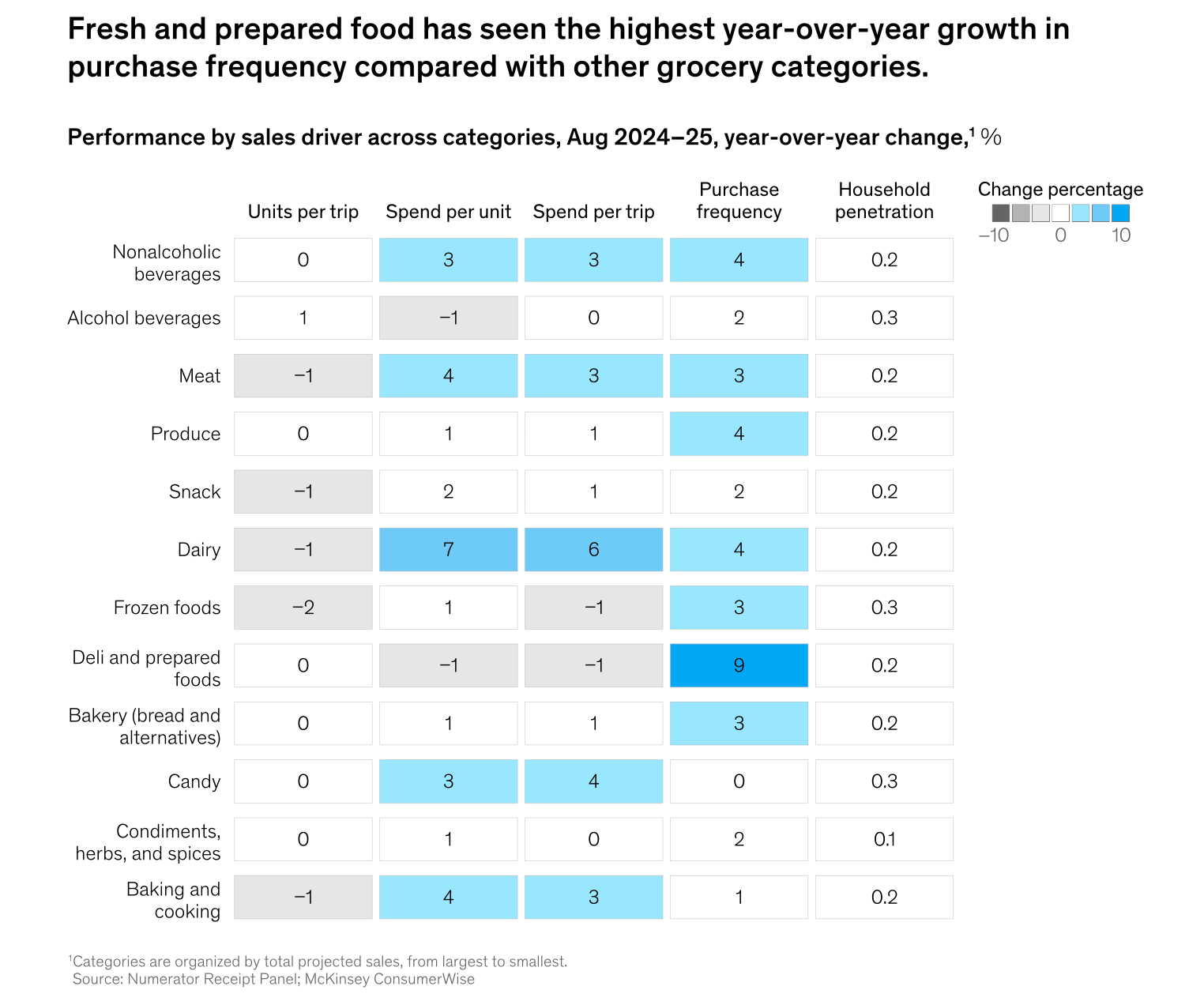
McKinsey’s The State of Grocery North America 2026 reports that roughly one-quarter of consumers buy grocery-prepared food instead of ordering from restaurants. Among people aged 18 to 29, that figure approaches one-third. Convenience and time savings are the leading reasons, and the grocery store is definitely becoming a place that serves dinner, you know, the kind that’s ready to eat.
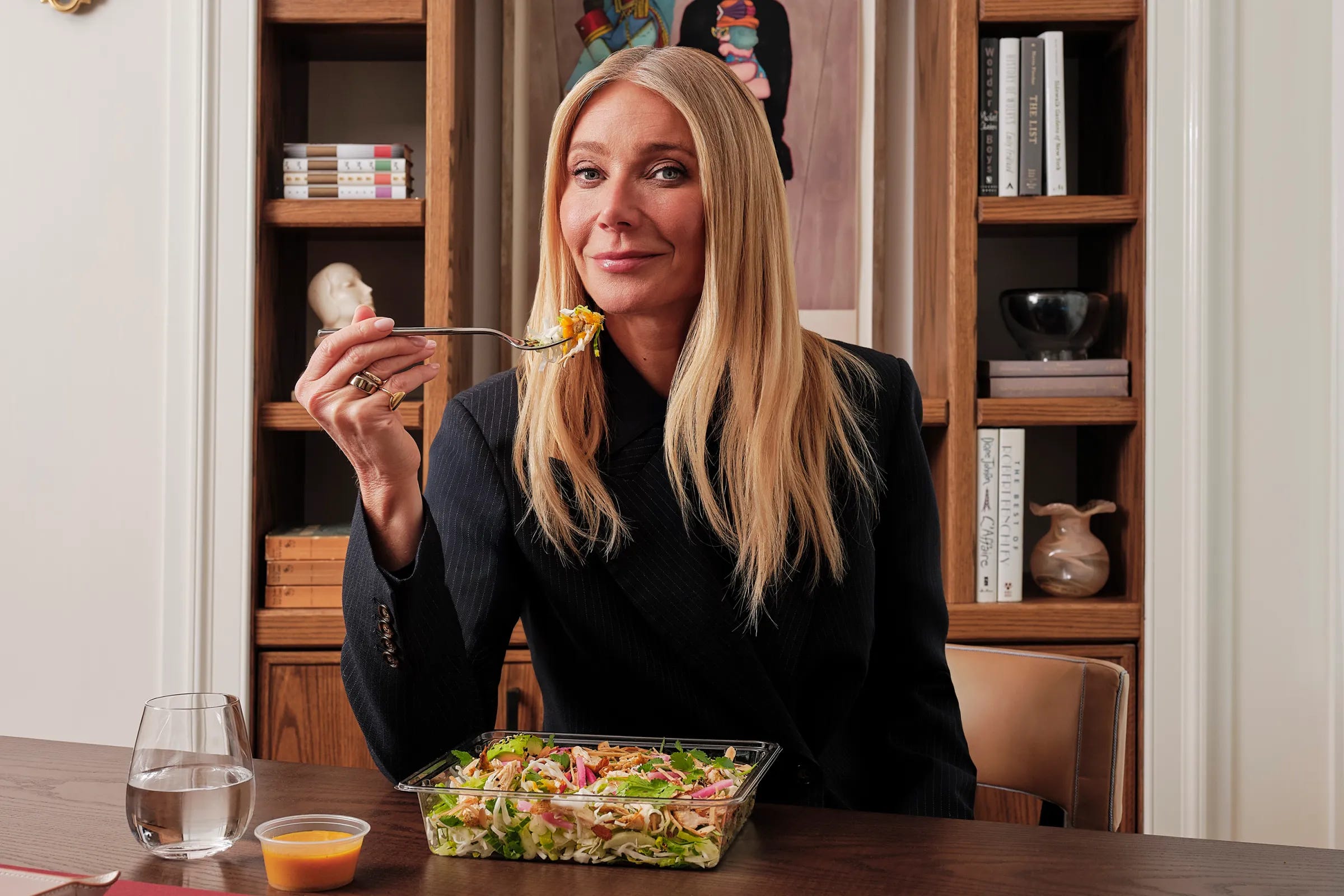
Then there’s a recent Grub Street piece by Rachel Sugar, titled What If You Never Cooked Again, that explores a world where prepared food can meet more and more of our daily needs. Butterfield Market, an upscale New York grocer that also sells prepared foods, and Goop Kitchen, Gwyneth Paltrow’s health-focused takeout and delivery business, fit right into that fantasy. I get the appeal, and I’m the first to admit I’d love to try a Goop Kitchen Blackened Salmon Bowl. But I also think these businesses illustrate aspiration more than how most people will feed themselves on a typical weeknight.
So what if you never cooked again? Lovely question. But what does that fantasy offer people whose grocery budgets are already stretched to the limit?
The same McKinsey report describes a consumer under pressure. US grocery sales rose 1.2 percent in 2025, while prices increased 2.2 percent and volume declined 1 percent. People spent more and bought less, a shopping experience familiar to anyone who has recently looked inside a grocery bag and wondered how they spent so much on so little.
The report proves a rising interest in fresh prepared food, sure. But reading its findings about convenience alongside its findings about cost, I couldn’t stop thinking about the freezer aisle.
A $25 Whole Foods hot-bar dinner is great in a pinch, sure, but a freezer stocked with slightly more affordable meals feels easier to digest, financially speaking.
AFFI and FMI’s2026 Power of Frozen in Retail report found that 40 percent of surveyed frozen-food shoppers eat it daily or every few days, up from 35 percent in 2019.
Shoppers noted they buy frozen food because it’s easier to prepare and cheaper. With money worries growing, they’re also more interested in cooking at home and wasting less.
The opportunity, I think, is to make the meals feel a bit more appealing.
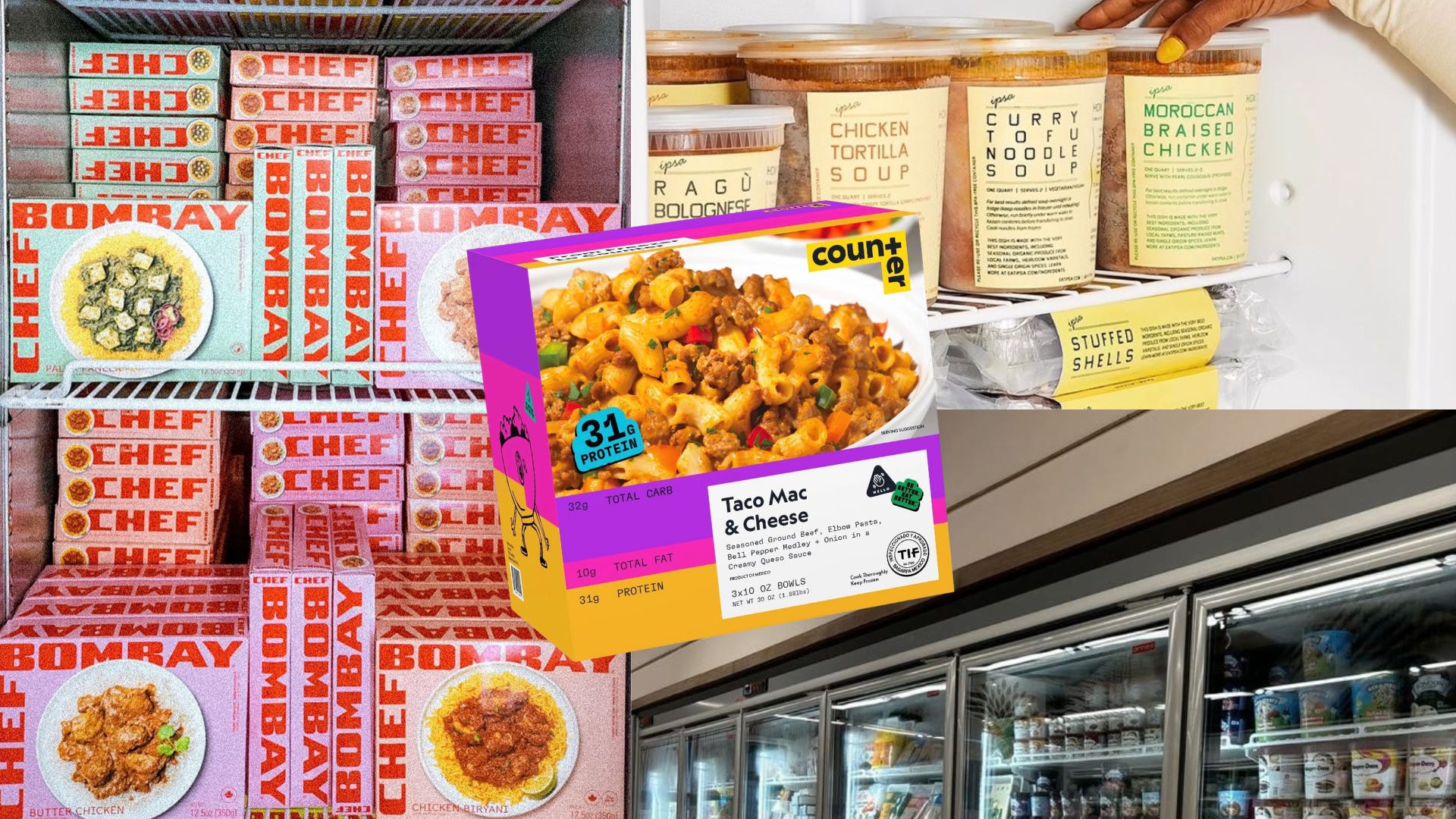
For years, my mental image of a frozen dinner involved a compartmentalized tray, an overly wet (read: soggy) vegetable, and a stodgy lasagna. The novelty of a TV dinner was not having to cook or clean, but actually enjoying the food felt like a separate question. A few brands have popped up in the last year or so, trying to break that barrier.
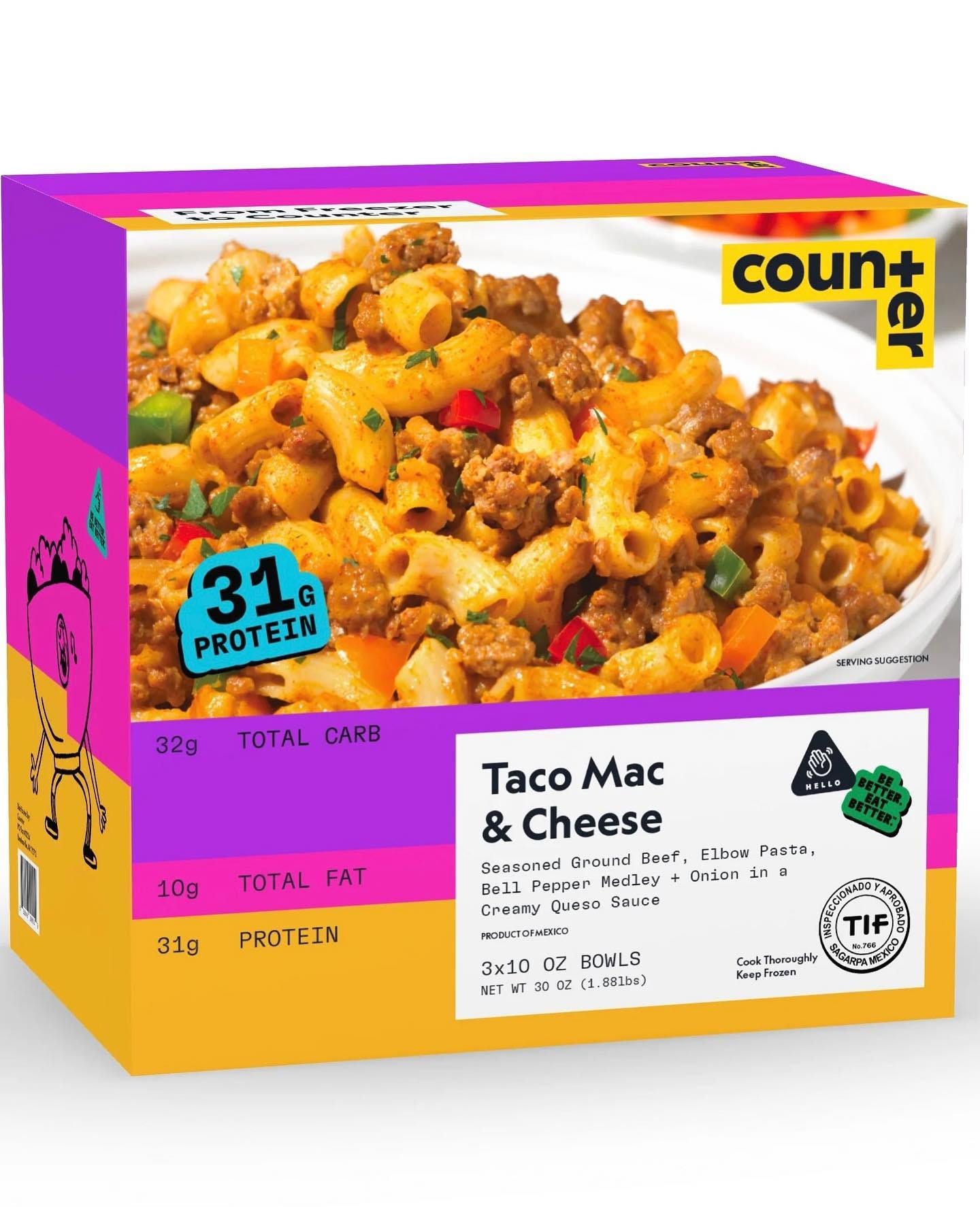
Counter leans into everything I’m talking about, including the entire influencer appeal. The brand turns creators’ viral recipes into high-protein frozen meals, including Lazy Lasagna and Jalapeño Popper Mac & Cheese. Its website lists single-serve meals at $5.89. The brand is turning recipes in your saved folder into a literal product in your freezer.
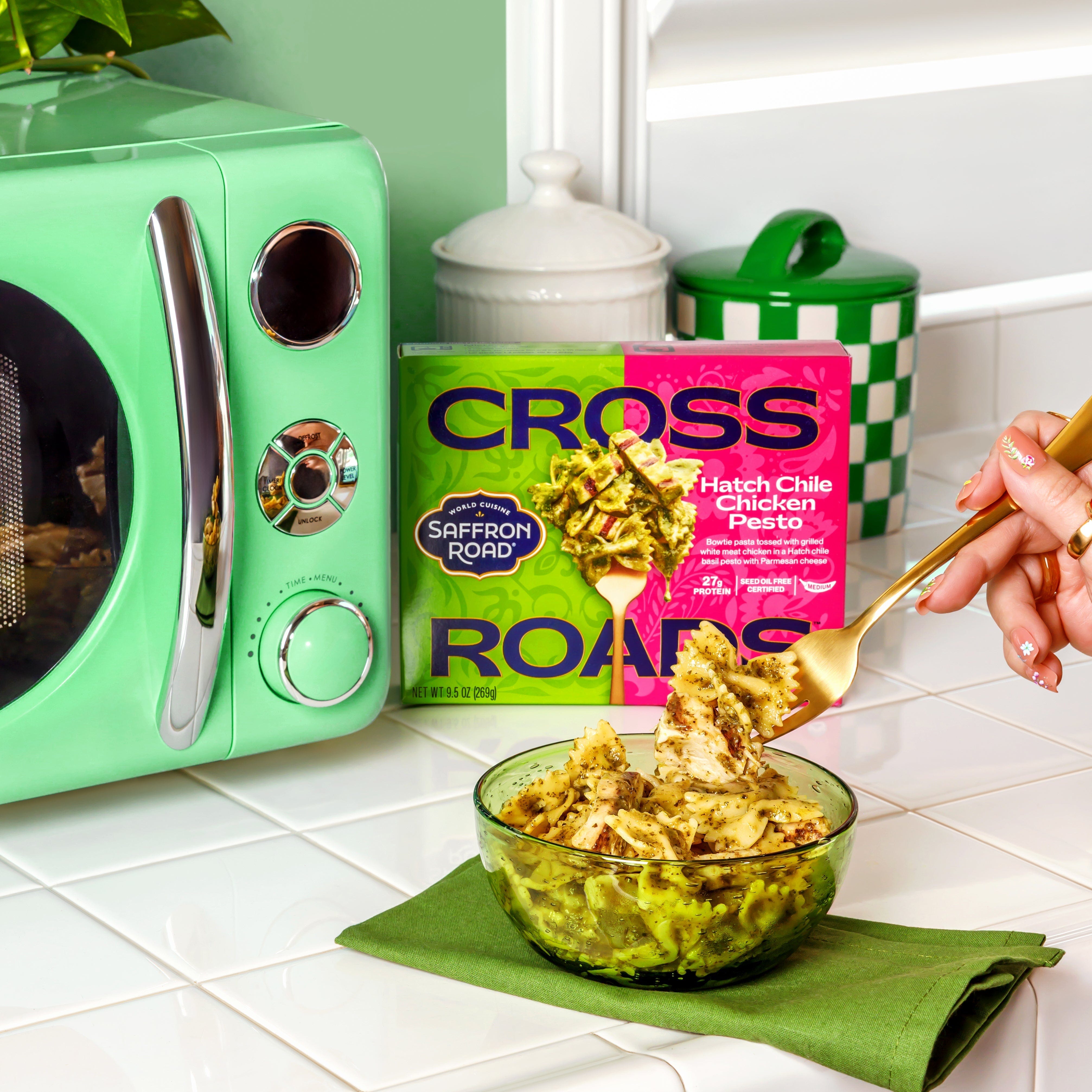
Saffron Road’s Crossroads line, launched in February 2026, includes Beef Birria Rigatoni, Butter Chicken Cavatappi, and cheese ravioli with a gochujang sauce. Each entrée has at least 24 grams of protein, and the flavor combinations are meant to catch your attention. Kanzen Meal from Nissin Foods launched in June 2025 as the Cup Noodles maker’s first single-serve frozen meal, positioning it as nutrient-dense comfort food. Its name, “Kanzen,” means “complete” in Japanese.
Then there’s Ripi, a frozen stuffed pasta. It launched in early 2025 with a nationwide rollout at Whole Foods. Chef Joe Sasto developed it, and flavors include beef short rib, chicken Parmesan, sweet potato, and cacio e pepe. Mings also offers four noodle-based varieties, including Spicy Dan Dan Noodles and Spicy Beef Ramen, sold nationally at Walmart.
These newer brands prove that convenience doesn’t have to mean sacrificing flavor or texture. Where the Stouffer’s and Hungry-Man dinners of my imagination promised a night off from cooking, these newer brands give me a reason to look forward to using my microwave for a familiar comfort food with an unexpected twist. These new brands promise dinner I’d actually want, even if I had all the time in the world to cook.
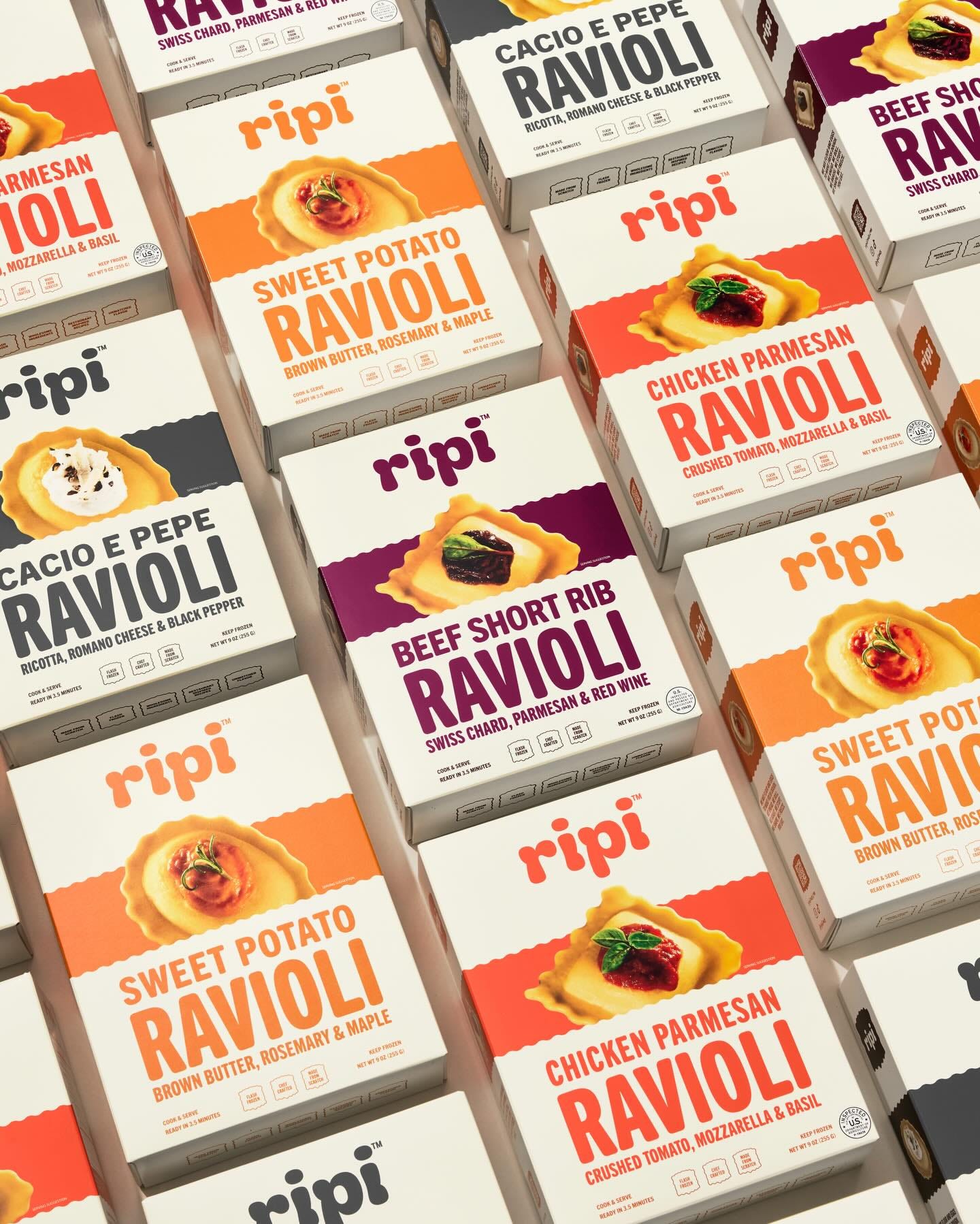
The design also bridges the gap between the frozen dinner my grandfather might reach for and the one I’d actually be excited to pull off the shelf. The packaging of these new brands fits right into the world of snacks and condiments, markets that have been pushing the limits of more contemporary designs and aesthetics. At first glance, Ripi absolutely doesn’t look like it should be stocked next to Stoffers; it looks like it could easily be wedged between Simple Mills and Back to Nature crackers. There’s just a bit more spunk and zest to these new brands that the old brands are absolutely lacking.
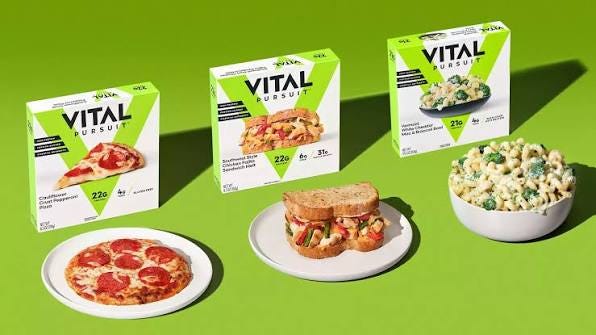
And while flavor might be part of the battle, texture has always been the other issue. You can have a perfectly reasonable ingredient list or flavor combination and still end up with dinner that feels steamed into submission. The air fryer lets certain foods like wraps, pizza, and breaded chicken emerge crisp and browned. Manufacturers are paying attention: even Nestlé’s GLP-1-focused frozen brand, Vital Pursuit, launched with air-fryer-ready options.
GLP-1s give companies another reason to rethink the frozen meal. NFRA’s 2025 research with Morning Consult found that 78 percent of GLP-1 users reported eating smaller portions, while 46 percent said high protein made them more likely to purchase a frozen product. Eighty percent expressed interest in frozen foods designed around their dietary needs.
I don’t think the desire to cook is disappearing, necessarily, but I do think the desire to cook and the obligation to get something on the table are completely different. I can want to make an elaborate Sunday meal and want Tuesday to involve opening a box and popping it into the microwave without feeling like a domestic failure.
Fresh prepared food has made that desire visible. Better frozen food can make it a more affordable habit, and I think that’s exactly where the freezer aisle is headed.
For now, my saved recipe folder remains quite ambitious. A Saturday task, if you will, certainly not a Monday one.
Great piece, Chloe. The design and flavor story is compelling, and I’d add the quality and safety side, because it’s what makes the frozen aisle’s rise possible and also what deserves the most scrutiny as the category gets more ambitious.
Frozen is often the safest format in the store, but only when the cold chain holds. Every thaw and refreeze cycle during distribution can quietly degrade texture, drive ice crystal growth and moisture migration, and raise microbial risk if temperatures drift. The soggy vegetable you describe is often a freezing problem, not a recipe problem. Slow freezing forms large ice crystals that rupture cell walls, which is why blast freezing and proper blanching matter so much to the final bite. The air fryer shift is interesting here too, because formulation and coating systems now have to be validated for a very different heat transfer method than the microwave.
The newer product mix raises real QA questions:
Cook instructions are a food safety control. Multi component meals with raw or par cooked proteins, stuffed pastas, and dense sauces heat unevenly in a microwave, and cold spots can allow pathogens like Listeria or Salmonella to survive. Brands need validated instructions tested across wattages, not just one lab microwave. Clear labeling matters because many shoppers assume frozen means ready to eat.
Allergen control gets harder with complexity. Gochujang sauces, cheese fillings, noodle formats, and protein fortification mean more ingredients, more shared lines, and more cross contact risk. Creator led recipes scaling into manufacturing is a big leap, and allergen management has to scale with them.
Then there’s the nutrition angle. Higher protein is a smart response to the GLP-1 trend, since users eating smaller portions need nutrient density per bite. But high protein should not stand in for overall quality. Sodium is the usual tradeoff in shelf stable and frozen meals, and public health guidance suggests many people already exceed recommended intake. Fortified claims also need verification so the label matches what is actually in the product.
I am still concerned if frozen becomes a daily habit for budget conscious households, as the AFFI and FMI data suggests, then the nutritional profile and safety of these products stops being a niche concern and becomes a public health one. Could the next wave of innovation compete on sodium, fiber, and vegetable content as loudly as it does on flavor and packaging?