


There’s something deeply, pleasingly wrong about a tube of honey.
A screw cap and a soft metal body belong next to my toothbrush, in a painter’s kit, or maybe even in my first-aid drawer. But certainly bot next to my toast at 7 a.m.
But, the object is obviously logical. No spoon is necessary, and certainly no sticky endless ribbon of honey connecting it back to the jar that permanently slops over the edge.
Yes, the honey bear already squeezes, and I love the bear, but the aluminum tube is even better. It’s tidier, and it’s absolutely smarter, it’s a little bit smug.
There’s also material reasoning. The bear is plastic, and plastic squeeze bottles tend to degrade each time they’re recycled, if they get recycled at all. Aluminum, by contrast, can be melted down and remade indefinitely without losing quality. The tube isn’t a perfect solution, caps are usually plastic, many tubes have a thin interior coating, and a crumpled tube full of honey residue is a harder sell at the recycling facility than a rinsed can, but it gives the format a sustainability story that a plastic bottle could never tell.
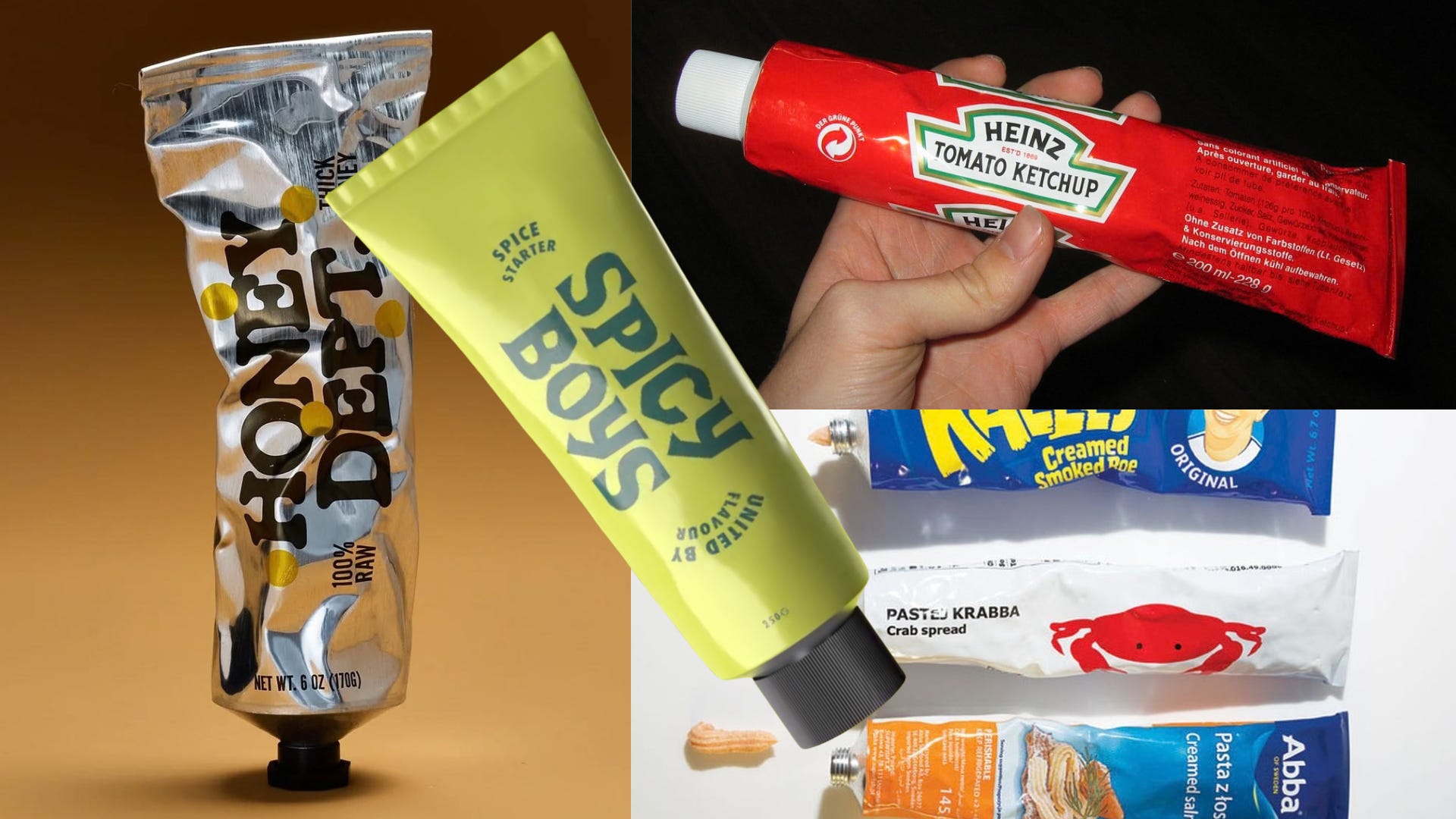
Beyond sustainability, part of the appeal is that I’m always drawn to packaging that can feel simultaneously unfamiliar and obvious. Honey Department puts thickened honey in aluminum, while Smeared puts peanut butter and strawberry spread in tubes. Spicy Boys sells its chili paste, a “spice starter” for livening up bland food, in a tube, and then there’s the conceptual brand Spread Co. that explores gourmet nut spreads in sleek aluminum tubes instead of the traditional jar.
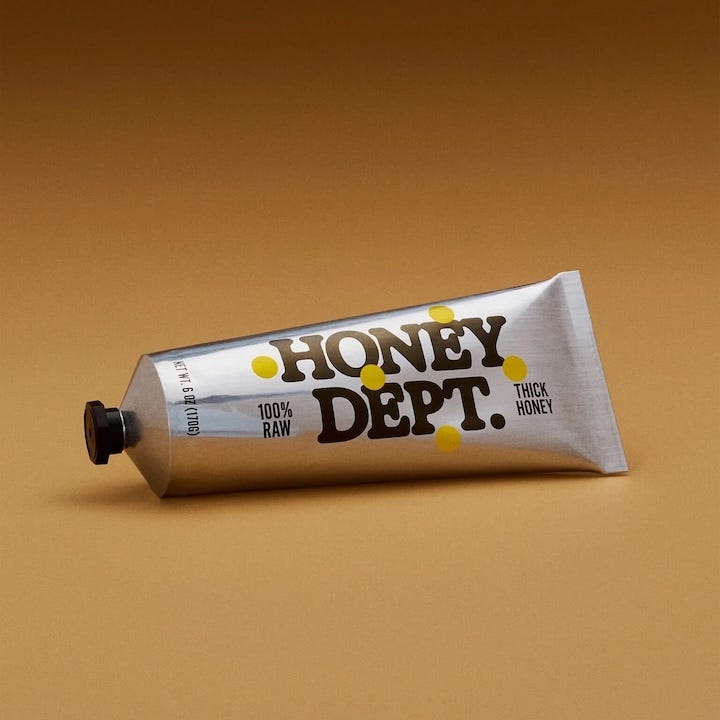
There’s also the joy and whimsy of it all. Graza proved to us a few years ago that a pantry staple could be playful, turning olive oil from a necessary purchase into a chef-inspired squeeze bottle you’d happily leave out on the counter. The tube carries the same kind of packaging je ne sais quoi. Squeezing honey out of what looks like a paint tube feels a little kitschy, but it’s also more functional,and unlike a plastic squeeze bottle, aluminum does have a better sustainability story.
Of course I know the tube isn’t new.
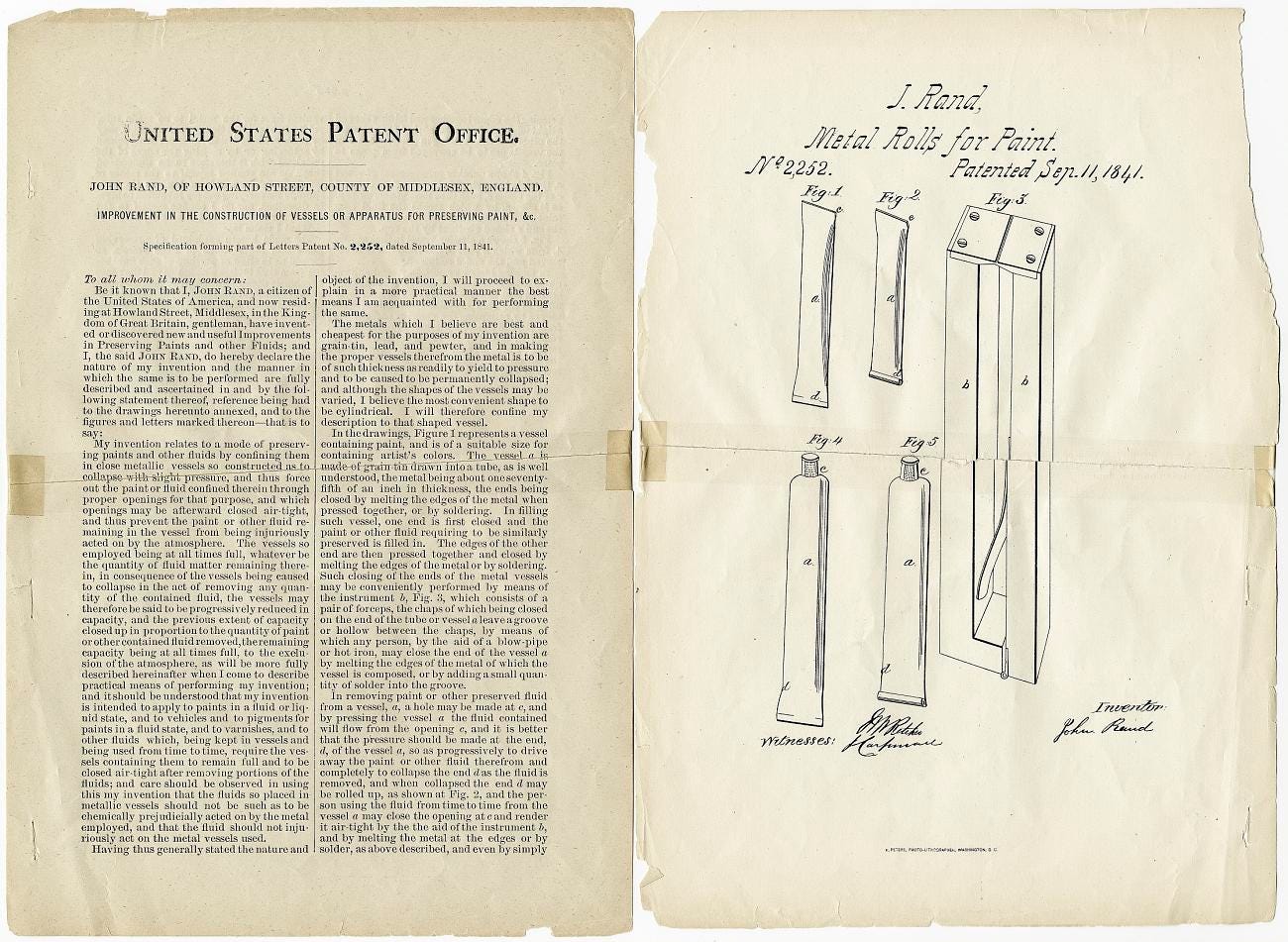
It dates back to 1841, when American painter John Goffe Rand patented a collapsible metal vessel for preserving paint; the Smithsonian holds his patent, dated September 11. The invention helped keep prepared paint from drying out while allowing it to be transported and dispensed repeatedly. Long before anyone squeezed honey onto their chia seed pudding, the tube was solving the problem of accessing a little of something without exposing it all at once.
For Noah Phillips of Honey Department, this inherited familiarity was part of the attraction. He describes the form as “intuitive and honest, efficient and utilitarian,” pointing to its history across art, medicine, personal care, and food. There’s very little to learn: the package already tells your hand what to do, even if its contents initially scream to your brain that something has ended up in the wrong aisle.
In Scandinavia, though, that mismatch essentially doesn’t occur. Norwegian producer Kavli dates its introduction of cheese in tubes to 1929, describing itself as the first company to sell cheese this way. Its ensuing expansion included factories in Sweden. The tube entered this food culture through industrial production and distribution, decades before it could be read as a trending branding choice.
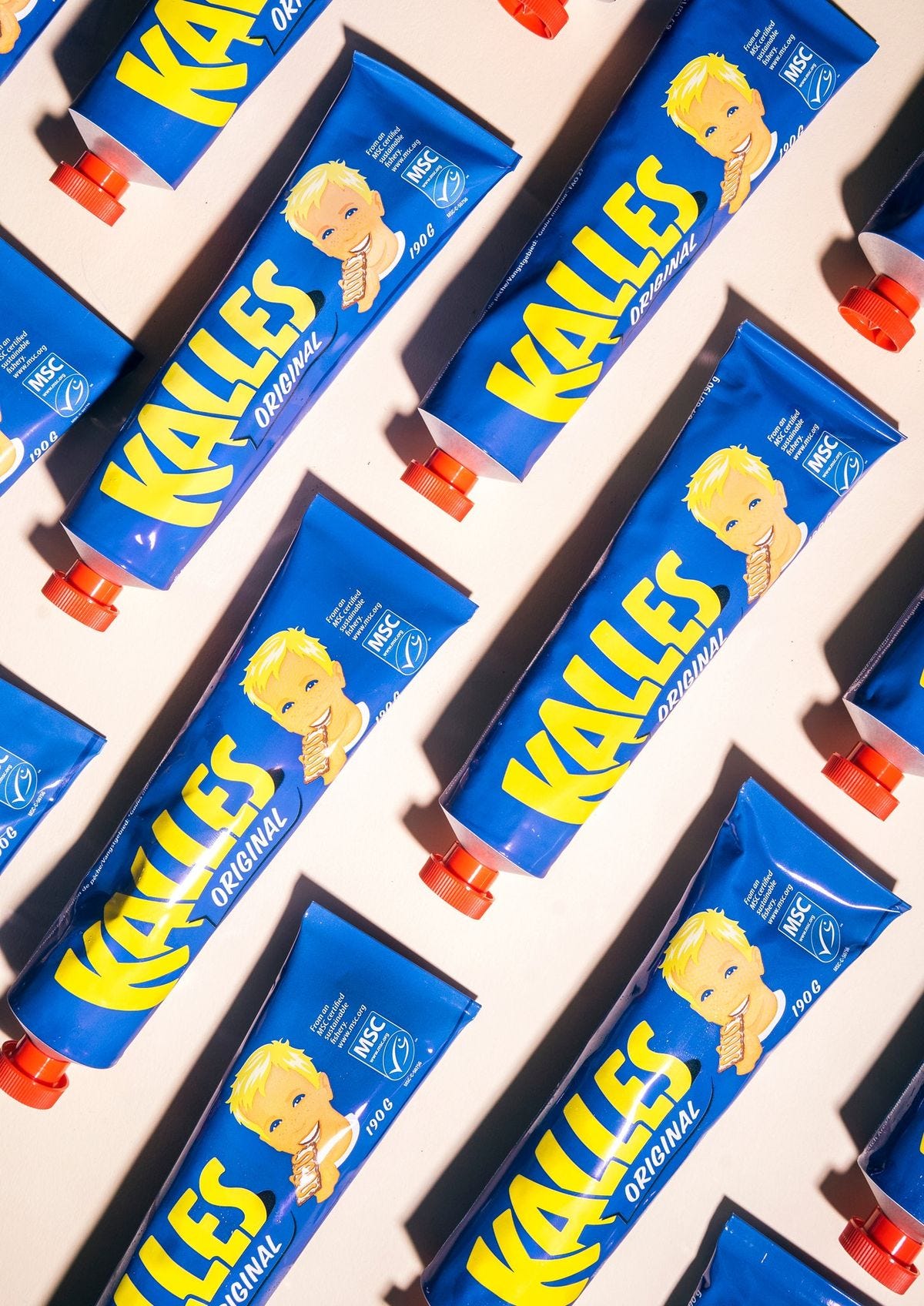
Then there’s Kalles, Sweden’s smoked cod-roe spread, that was introduced in 1954. According to the brand, it sells about 10 million tubes annually, and one in every two caviar tubes sold is a Kalles tube. Kalles also offers a clear explanation for its packaging: the aluminum stays compressed after squeezing, limiting the air drawn back inside, a characteristic the company identifies as important for its air-sensitive contents. What might look like an eccentric specialty import to an American shopper is, in Sweden, just an ordinary staple.
America does have its own food-tube examples, according to Amore’s history, founder Mario Foah discovered concentrated Italian paste tubes in 1978 and saw an opportunity to sell them in the United States. Cento’s range includes tomato, anchovy, garlic, onion, and vegetable pastes in tubes. Anyone who has opened a can of tomato paste for a recipe that calls for one tablespoon understands the practicality.
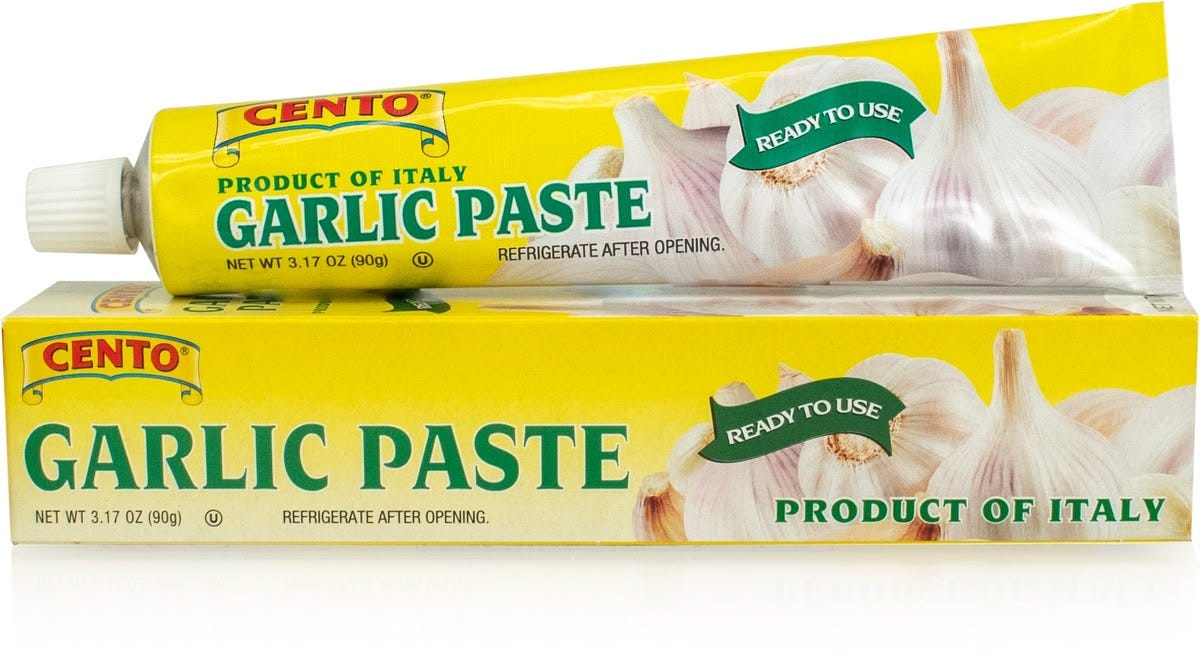
So why are we seeing more of it now? More than just feeling fresh and new, it fits the way people cook now. Home cooks increasingly reach for condiments as the shortcut to flavor: a swipe of chili paste, a squeeze of honey, a dab of something fermented to finish a dish, these are all small-dose ingredients, and the tube is built for small doses. It dispenses exactly what you need, keeps the rest sealed, and can sit on the counter beside the salt and olive oil. Not to mention, honey and peanut butter belong to routines that happen at the table, sometimes several times a day. The opportunity is to make the tube something you serve from and keep within reach. Plus, much like the rise in single-serve pouches, when people are out and about, they still want their favorite brands in their back pocket, literally and figuratively.
“The tube takes it out of the cupboard, onto the table and into your bag,” Phillips says. He says customers are using honey more frequently, across more foods and drinks. That’s his observation rather than a quantified consumer study, but it explains his ambition: remove a few small inconveniences and give people fewer reasons to put the ingredient away.
That includes visual reasons. Phillips wanted to escape both the supermarket plastic bottle and the folksy farmers’ market jar. “It’s meant to be left out on display,” he says. Smeared takes that proposition literally, selling a stand that holds its tubes upright.
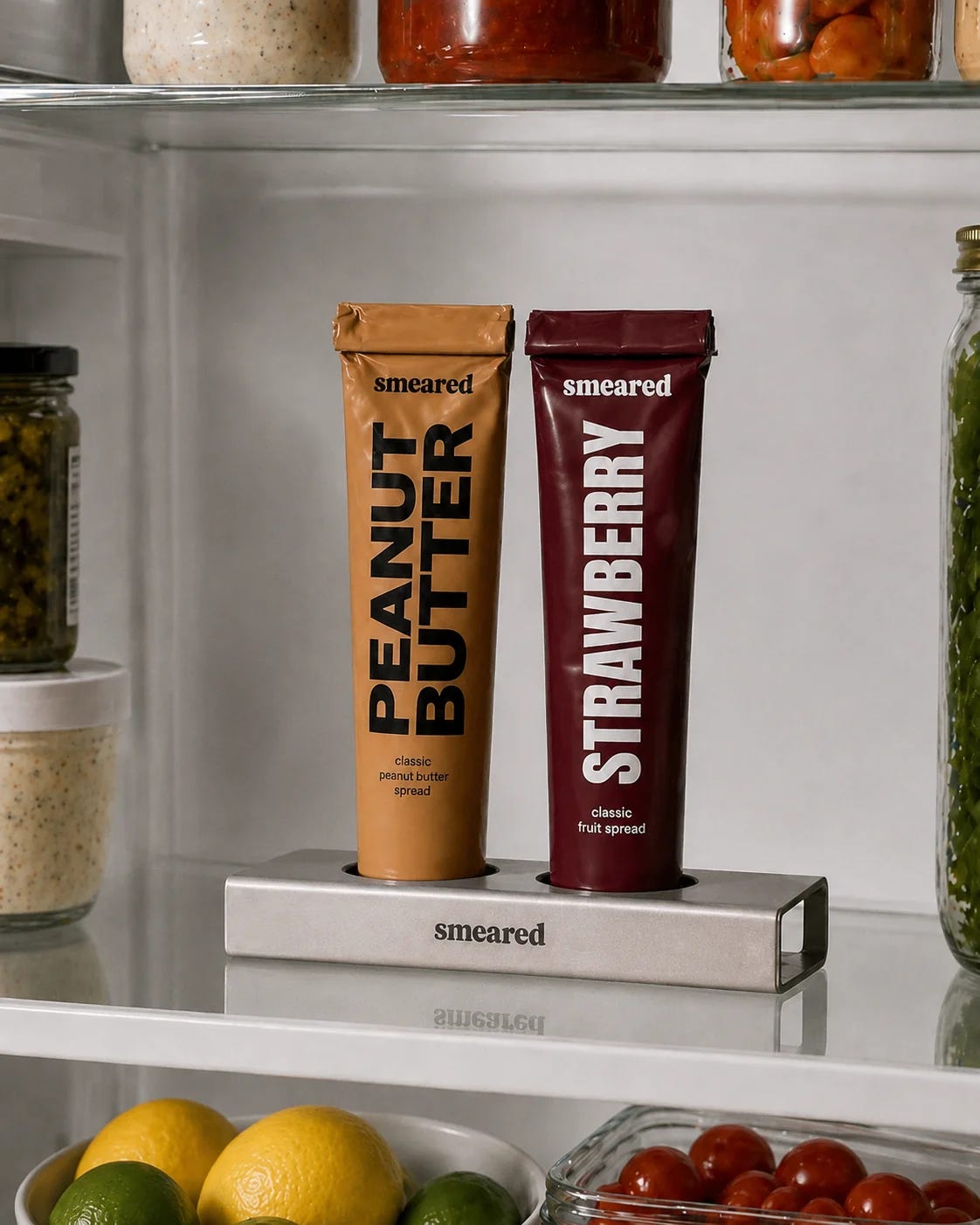
The stand makes a little display out of sandwich ingredients, and the countertop becomes another place to arrange branded objects. Leaving food visible might remind someone to eat it, while also asking an everyday purchase to contribute to the appearance of their home.
Phillips describes arriving at the format through the product itself: “For us it wasn’t a trend. It was obvious.” Obvious, however, doesn’t mean effortless. Phillips says aluminum costs more than plastic, dents in production and shipping, and comes with constraints around fill sizes, nozzles, and caps. A beautiful package still has to accommodate the food inside it and the person trying to get it out.
For now, part of the pleasure is finding a familiar food in an unexpected package. Every squeeze makes it a little less strange, and tubed honey becomes something reached for without much thought. That’s the future Phillips is designing toward.
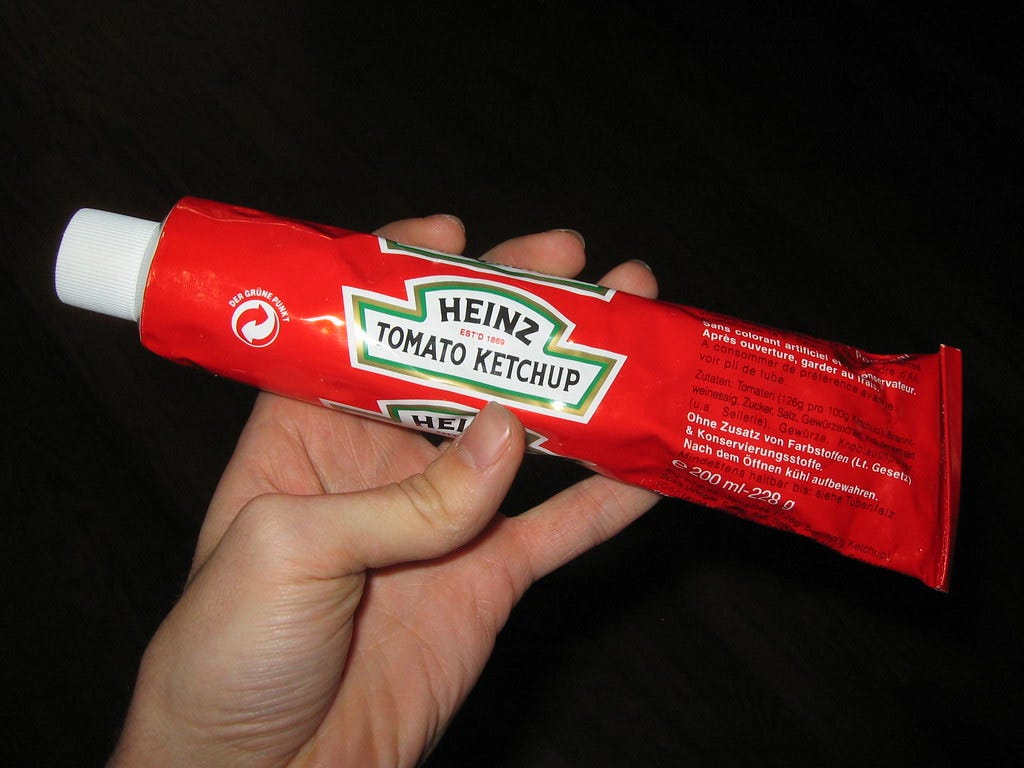
So what’s next for the tube? I’m predicting a lot more engagement from brands. If Graza launched a tubed mayo, or Fishwife put out a tubed sardine spread, or Heinz finally gave us a ketchup tube for the perfectly dressed hot dog, I’d be first in line. And you’d probably be right behind me.