

Pierre Jamet spent the week between Christmas and New Year’s the way most of us spend that strange, formless stretch of the calendar. And by that I mean not working. Of course, if you like your job, you’re loosely thinking about work and fusing that with some whimsical thoughts. Unlike what I was pondering, Jamet chose to sketch a boat.
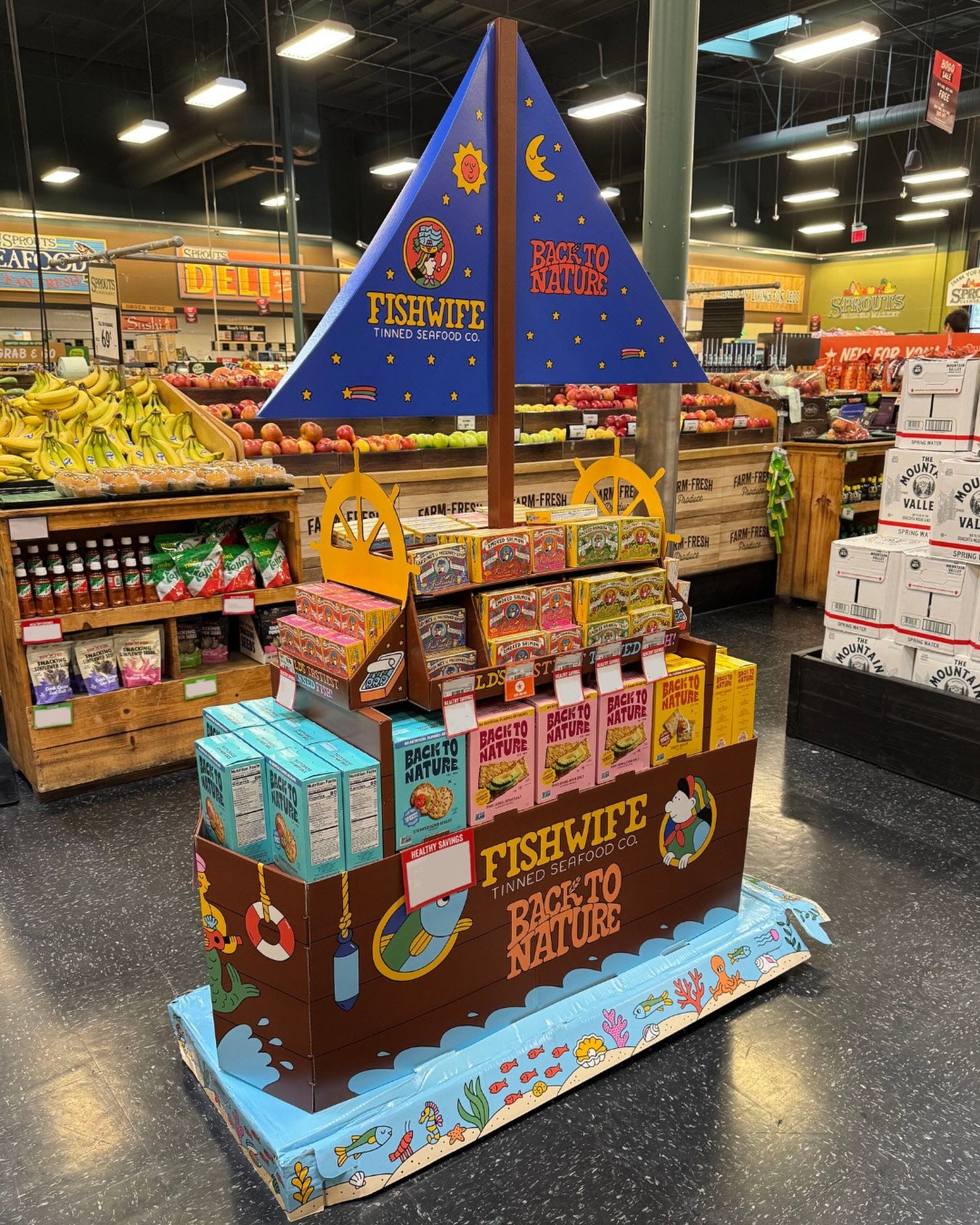
More precisely, a half-pallet shaped like a sailing boat, designed to hold tins of fish.
Jamet runs sales at Fishwife, but he’s a civil engineer by training, and he admits he can’t look at a pallet display without seeing a tiny building with thoughts of structure, load, and sightlines from across the aisle. His logic was, in his words, almost too obvious: “Every tin of fish starts its life on a boat, and somehow nobody in the category had thought to put the fish back on one.”
He sent the sketch to Jerry Solberg at Vanguard Companies, a corrugated display manufacturer, who replied four minutes later: “Wow, how cool!!!” Yes, that’s three exclamation points, from a guy who works in corrugate, during the holidays. Eight months later, the boat is docked in more than 300 Sprouts stores, drawn in the same bright and slightly giddy visual language as the tins. Shoppers are doing exactly what Jamet hoped they would; they’re stopping, taking a photo, and picking up a tin.
I should say, before anyone in the point-of-purchase industry writes in: I’m aware that there is nothing new about a grocery store display. Endcaps, dump bins, case stacks, and elaborate cardboard fixtures have been around for well over a century. They started as handwritten signs and window arrangements in the late 1800s and grew into the whole self-service merchandising apparatus we now walk past without registering.
What’s new, however, just might be the creativity. And I have a sneaking suspicion about the timing.
A whole class of food and beverage brands broke through around 2020, Fishwife among them, and came of age while the physical world was more or less closed for business. There were no sampling tables, no pop-ups, and no tasting events. Meanwhile, everyone was home, bored and on their phones; U.S. retail e-commerce sales jumped 43 percent in a single year, per the Census Bureau. So these brands did their world-building where the people were, in the feed, and got very, very good at it. They built color palettes and illustrated universes and cult followings, all of it roughly the size of a phone screen. Now they’re arriving in retail, and they’d like their world to come with them. The shift isn’t online-to-offline so much as online-made-physical, the display as a three-dimensional Instagram grid.
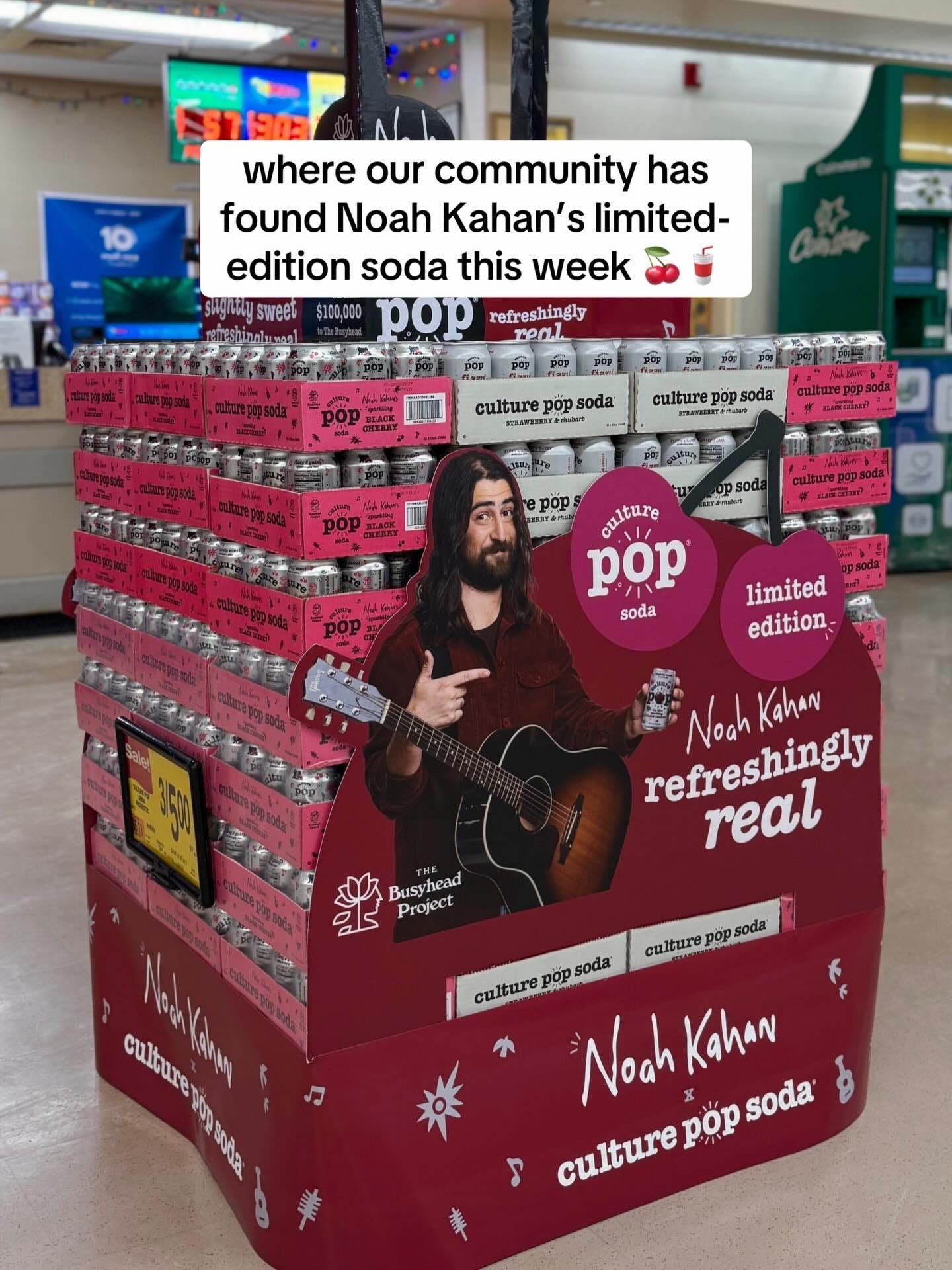
Hannah Faust, Studio Director at DarkRoast, designs retail programs for consumer brands and sees it in the briefs. Her clients want the leap from scrolling Instacart or Instagram to walking past the brand in-store to feel like “the exact same high-touch experience.” That means die-cut components and vibrant structures. It also means newer tricks like magnetic skins and changeable graphic panels, which let a brand chase a micro-trend without building a whole new fixture every time the internet decides a flavor is having a moment. Her favorite example is Culture Pop, which rallied behind its Cherry soda when cherry was “trending everywhere.” The brand layered in a Noah Kahan collaboration and rolled out displays across its New England home market and other key regions.
The feed and the aisle are very different jobs, though. Online, the shopper who finds you was already curious enough to click. In a grocery store, you’re one of forty tins of tuna, competing for the attention of someone who came in for eggs and milk and is rushing to a meeting they’re already late for. Jamet puts it perfectly: “A great display stops the shopper who wasn’t looking for you. The shelf only rewards the ones who already were.”
What I like most about the Fishwife boat is that, by Jamet’s own account, it was “way messier than the rendering.” The first retailer they pitched passed. So Casey O’Donovan, Fishwife’s director of sales for the West, took it to Sprouts in February, in an email titled, I am delighted to report, Exclusive Fishwife Boat!” Sprouts buyer Rachel Maher and her team loved it but were refreshingly honest. A boat full of nothing but tinned fish was a hard sell, and they wanted to see velocity numbers before committing. Fishwife brought in Back to Nature crackers, which helped answer the question many American shoppers still have about premium tinned fish: “Okay, but what do I do with this?”
Daniel Miller, the illustrator behind the tins, drew the artwork so the boat and the packaging would read as one world. The whole thing shipped fully built, so a store team could simply wheel it out, and it hit the floor the last week of August, right on time for Sprouts’ Protein Event.
The boat works, I think, because it could only ever be Fishwife’s. “If your display could be for any brand in the category, don’t build it,” Jamet says. Tinned fish is three inches tall, but the boat takes the same illustrations and the same coastal joy and turns them into something you can walk around. It’s also fast. A tin has to be picked up and read. A four-foot boat in the middle of a grocery store says fish, coast, fun in about half a second, to someone who hasn’t read a single word. He calls it “the closest thing we have to a Fishwife store inside somebody else’s store.”
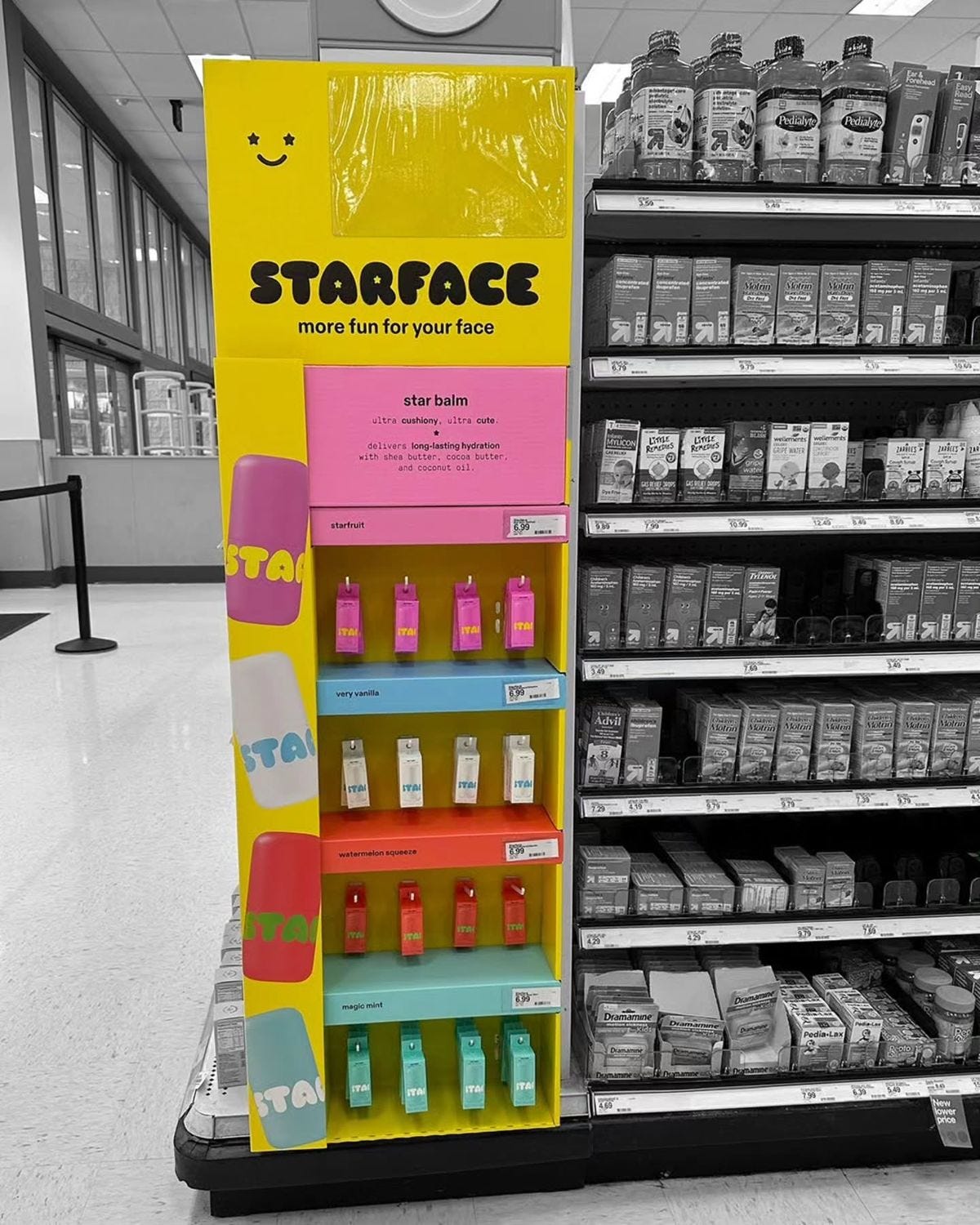
Faust points out that a display has to do all of this unsupervised. No brand ambassador stands beside it, and no founder is on hand to explain the origin story. It has to establish a messaging hierarchy, make the case for buying, and be simple enough for store employees to assemble and restock correctly. For emerging brands still settling into their visual identity, she calls it “a creative design test”: the moment a brand built for screens has to translate itself into corrugate.
The stakes can go well beyond a temporary sales bump. An in-and-out floor shipper, Faust explains, can generate trial and prove velocity to a retailer, which is how a small brand makes its case for a permanent spot in the planogram. Sprouts has become a natural launchpad for exactly this, and Publix offers similar opportunities. Even stores with famously strict clean-floor policies are loosening up: Whole Foods Market, Faust says, is permitting floor displays again for the first time in years. Beverage still rules the off-shelf world, but brands coded around protein, fiber and other diet tribes are fighting hard for floor space. Viral products are using displays to turn TikTok buzz into actual sales, and she points to Fishwife and the recent wave of Dubai chocolate brands.
None of this happens overnight, and display programs are often planned up to a year out, around trade promotion calendars, and even further ahead when licensing is involved. Faust recalls retailers spending more than a year working with brands on Barbie movie tie-ins, fitting displays to store footprints while satisfying strict studio rules, and I would pay good money to read those email threads.
For Fishwife, at least, the boat is not a one-off. Off-the-shelf is now baked into how Jamet’s commercial team plans every account, several national-retailer displays are already locked in, and yes, the boat is coming back to Sprouts. His advice to everyone else is to start with a sketch, and find a manufacturer who says “how cool” instead of “that’s not standard.” Let the buyer change it, because they know their floor better than you do, and sell the number, not the art, because the design “just gets them to open the email.”
The display itself is old, sure, but get ready for an influx of more creative versions.