

I’ve been doing this job for over five years, and I’ve been viewing concept work (amongst produced work) ever since. We’ve covered plenty of it, from brands built as speculative exercises to student-produced projects. That’s nothing new. What is new, however, is the sheer volume of concept work, and fictional brands have inundated my feed at a rate that feels significant.
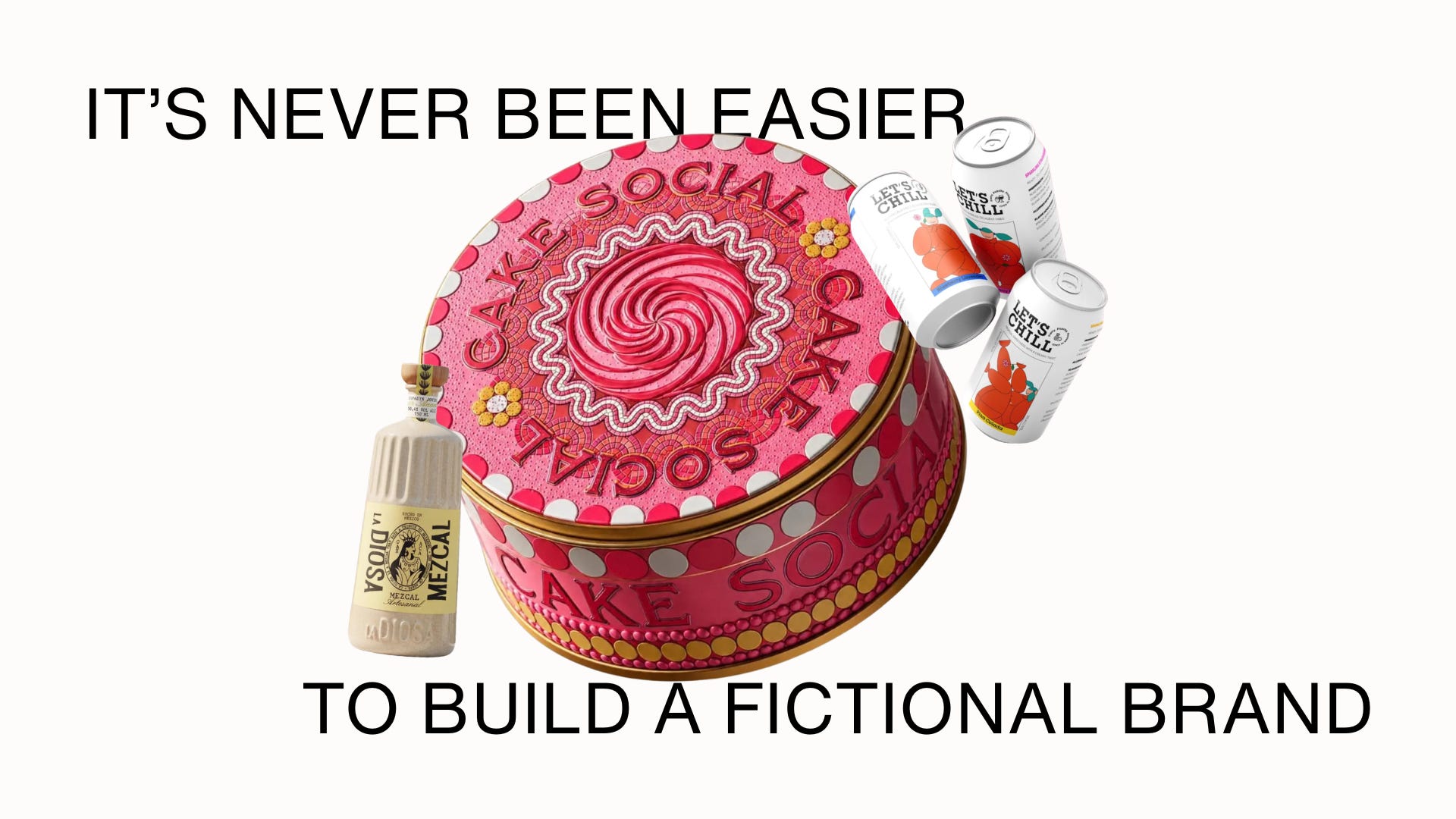
Honestly, it’s disorienting. I used to be able to spot a concept from a mile off, and the signs were obvious, like a category that doesn’t quite exist yet or packaging with no barcode, no fine print, no regulatory disclaimers anywhere on it. Those tells still exist, sure, but they’re getting fainter and fainter, and it’s becoming harder for me to tell whether a brand is real, even with a trained eye.
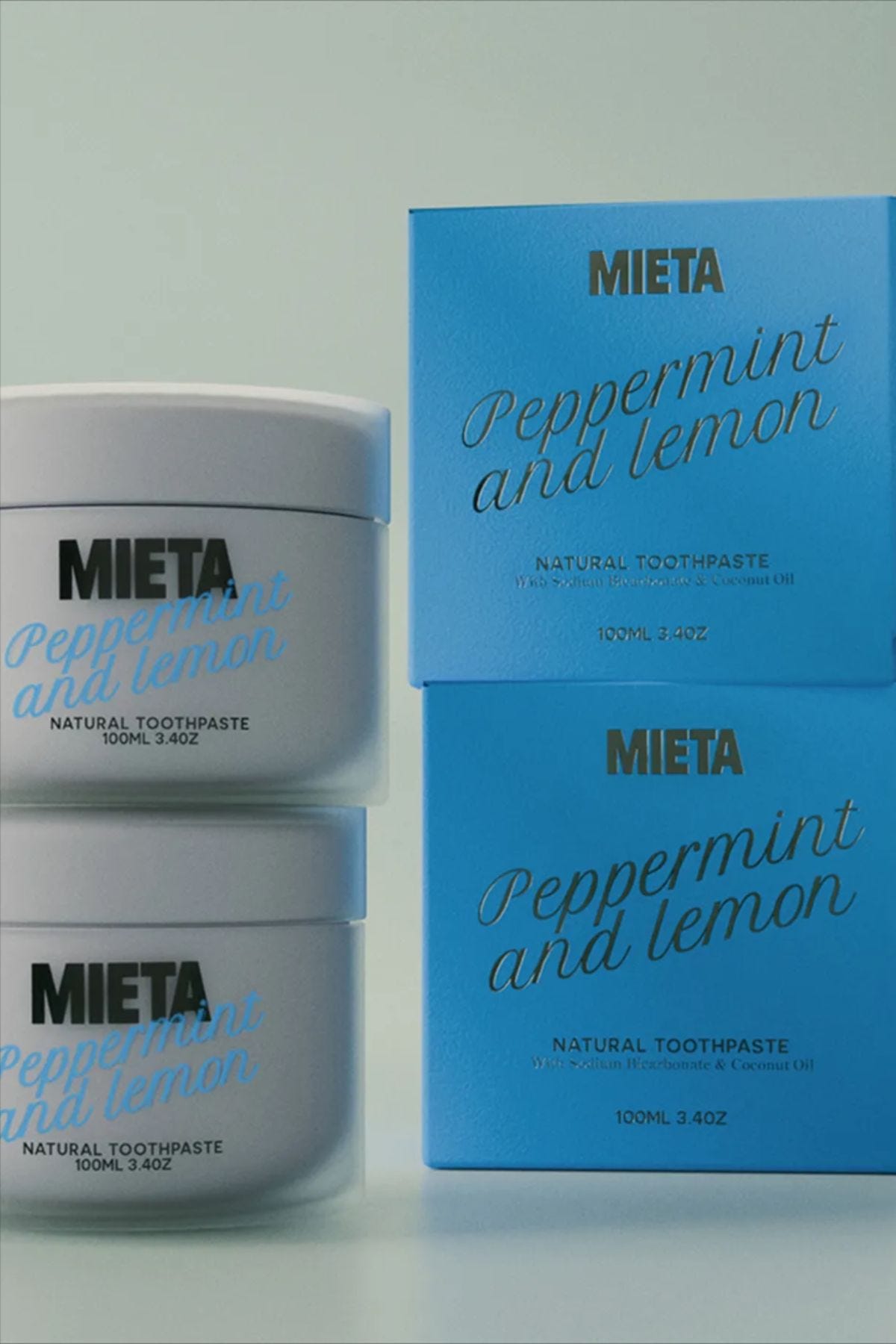
A decade ago, building a brand, including its identity, packaging, photography, a website, and a tone of voice, took a team and money. You needed a strategist to iron out positioning, a designer to translate that into something visual, a photographer to take pictures, a developer to build it out, and enough money and time that nobody bothered unless there was an actual product behind it, or at least the intention to make one. If you saw a fully developed brand, the odds were good that it was real.
But now, a student with a laptop and a free afternoon can tip-tap away at a concept brand polished enough to pass for a real client project and throw it up on a self-made portfolio website. Figma has become a one-stop shop for the entire process, AI tools handle the so-called monotonous parts of image editing and copywriting, and design school studios are generating portfolio pieces that look like they came out of a top-tier agency.
The barrier to entry for making something that looks professional is minimal. Which means more people, with less access to capital or connections, can show off their skills. And these conceptual brands are often leading to real work.
But it also raises an interesting question for the design industry. When the tools make the end result this accessible, does that undermine the value of experienced creative work? Or does it raise the bar?
Erin Buchanan, a professor at SCAD, has firsthand knowledge of how quickly this workflow has become second nature for students. She sees projects start in Figma, and FigJam spaces are where students collect images, links, and video references and summarize feedback before a project even takes shape. Every stage after that, from lo-fi wireframes and hi-fidelity mockups to final presentations, happens in the same tool, with students constantly trading tips on new features that save time.
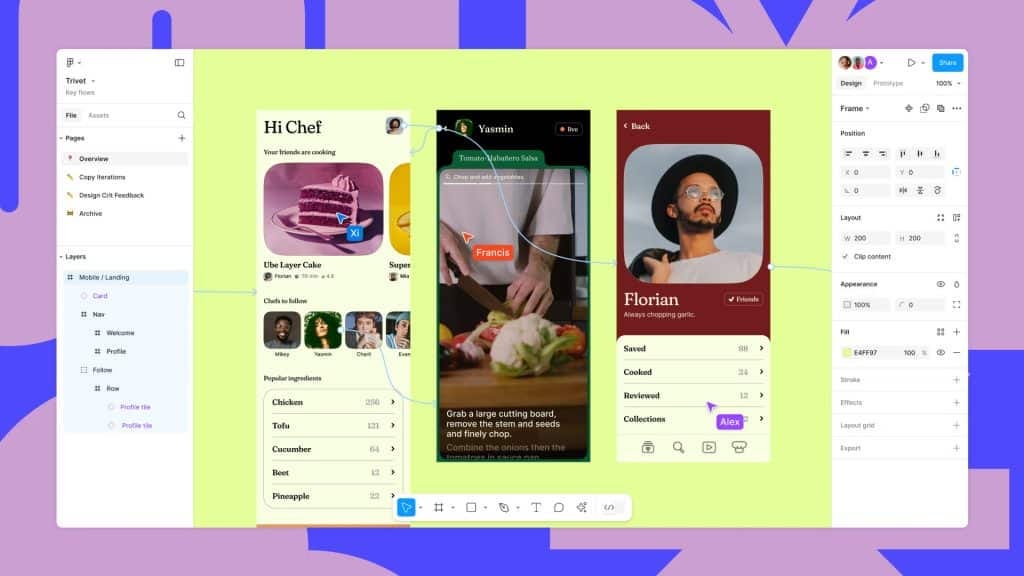
AI is now folded into nearly every step of that process. Figma’s built-in AI image editing tool is used constantly to remove backgrounds, change colors, and smooth textures, while tools like Claude and Nano Banana also show up in student workflows. Buchanan mentioned that her non-writing majors lean on ChatGPT to draft concept statements and brainstorm packaging and campaign copy, freeing up time for visual thinking. Pricier resources like Artlist.io for video and audio remain more of a coveted, occasional tool than a default.
Notably, Buchanan is already seeing students self-correct. Through group critique, students are recognizing that quality comes at the expense of expediency; the class is developing its own internal standard for when AI speeds up craft versus ruins it.
The designers doing this at a professional level describe concept work less as a shortcut and more as a discipline in its own right, one that AI has just accelerated.
For Andreea of Irmine Creative, it starts with an interest. “For me, it usually starts with curiosity rather than thinking about it as a pitch. I’ll notice a category, a product, or even just a certain feeling that I want to explore, and then I start building a fictional brand around it.” She treats it like a real client project regardless of whether a client exists. “I think about who the brand is for, what its personality is, how it should position itself, and then translate that into the identity, packaging, imagery and wider brand world.” The commercial upside follows naturally from doing the work well: “I don’t normally start thinking, ‘I want this specific company to hire me.’ It’s more about creating the kind of work I would like to be hired for. The commercial side comes naturally from that, because the finished project shows potential clients not only what I can design, but also how I think.”

Candy Brophy‘s process is even less calculated. “I don’t really pitch to anyone but myself and the universe; I daydream and conjure up ideas I have when I’ve been running or when my head is racing with ideas in quiet moments or from dreams,” she says.
She’s not chasing engagement, either. “I share for the exercise of it and the love of realizing and reviewing my concept in the world to little or no likes, but many saves and inquiries, so someone’s looking, then I’m contacted by people to create either exactly what I’ve imagined or collaborate with them on new brands.” That instinct-first approach became one of her most significant working relationships: with Connor Blakley’s Dropout Company. “He has more than proven to be an absolute capitalist force of nature, and that’s what my concepts need to become realizations and not wasted to the ether. We currently have a few in the pipeline to be launched soon, which is exciting.”
Both point to the same thing separating durable work from disposable content: a genuine idea underneath it. Andreea shares, “I think having an actual idea behind the project makes a huge difference. It’s very easy to create a beautiful logo, put it on a few nice mockups and call it a brand.”
Brophy, however, is more blunt.”The idea itself and the old-school graphics and rules of design can’t be skipped over. They are the WHOLE point. It’s like a cake with decorative icing, but it’s just eggs and flour and has no base. You’ve got to bake that cake properly before you decorate it.”
The flood of accessible, AI-assisted polish seems to be pushing the designers who care about craft to get sharper about what actually differentiates their work.
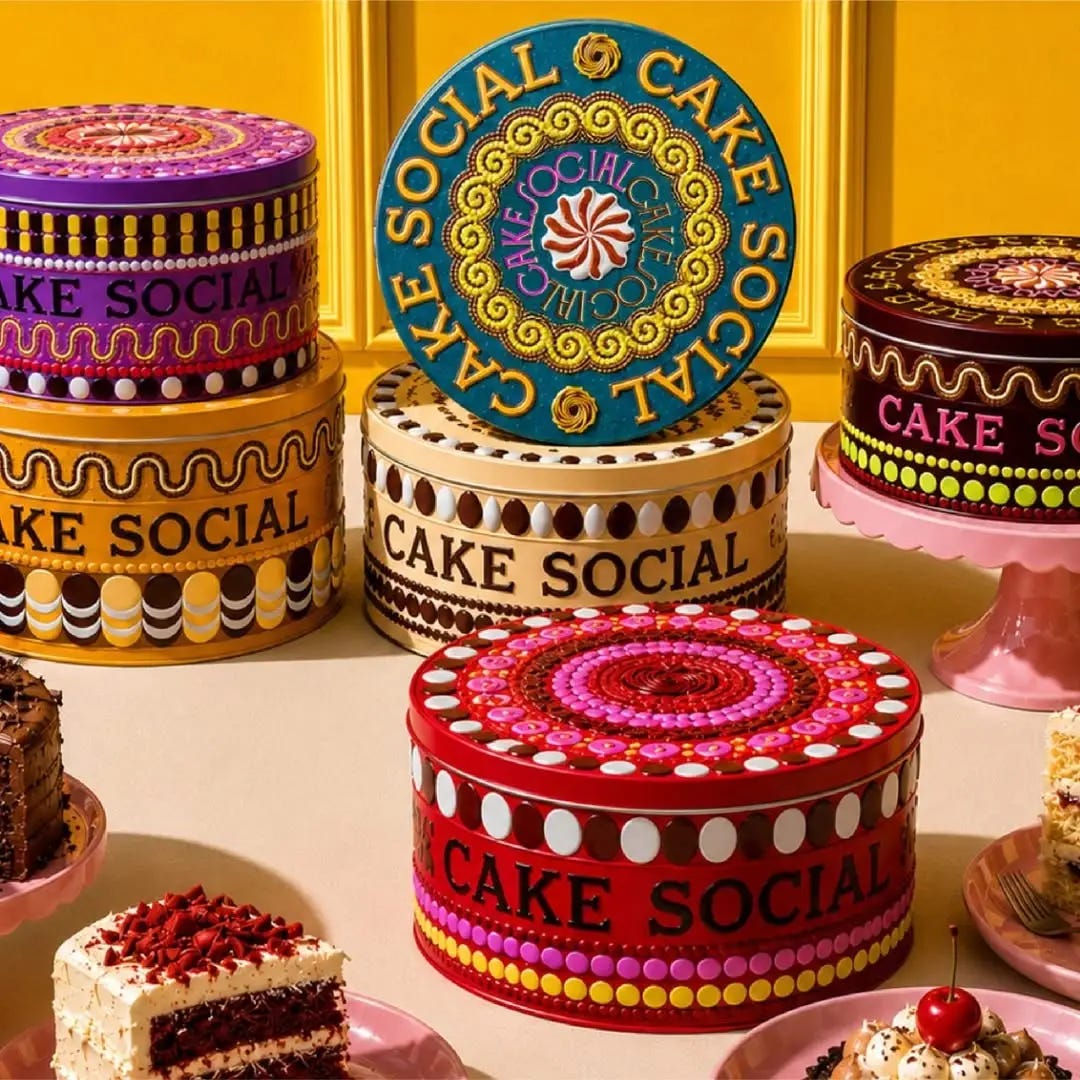
Andreea frames it as a shift in what wins attention now. “The general visual standard is so high now. I think that makes the idea behind the work even more important. When beautiful presentation becomes normal, having a clear point of view is what starts separating projects from one another.” For her, that’s translating into something bigger than aesthetics. Brands, and by extension the designers behind them, are being pushed to actually connect with people. It’s forcing empathy and point of view back into an industry that could otherwise coast on tools alone.
Brophy’s take on standing out leans into confidence rather than anxiety about competition. “I’m a big believer in the rule of attraction and serendipity. If my style finds the eyes of a future client or brand partner and they love my style, that’s great, and the universe has spoken; it just means they have to scroll through the eye burn for longer now.” Her advice to students who want to break through isn’t about beating the algorithm or the AI tools; it’s “create for the love of creation, not for validation.”
What’s happening right now, however, is a new calibration of how creative work gets done and shows up. A student in Buchanan’s classroom can now build something that would have taken a small studio weeks to produce, and use that speed to run more iterations, get more feedback, and develop a point of view earlier than designers a generation ago ever could.
For the working designers who’ve built real relationships out of concept work, accessibility is helping to clarify what makes their work worth hiring for. Everyone now has access to a beautiful mockup. The system now rewards idea-first thinking that both Andreea and Brophy describe. The flood of accessible polish is making the case for ideas, story, and point of view harder to ignore than ever.
But the tools making all of this possible are worth pausing over. Even the people building them are skeptical. Jacob Coxon, who spent three years working on pretraining at both OpenAI and Anthropic, recently resigned, warning that the industry is racing to build self-improving systems faster than it can guarantee those systems stay under human control. His departure followed another Anthropic researcher’s resignation weeks earlier, in which the outgoing safety lead described the world as being “in peril” and cited the pressure companies face to set aside their stated values in the name of speed.
None of that concern is about Figma plug-ins or quick concept statements drafted by ChatGPT. Still, it’s a useful reminder that using AI might speed things up and change how students and designers showcase their ideas—but just because something is easier doesn’t mean it’s always worth it.
What performs well is essentially smoke and mirrors. Cool wordmarks and interesting color combinations drive likes and shares, but when I look for the why and the strategic spine underneath it, there’s often nothing there. It’s a byproduct of how much of this work is being made. It’s trendy, sure, but it often falls flat..
When a designer leans on a chatbot to write the concept as well as design the mark, you get language that sounds like strategy without strategic thinking. The why has to come from a human who’s actually wrestled with a brand problem.
To be clear, I don’t have a problem with conceptual work; I think boundary-pushing and limitless ability push creatives. What I do have a problem with is that while concept work is getting better, I don’t necessarily think the real work is. A concept has no constraints, and that’s part of the appeal. But IRL brands sold to real consumers have plenty of constraints, and a certain level of depth and research to back it up. While I think the front-end design game is improving, we need to push ourselves to deepen our thinking from a strategic point of view.
Front-end design only wins when back-end thinking excels.
Until next week,