

There is a particular corner of American culture that lingers deep in kitchen cabinets, most certainly my grandfather’s, in which the store brand has gone to die. Aluminum foil. Freezer bags. The list goes on. I have yet to convince my husband that any private-label brand has an equivalent to Charmin’s Ultra Soft 3-ply, quilted, scalloped-edge toilet paper, and he’s been unable to convince me that private-label painkillers are the exact same as name-brand ones.
It’s all about perception when it comes to private labels.
However, oddly enough, in the past few years, the generic option has become more coveted.
A new report from the brand and design agency Pearlfisher gives this shift a name: the “cult threshold.” They define it as the moment a store brand stops being a compromise and starts becoming something people seek out.
“The store brand is the new cult brand,” the report states. “Not a consolation. Not a compromise. Cool.” Exhibit A, they claim, is Kirkland Signature, which has achieved the rare feat of making a warehouse logo function as a status symbol full of insider intel and cult pedigree. If I took a shot for every time my dad mentioned that Kirkland Vodka is just Grey Goose, I’d be on the floor. It’s his favorite fun fact, especially whilst making a martini.
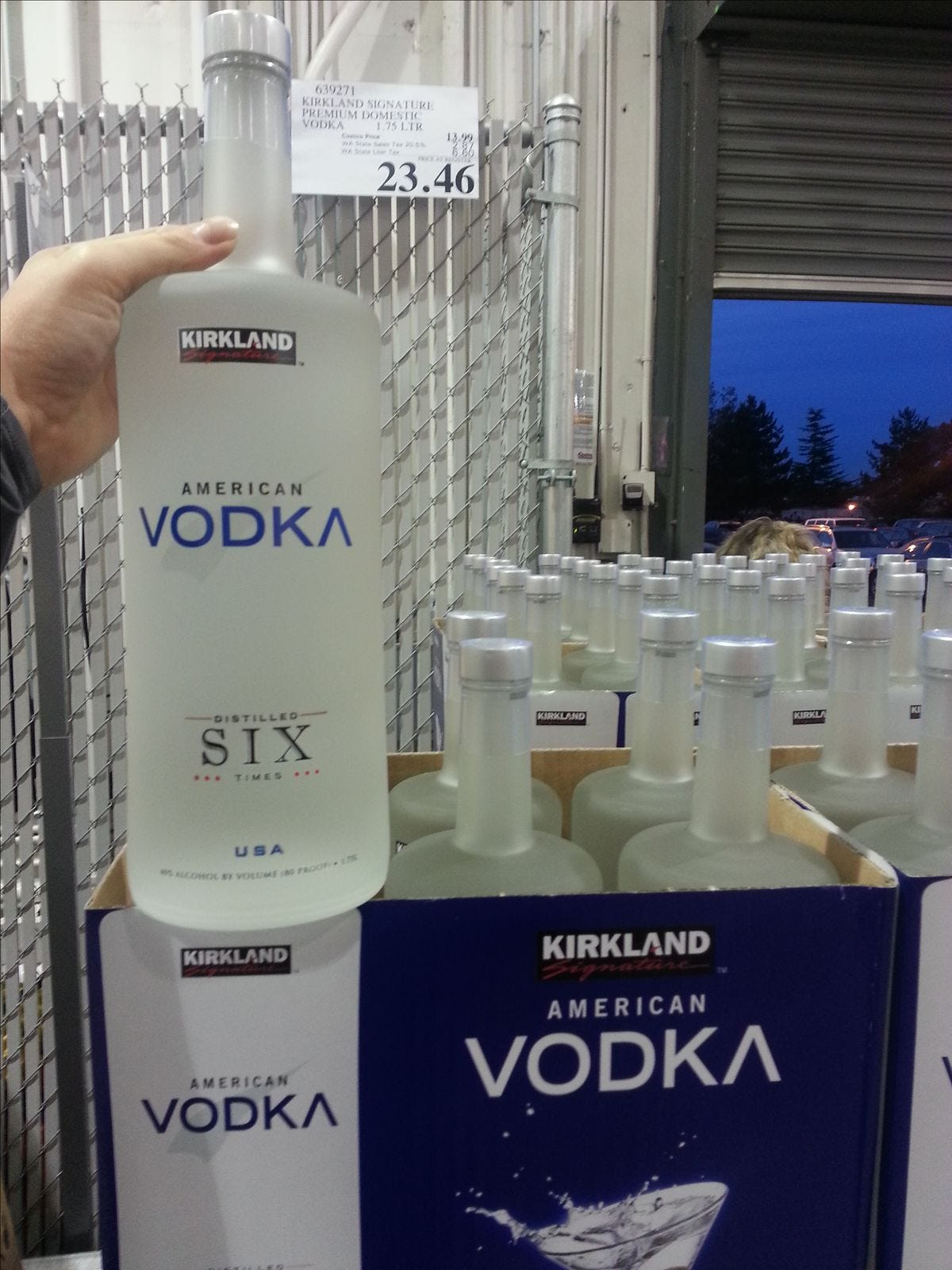
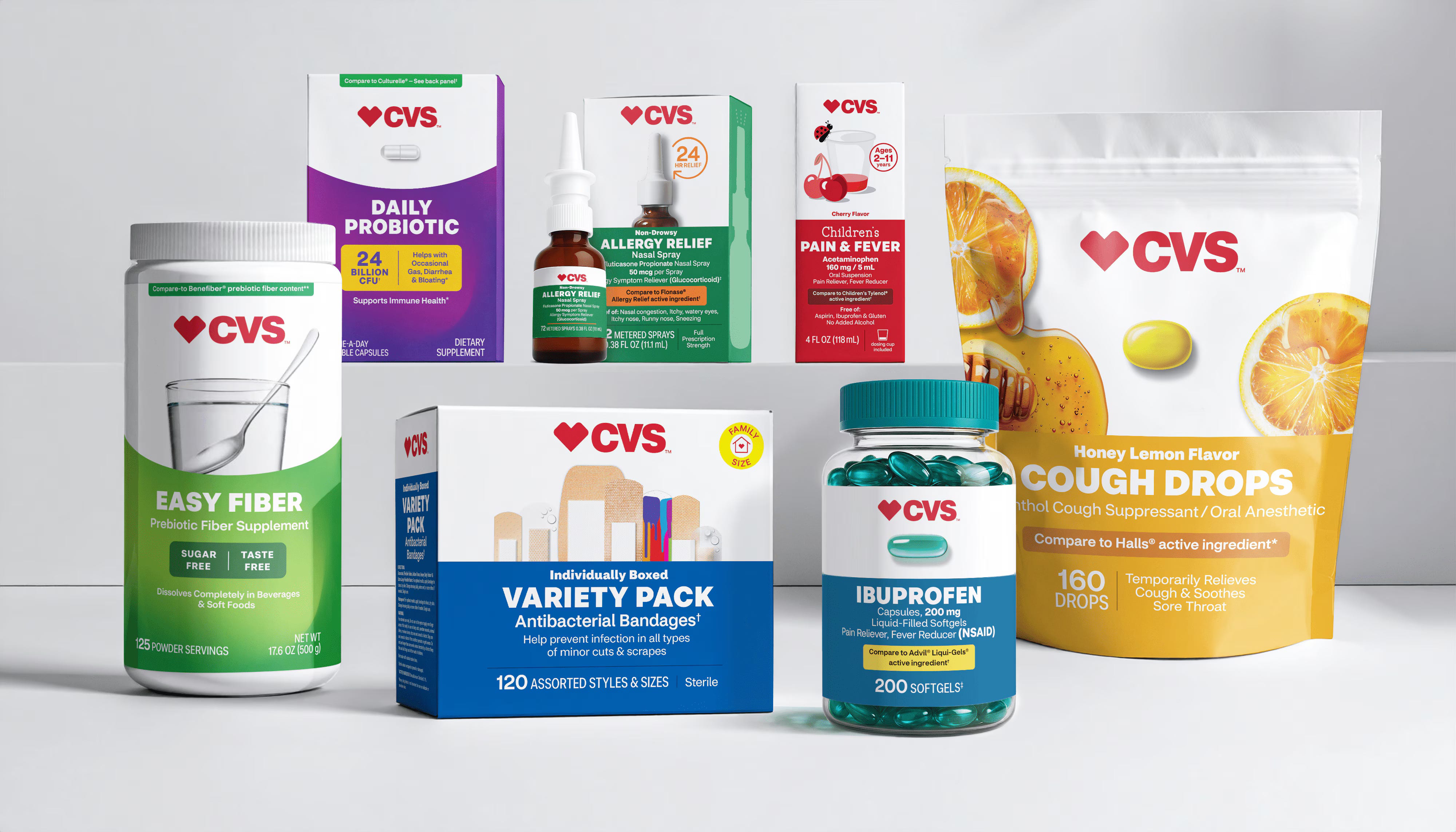
If any other agency released this report, I’d be skeptical that it wasn’t just to win over new clients. But if anyone has insight into building private label brands, it’s Pearlfisher. Having worked with CVS Health to revamp its healthcare line, Best Yet, covering more than 1,800 SKUs for the wholesale house brand, Paperbird’s paper goods and household products, and Shoprite’s parent company, among others, there’s a plethora of insights.
According to the Private Label Manufacturers Association, citing data from Circana, U.S. private-label sales hit a record $282.8 billion in 2025, up more than $9 billion from the year before. Store-brand dollar sales climbed 3.3 percent, nearly triple the 1.2-percent growth of national brands over the same stretch, while private-label unit volume actually rose as national-brand units fell.
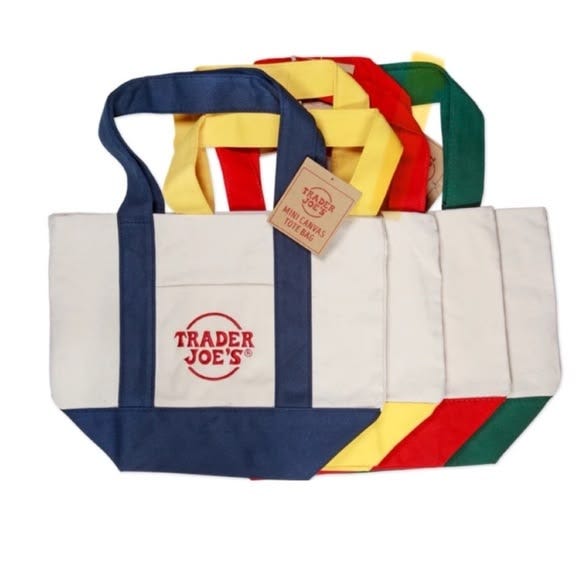
Kirkland Signature remains the example everyone reaches for, and for good reason. Costco’s in-house label rang up roughly $90 billion in sales in fiscal 2025. But virality doesn’t always require that kind of scale; sometimes a single item is enough to send a private label brand into the cultural conversation. I’ve also seen such a rise in virality for brands like Publix’s subs, Trader Joe’s mini canvas tote bags, and Whole Foods’ Berry Chantilly Cake.The list goes on and on.
There’s also the fact that Walmart’s most loyal store-brand shoppers tend to be high earners, with plenty of them clearing six figures a year. Does designing for someone who chooses the store brand look any different from designing for someone who needs it to? Rebecca Demmellash, Strategy Director of Pearlfisher, who co-authored the report, answered, ”The drivers to private label are not one thing but a combination of things that are fluid. Shoppers are very savvy. They know private labels are sometimes simpler, better ingredients, like Nature’s Promise, or 365, or even some Trader Joe’s lines (Organic, etc). They assume high quality because it’s often produced by the branded product manufacturer, they realize a better price is because the middleman is cut out, or they are driven to it because it’s simply their favorite product.”
There is no longer a single private-label shopper to design for; everybody is at the same shelf for entirely different reasons.
That’s the entire challenge packaging teams and brand designers are working with. A shopper reaching for the store brand because it’s the only thing that fits their budget this week needs packaging that highlights value without signaling deprivation. It shouldn’t look or feel like a “cheap” option, even if price is the whole reason they’re considering it. On the flip side, the six-figure earner reaching for the same product isn’t thinking about price at all; instead, they’re responding to design cues that look considered, minimal, maybe even more design-forward than the name brand next to it. And then there’s the shopper who’s simply loyal to the product itself, who doesn’t think of it as “the store brand” so much as just the brand they buy. How does one design for completely different types of consumers that each value something different?
“I don’t think good design should be calibrated to someone’s purchasing power. If anything, the increasingly broad audience for private-label brands reinforces something I’ve always believed. People across demographics are incredibly design literate today. They may not use the language designers use, but they recognize confidence, clarity and intention immediately,” notes Prachi Sheth, previously contracted as a Senior Brand Designer for Walmart.
She continues, “Working within Walmart has made that especially interesting because the scale is enormous. You’re designing for millions of people with different tastes, backgrounds, and relationships to the brand. The challenge isn’t designing for one archetypal consumer. It’s creating something distinctive enough to have a point of view while remaining intuitive and relevant to a remarkably broad audience”
On TikTok, the #dupes hashtag has racked up billions of views, built on the premise that finding a cheaper stand-in is not something to be shy about. In China, the shopping ritual known as “ping-ti,” sourcing the best possible substitute for a fraction of the price, has, per Pearlfisher’s report, become its own form of social currency, generating billions of views on social media. Frugality, once something people were ashamed of, has evolved into something people want to share and be proud of.
As Pearlfisher’s report puts it, that threshold “doesn’t require a limitless budget. It requires honesty.” What Pearlfisher’s report makes obvious is that the private-label aisle has finally started telling its own story instead of just being the cheaper alternative.
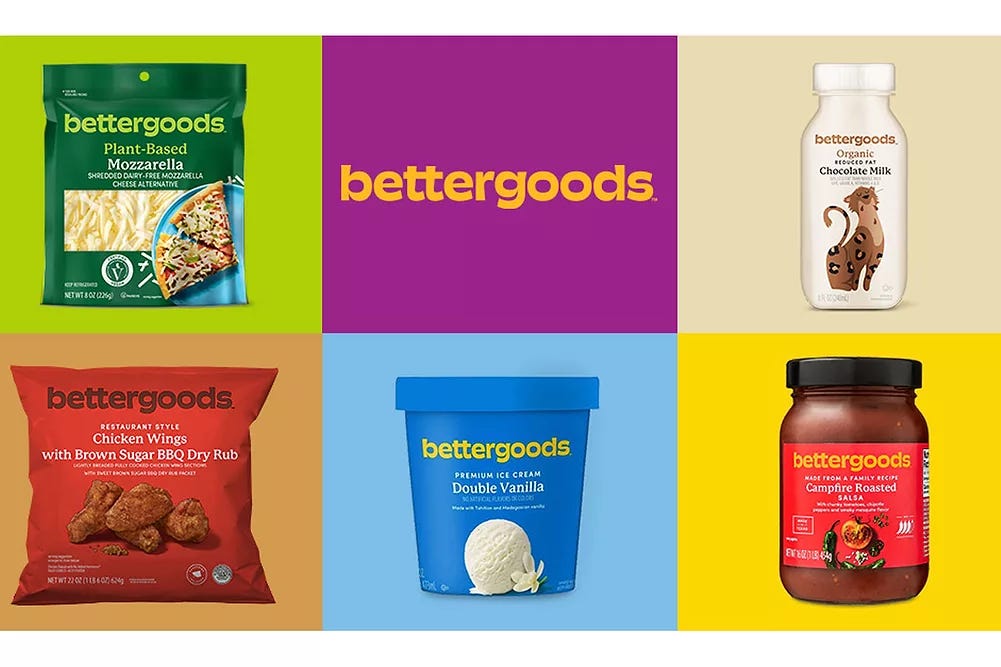
Walmart has streamlined the Great Value redesign, moving away from the label’s dated, budget-coded look. Walmart’s bettergoods line has reached 28% of households with $500 million in year-one sales, launched with a design-forward, editorial identity rather than a discount one. Kroger’s Simple Truth and Whole Foods’ 365 have both proven that higher-quality, better-designed private labels can attract consumers, and Kroger revamped its pet brand, Abound, with redesigned packaging as part of a broader push into what one Kroger executive called “trendy” private-label products. Target updated its Up & Up label in 2024 and has leaned further into chef collaborations under Good & Gather, treating store-brand development less as a cost-cutting exercise and more as product development at any national CPG company. The redesigns are stripping away the design cues that used to say “this is the cheaper option” and replacing them with design language that could sit on a shelf next to, or even instead of, the name brand. What’s more, 67% of Gen Z shoppers believe private-label products are just as good as national brands.
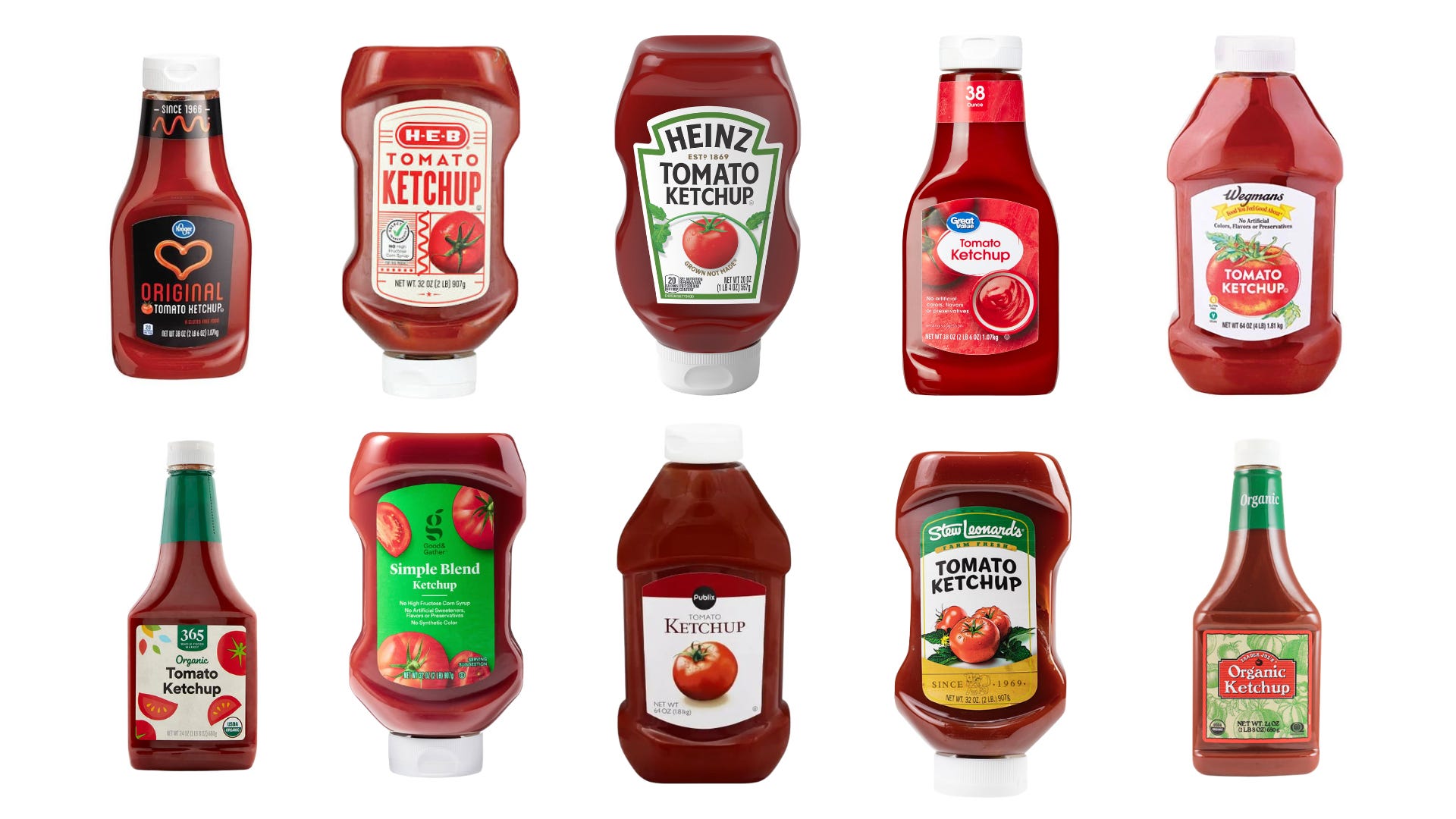
But it’s important to note that this isn’t all about design. Right now, more than ever, the promise of a less expensive option matters, and pretending otherwise does a disservice to what shoppers are living through. Since the pandemic hit, grocery bills have quite literally exploded. Food-at-home prices jumped 9.9% in 2022 alone, the fastest single-year increase since 1979, and meat, poultry, fish, and egg prices spiked 12.6% in a single year as the pandemic tore through supply chains. Plus, the food-at-home Consumer Price Index was still running 2.7% higher year-over-year as of mid-2026, meaning the increases of the last few years haven’t stopped. For many households, it’s exactly why a store brand that can pass as premium is essential. A store brand that looks as premium as the national brand next to it is a win for retailers and shoppers, who no longer have to debate whether price reflects quality (or perceived quality).
I still don’t think I’ll be swapping the toilet paper brand at our house quite yet, but I’ll take the Kirkland Vodka in my martini any day.
Until next week,
