

Every beauty brand wants to be desirable, but none of them wants to admit how desperately they’re chasing cool.
What I’m most curious about is how brands can pull off desirability without trying too hard, while still making consumers feel cool to use their products. The conundrum has been circling the drain that is my mind for a few weeks now, mostly because I’ve been so consumed by understanding how and why beauty brands optimize for cultural relevancy in a very online world.
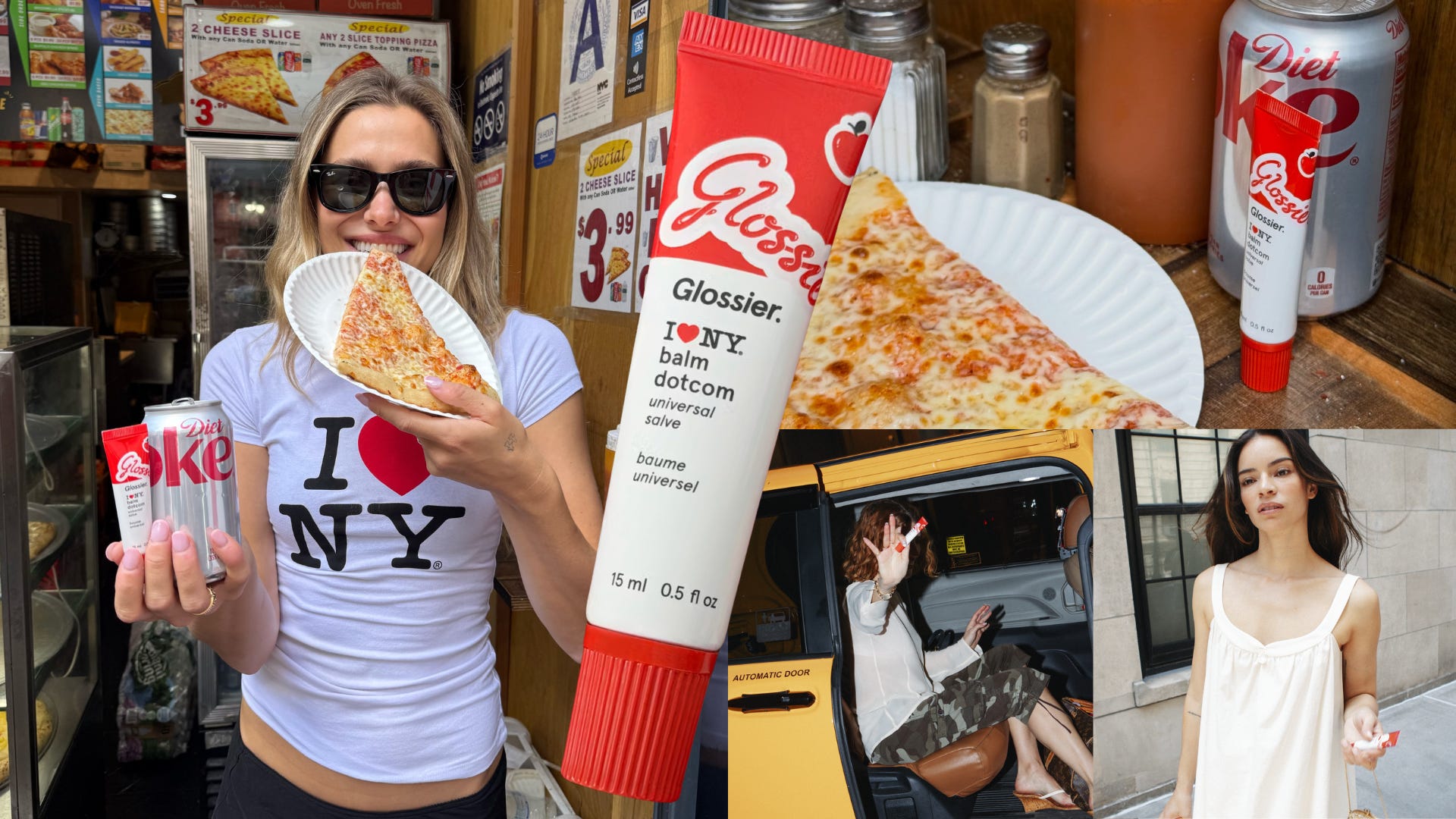
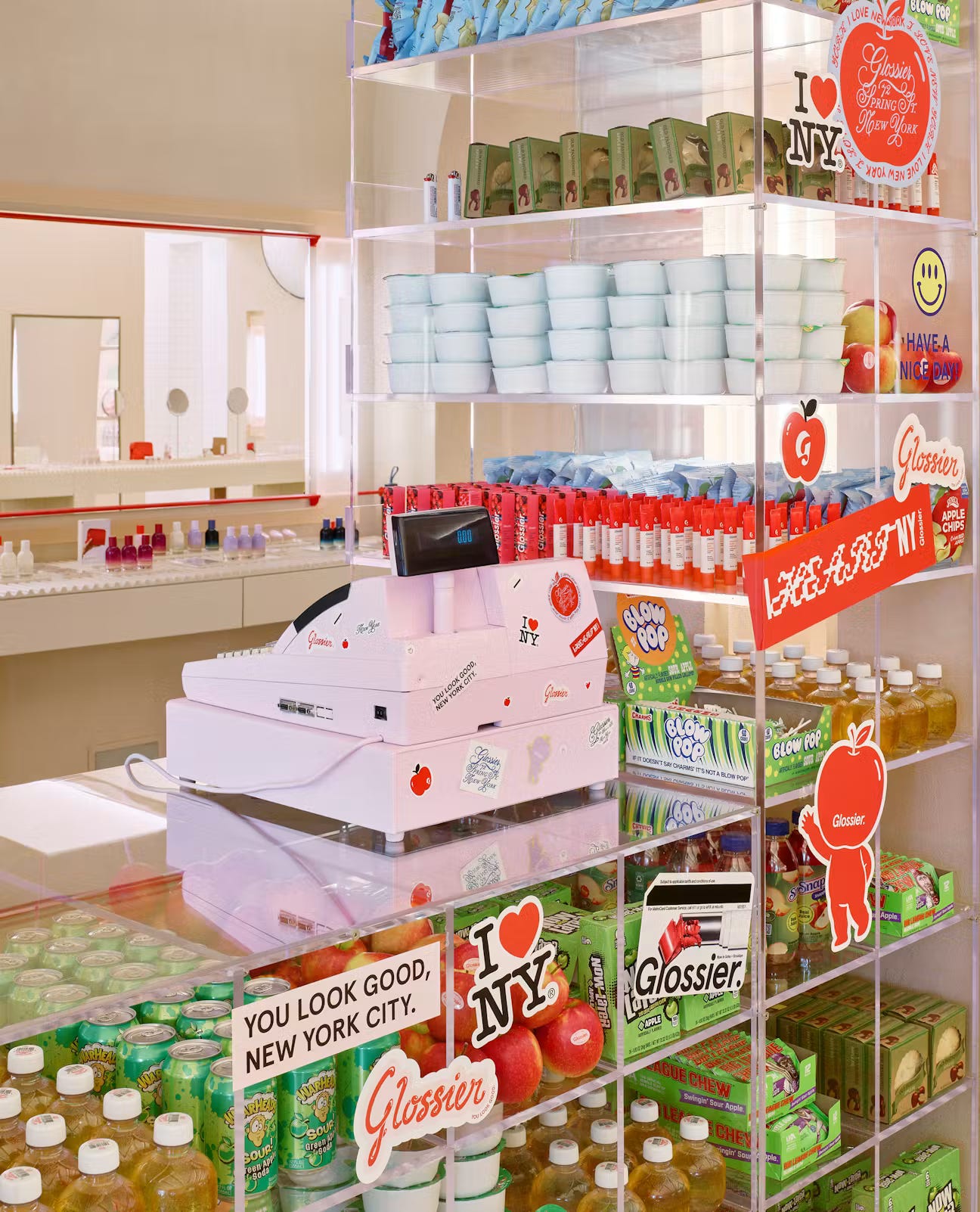
Most of these thoughts were sparked by Glossier relaunching its Balm Dotcom in an “I Love New York” wrapper, turning its SoHo flagship into a fake bodega. It is, by the company’s own admission, a look backward before it moves forward, trying to regain the same virality and brand trust it once had.
The brand’s new leadership has explicitly said that the plan is fewer launches with greater impact, built on nostalgia for the brand’s own history rather than a new product story. Which raises the question: If a product or brand is no longer seen as being cool, is the memory of once being cool actually enough?
Glossier launched when I was in high school, right as I was figuring out my own taste; what makeup I wore, how I wore it, and what brands felt like me. Glossier was the brand. It was everything I wanted to be a part of: a new label that seemed to belong only to girls in the know. This was pre-peak-influencer, when word of mouth (or word of blog) still carried the weight. Using Glossier and being part of its world felt like belonging to something bigger than myself or my high school.
In college, I fondly remember my brother gifting me a few Glossier products for my birthday, and even he was excited to go to the SoHo store to see the interior design, even if it meant standing in line for close to an hour. Experiential design at its finest.
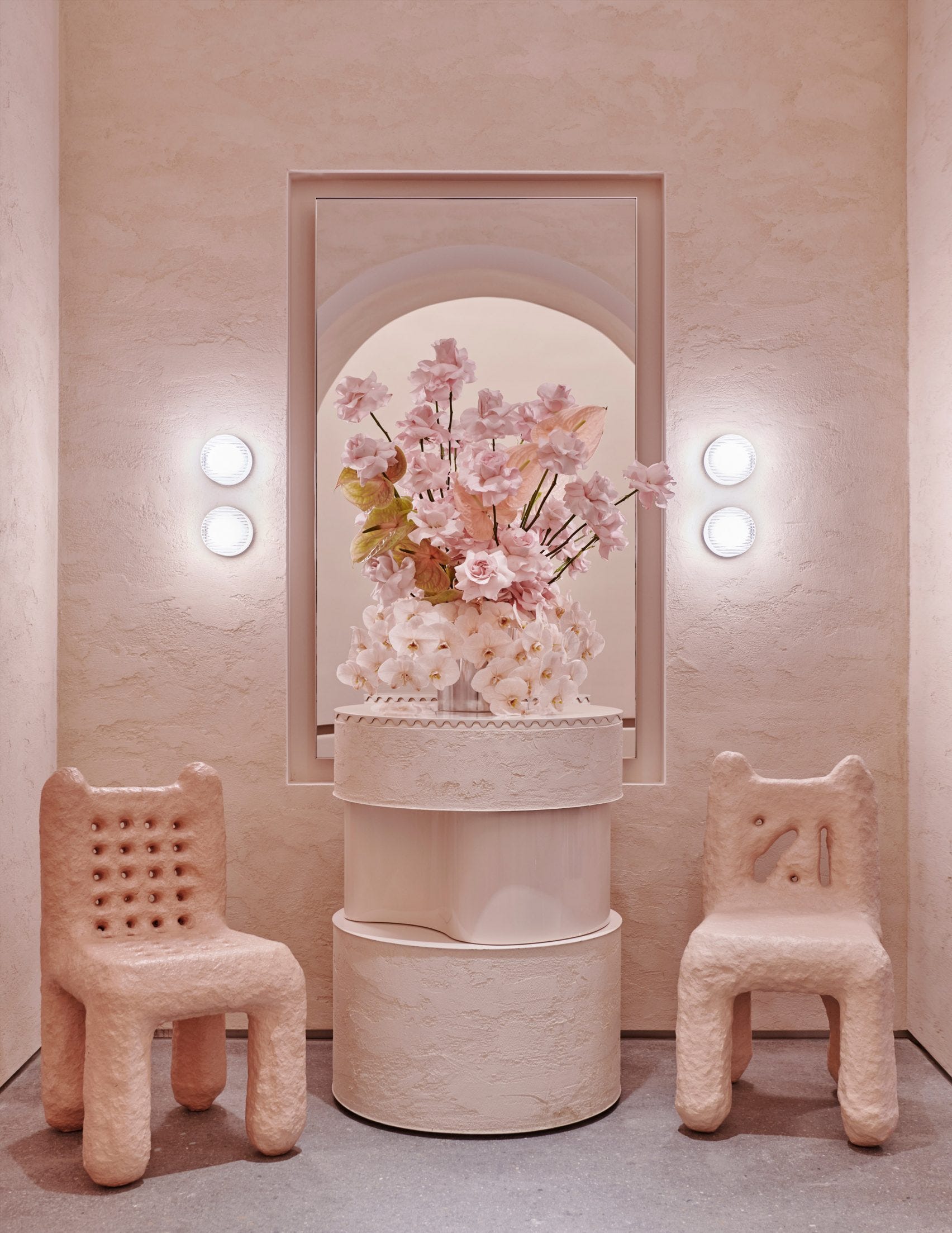
I’m not sure when the brand lost its intrigue for me. I don’t remember craving it after college the way I once did. It’s not that I aged out of it, exactly; it just stopped feeling like something I had to chase. Other brands kept popping up, too, from Milk Makeup and Kylie Cosmetics to Drunk Elephant and Sol de Janeiro, and the options started to feel endless. Glossier’s products (Boy Brow, Cloud Paint, and Balm Dotcom) stopped being products I needed to repurchase the second I ran out and started being products I might replace with new brands.
Would I go back to Glossier? Absolutely, but I’d need the brand to launch something that actually solves a problem I have now. Part of the original appeal was how the products worked in multiple ways without a brush. I wore Cloud Paint as both blush and gloss, and I loved that ease. But I’ve also grown more comfortable with technical application, and with understanding the science behind what I’m putting on my skin.
The I Love New York campaign is betting that the old Balm Dotcom, in old packaging, sold in a fake bodega, is enough to make girls like me chase it again. And maybe it is, for a weekend. But while the nostalgia can get me in for a moment, I’m not sure if that alone is enough to keep me coming back. And I highly doubt the brand is betting on it; I’m sure there is plenty more up their sleeve.
“As an OG Glossier girl myself, I think it was a really well-executed campaign. But unfortunately, as with nearly all marketing campaigns, it’s a single fleeting moment. If the goal is to truly engage and win back their original customers with nostalgia, I am more eager to see how they plan to actually bring them back into the fold in the long term – beyond a single buzzy campaign,” notes Krissy Arocho, Fractional Director of Brand for Fur and formerly on brands such as DedCool, Salt & Stone, Boy Smells, Kin Euphorics, and Milk Makeup. “These things take real time, repetition, and intentionality. It’s about building that trust and connection again. The other real question for me is whether Glossier can make that nostalgic feeling be enough to translate into sales. If that emotional feeling underneath is enough for someone to want to buy it to hold onto it again. If the product isn’t ‘cool’ by nature anymore, is wanting to hold onto that nostalgic feeling enough to sell it?”
Coolness seemingly compounds the way trust compounds, through repetition over years, not through a single viral post, and most people wildly underestimate how long it actually takes a brand to become truly ubiquitous. Which means the reverse should also be true. The fade takes years, too, even when it feels instant from the outside.
“Old things can become new again when they’re seen in a different light, but the brands that stay relevant usually remain true to their original essence. If you change too much to pursue a younger audience, you risk alienating the customers who built the brand in the first place. I rarely think reformulation or a packaging refresh alone attracts a new generation. It’s more about helping a new audience see an existing product through a fresh lens,” shares Sydney Dake, who formerly worked at E.L.F. Beauty and is now Founder & CEO of Gntl.
Dake continues, “That can happen through storytelling, community, creative direction, or simply showing a new generation using the product in a way that feels authentic to them. Younger consumers, especially, are highly attuned to being marketed to, and they can spot when a brand is trying too hard to be relevant. The brands that succeed don’t chase trends; they create a bridge between what they’ve always stood for and why that still matters today.”
It’s also worth saying that none of this works if the product isn’t actually good. “Coolness” can get someone to try Glossier’s Balm Dotcom, but the reason people have been buying it and restocking it speaks to the product’s quality.
The clearest proof of this came in 2023, when Glossier reformulated Balm Dotcom to be vegan, swapping out lanolin and petrolatum for plant-based alternatives. The backlash was immediate and specifically about the product’s actual performance. Customers said the new formula didn’t seal in moisture the same way, didn’t feel the same on the lips, and wasn’t doing the job. So in May 2024, Glossier brought back the original formula, and the announcement racked up over 100,000 likes and 3,000 comments in just a few days. People absolutely don’t campaign that hard for a product that was only ever performative.
Sunia Pervez, who was a Senior Merchant at Sephora and now owns a Retail strategy and brand growth company, notes, “Rhode and Glossier have become cultural brands in a way that’s bigger than just the products. They’ve created highly recognizable hero products and merch that people genuinely want to own—from Rhode’s phone cases to Glossier’s You fragrance and signature pink packaging. They’re brands where you see the product online or in someone’s bag and immediately know what it is. There’s a bit of an “I want that because everyone’s talking about it” effect.”
Merit, on the other hand, is a clean, vegan, and cruelty-free minimalist makeup brand founded in 2021 that’s never felt like it’s tried too hard, and has built an older-skewing customer around a smaller, more complete assortment. Its business model depends on people loving the core line rather than waiting for the next drop.
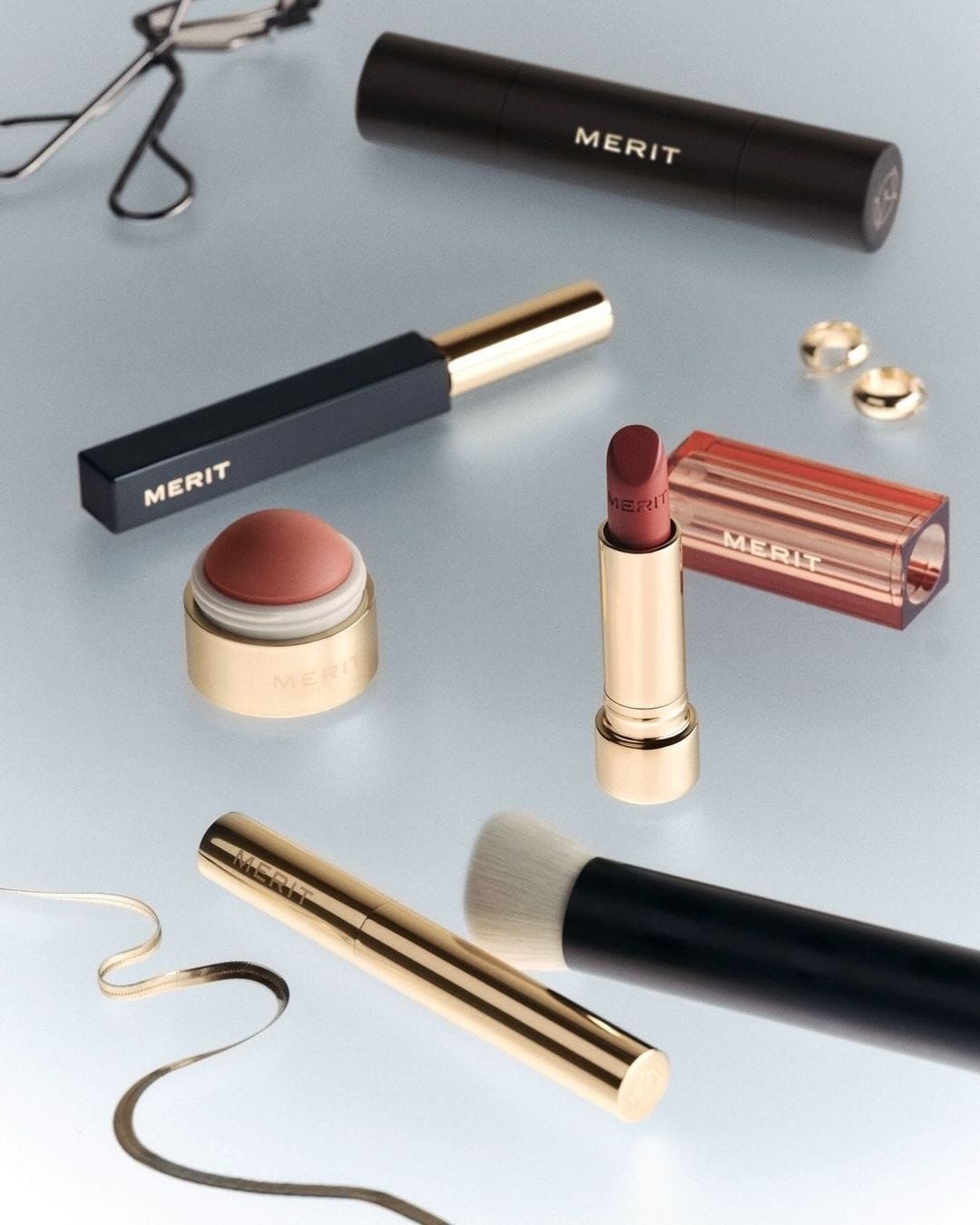
“To me, [Merit] is much more of a quiet luxury, minimalist brand. The customer also tends to skew a bit older and is looking for effortless, elevated essentials rather than the latest viral launch. From a merchandising perspective, that’s where their trajectories start to diverge,” shares Pervez. “Merit feels like a brand where the core assortment is the business; you come back because you love the products and they work together as a complete look. Rhode and Glossier, on the other hand, have a faster pace. You’re constantly thinking about what’s next: the new Rhode makeup kit, a limited-edition Balm Dotcom, or the next product everyone will be talking about. Merchandising those brands is as much about keeping the excitement going as it is about the core assortment.”
Then there’s Patrick Ta and EADEM, which are also working hard to win over a core demographic, more under the radar than Rhode or Glossier, and the common thread isn’t chasing a certain aesthetic. Pervez mentions, “To me, Patrick Ta has done an excellent job of staying culturally relevant while building a business that’s rooted in credibility, thoughtful innovation, and products people actually repurchase, not just hype.”
Patrick Ta launches when a product answers something his makeup artist background tells him customers actually need, not when the algorithm needs feeding. EADEM’s founders are frequently described as having a specific, narrow customer in mind, so every touchpoint reads as inevitable rather than trend-chasing. These brands have declined to make coolness part of their plan.
Arocho shares, “Not to be harsh, but I think [sameness is] a plague in beauty specifically. When everyone is using the same references, then what is even really cool, unique, or intentional at all? I usually focus on pulling my campaign references from sources outside of the industry I’m working in for this exact reason. It’s the only way to create something that actually disrupts a feed instead of blending into it.”
None of this means brands should stop trying to be desirable. Or cool.
Which brings us back to Glossier, because no beauty brand has lived through the entire cycle in public quite like it has. It launched in 2014 as the internet’s first true skin-but-better DTC brand, rode the millennial pink wave to a valuation near $2 billion by 2021, and then spent the years after learning what happens when a brand stops being the thing everyone is discovering and becomes the thing everyone already knows. Layoffs followed. So did product dilution, and a valuation reportedly cut by more than half. Glossier did not lose its customers overnight, but it did lose the sense that it was still the most desirable and newest thing in the room.
That is what makes the I Love New York campaign worth paying attention to. It is a very clear attempt to buy back trust using the one asset Glossier has that nobody can copy: its own origin story.

But nostalgia is also low-hanging fruit, and increasingly the default strategic response. Beauty and CPG at large have gotten very good at looking backward and slapping a “nostalgia” label on things, everything from throwback packaging to archival drops. It performs well because it’s built for algorithms, and it lets a brand borrow trust it already earned instead of having to earn new trust from scratch. None of that is inherently bad, but it’s a move I’m slightly bored with.
What separates Glossier here from a quick nostalgia grab is that this bodega move is only just the start of the brand’s comeback era. And the bodega absolutely gained attention. “Hundreds of young women lined up on Spring Street at 9 a.m. on a recent sticky Tuesday. Unlike on most mornings in Soho, they weren’t waiting to get into a sample sale. That day, it was lip balm,” as reported by The Cut.
But I’m most curious to see what’s next from the brand from a product perspective. Pervez notes. “Are they listening to customers? Can they continue to innovate? Do they have a clear point of view, or are they just chasing trends? The brands with staying power know who they are. They evolve with the customer rather than jumping on every viral moment. That’s what separates a brand with longevity from one that has a great six months and then fades.”
Nostalgia can absolutely reopen the door, but it can’t make customers stay. If Glossier pulls this off, I’ll be intrigued. If it doesn’t, it’s the same story every nostalgia campaign tells… a beautiful moment right before the fade continues anyway.
Stay Fresh,
I realised nostalgia has been the go to move for most businesses these days. I remember a while back McDonald’s had a Collab with friends.
I think a question I have (fellow brand copywriter and marketer) is: is the target age staying the same, or does Glossier want to grow older with their originally OG audience? Because if the target wants to remain the same and phase out the OG consumer, that’s one thing but it needs to cater to a late Gen Z or alpha. But to the writer’s point, if Glossier wants to grow with the consumer, it would need to start focusing on being timeless and maturing some of the product line