

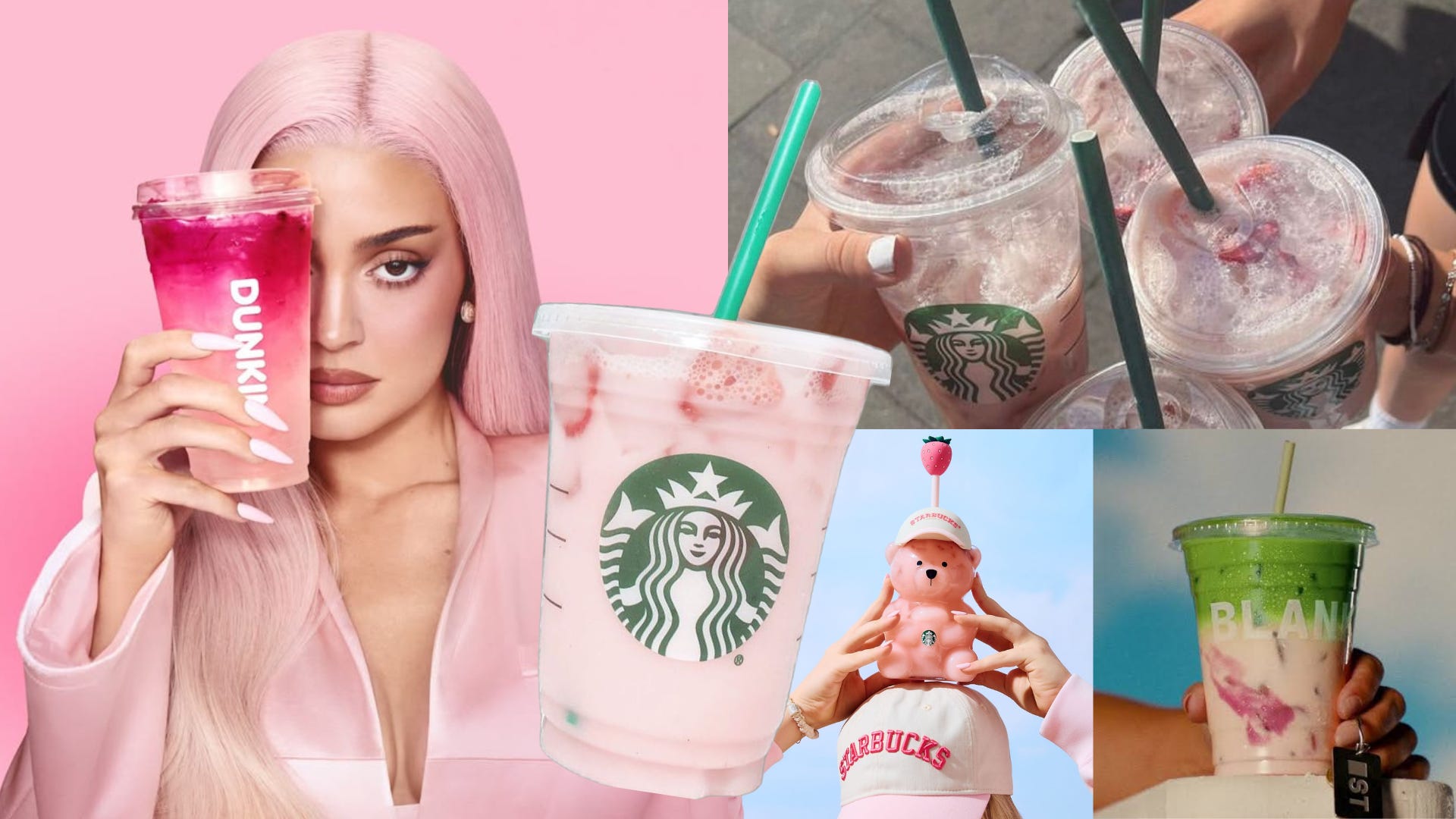
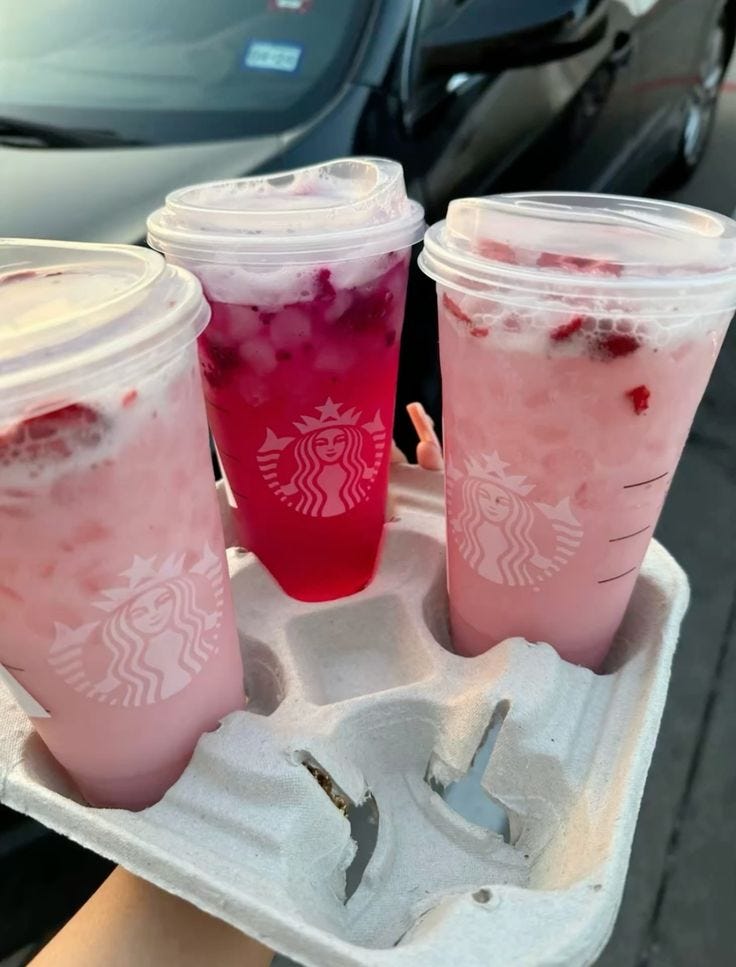
In shocking news, Starbucks’ Pink Drink turned ten this year. Had you asked me when it launched if the Pepto-Bismol-hued coconut milk and freeze-dried strawberry drink would have stuck around this long, I’d have rolled my eyes and laughed at you.
But I’ll admit when I’m wrong, and in this case, I very much would have been.
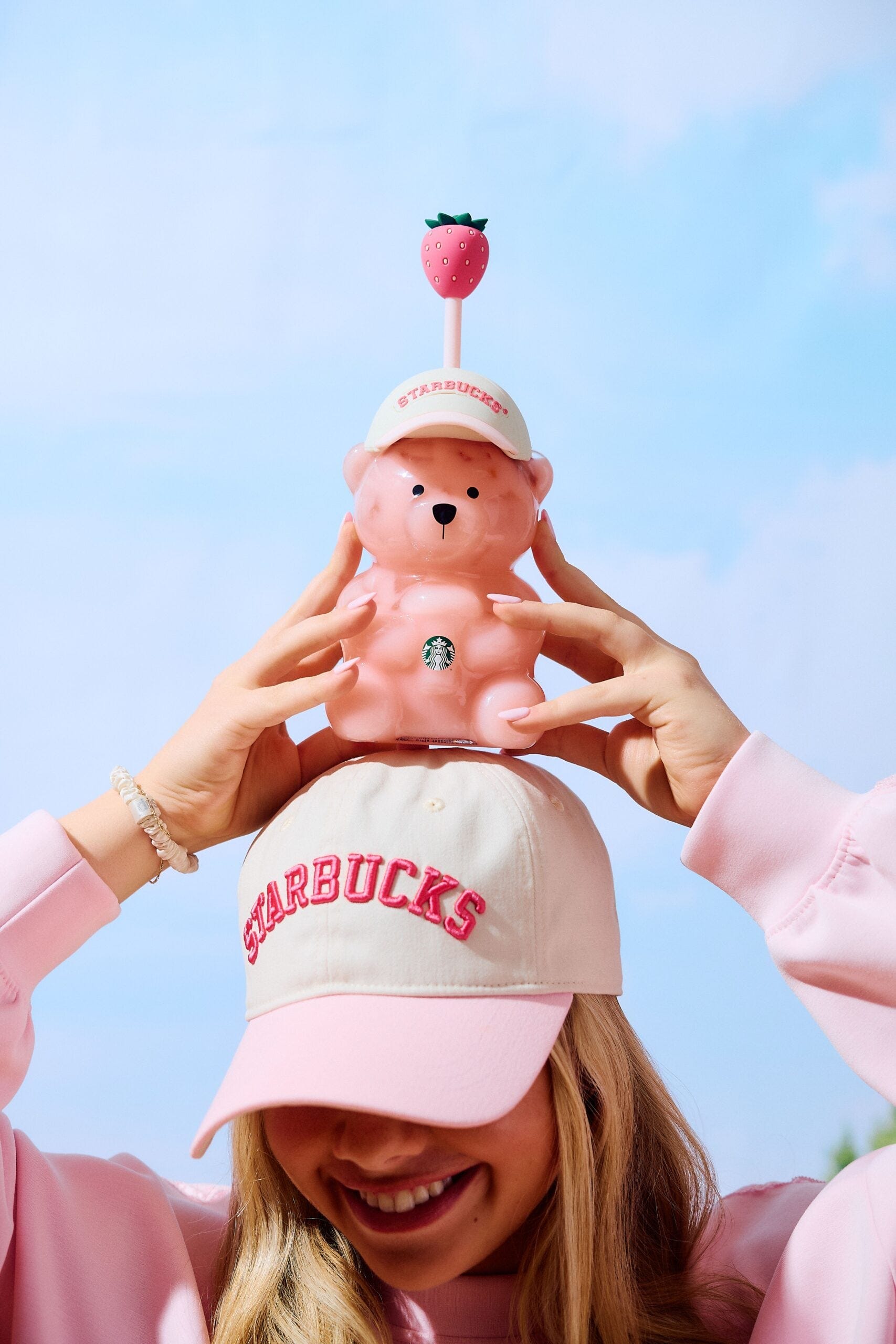
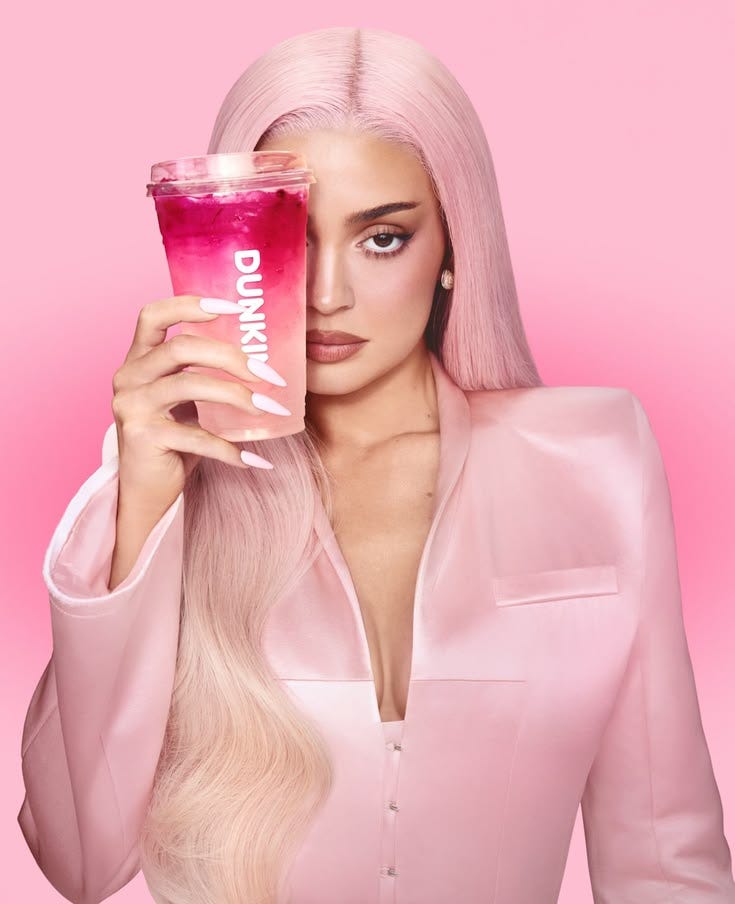
That said, it caught my eye recently that Dunkin’ wrangled Kylie Jenner for a “King Kylie” collection built around its very own pink offering. Starbucks responded not with a celebrity but with Bearista, its own bear mascot, launched on July 13th, which stretched across tumblers, hair clips, and hats. And then, not to be outdone by other “coffee” behemoths, there’s Blank Street with its Miami Vice Matcha, a summer seasonal blend of ceremonial matcha, coconut milk, strawberry, and pineapple, as well as the Strawberry Shortcake Matcha.
What started as a secret menu item has become a full-blown arms race of merch, collaborations, and content.
I’m most interested in the timing of it all, as it’s happening in the middle of the most aggressive “health”-focused times we’ve seen in recent years. GLP-1 use is up, sugar is the villain, and brands are increasingly leaning into functional additives like prebiotics, adaptogens, fiber, and protein. And yet the drinks taking over culture right now are sugary, artificially colored, and built for Instagram and TikTok.
Pink is having a moment when, by every wellness metric, it should be having the opposite. To understand why, it helps to separate what these brands are actually building.
According to Nikita Walia, Partner, Strategy at U.N.N.A.M.E.D., a brand and venture studio with clients ranging from Apple and Netflix to Nike and Tiffany, the Pink Drink “has crossed the line from a successful product into a platform. Once something has that much recognition, brands start asking how far they can extend it beyond the original purchase occasion: into collectibles, collaborations, content, and, ultimately, identity.” Starbucks and Dunkin’ are running two different plays on that same idea.
As Walia put it, “Starbucks is building a closed, proprietary ecosystem. They are banking on there being enough existing goodwill towards Starbucks, and that this will become a flywheel for the brand. It wants customers to be part of the Starbucks ecosystem, forming attachments to its owned products, rituals, and characters. Bearista is something Starbucks can keep developing without borrowing relevance from others.”
“Dunkin’s model is a bit more open, importing cultural energy through collaborators, and making a brand a platform for engagement with broader culture outside its walls,” she continues. “Kylie then brings an audience and cultural context for their own pink drink exercise. In simpler terms, Dunkin is trying to insert itself into culture, and Starbucks is attempting to manufacture cultural symbols of its own.”
Neither strategy has much to do with what’s in the cup. The health conversation assumes people are optimizing for input, calories, sugar grams, and protein counts. But the pink drink phenomenon runs on a completely different currency. Gen Z is not pulling back on small indulgences even as they say they want to eat cleaner. A 2026 study found Gen Z is more likely than older generations to spend $10 to $25 on small indulgences. Bank of America has reported that 57% of Gen Z buys a small treat at least once a week, with nearly 60% admitting it leads to overspending. This is a generation drawing a hard line between what counts as health and what counts as reward, and letting both coexist.
That split shows up in the way the industry itself frames indulgence. The old binary of healthy versus fun is gone. A pink drink doesn’t have to pretend to be good for you. A little treat here and there is simply necessary.
But why pink, and why now?
“Beyond the nostalgia drivers, pink communicates fun, femininity, girlhood, or even playful rebellion, depending on the drinker,” Walia told me. “There is this massive ‘little treat’ culture, and it seems like brands are trying to one-up each other on flavor profiles, especially those that lend themselves to vivid colorings.” That “little treat” language isn’t incidental. It’s the exact phrase economists and consumer researchers have been using to describe how younger buyers are coping with financial anxiety, tuition costs, and a housing market that feels permanently out of reach. One report described the phenomenon as consumers “turning to small indulgences, nostalgic experiences, and affordable luxuries to navigate economic pressure and social exhaustion.” A pink drink, at roughly five dollars, is an easy way in.
The drink, a grande size — 16oz for any non-Starbucks drinkers —stands at 140 calories, with 25 grams of sugar and 50mg of caffeine. According to the American Heart Association, women should consume no more than 25 grams per day. Men, on the other hand, should consume no more than 36g per day.
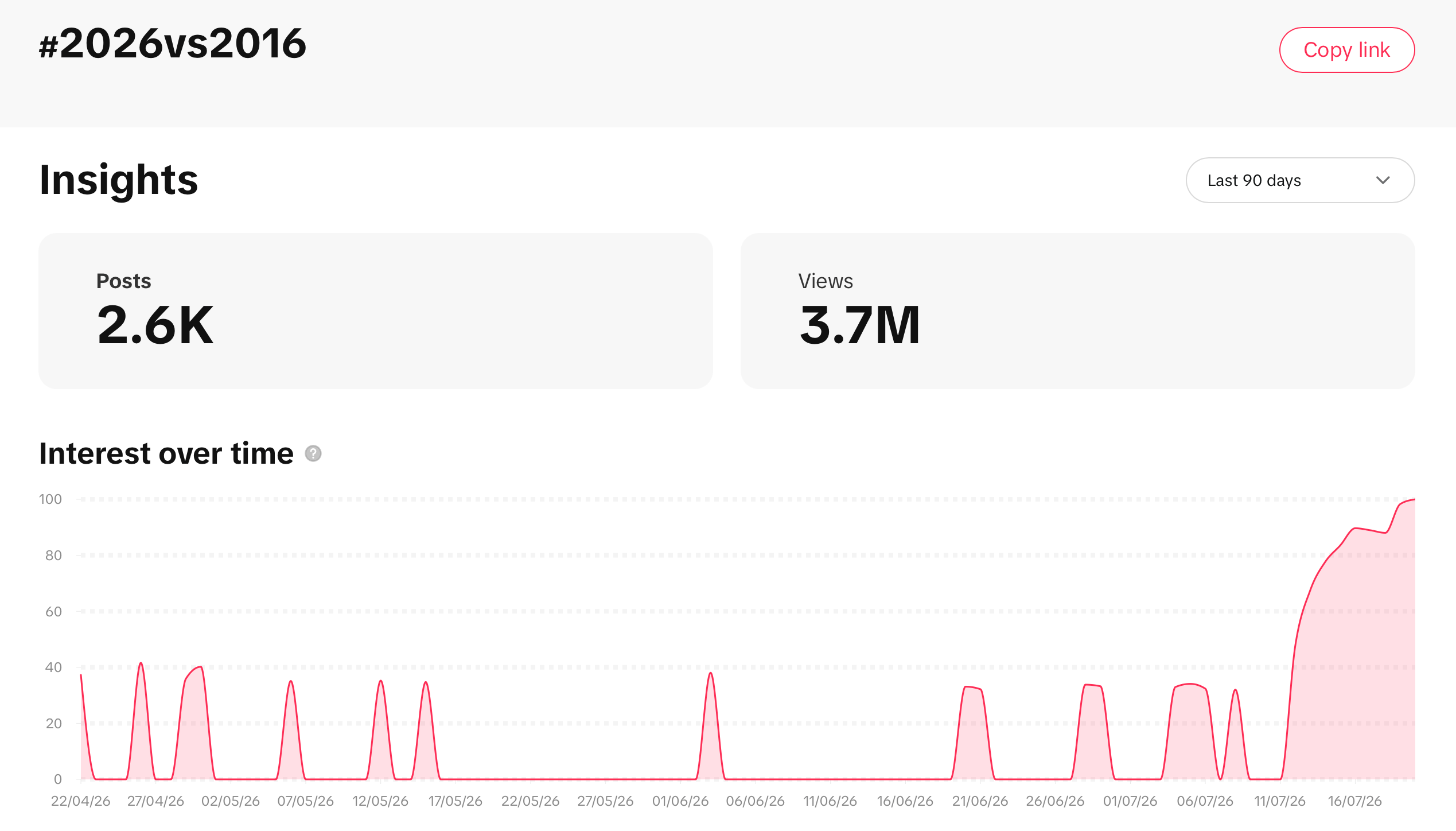
There’s also a generational clock running underneath all of it. “Millennial pink was one of the defining colors of 2016, which is when the original Pink Drink went viral,” the strategist pointed out. “What we’re seeing could just be part two.” Nostalgia cycles tend to run in ten-year loops, and 2016 is exactly what people on TikTok have been nostalgic for. In the past few weeks, according to data from the TikTok Creative Center, the graph shows the rise of #2026vs2016 and how much it’s exploded with over 3.7M total views.
When asked what tips a trend from on-trend into overexposure, Walia didn’t hesitate: “When we see a few major brands arriving to the party, a trend is not a point of distinction; it is probably overexposed. By that point, you’ve lost all first-mover advantage and look like you’re just trying to catch the final dregs of a moment to capitalize on. If there is no prior connection to the product or brand, and there is no real newness being created, it’s a brand just tapping into a trend that is on the way out. That does not mean individual brands connected to the trend have exhausted it, but new entrants will seem late. Starbucks has years of consumer recognition around the Pink Drink.”
But at the end of the day, the pink drink wars aren’t really about pink. Or even about drinks. They’re about what happens when a health-obsessed culture needs more whimsy and joy. This trend proves that not everything needs a purpose beyond being fun.
Is it an antidote to the wellness era? Yes, but mostly indirectly. People aren’t drinking pink drinks in spite of being healthy. It’s when the zeitgeist is consumed with preaching fiber and protein goals, optimization-maxing, and tracking sleep scores that it all gets exhausting. In my head, this is a subconscious rebellion against the insistent need to add function to the things we consume. A sweet little pink drink is fun for the sake of being fun. It brings a bit of joy without breaking the bank or the day’s caloric budget.
This time next year, I’d bet on seeing more of these small, joyful treats popping up everywhere, which raises the question. Why do you think Dot Cakes took off so fast?
Until next week,